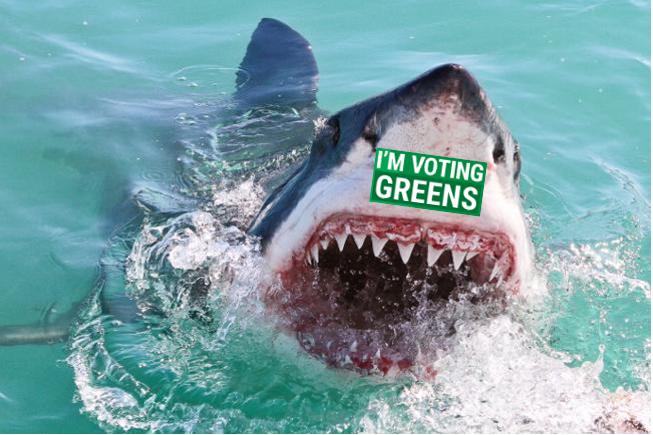
Don’t Swim or Surf at Sydney Beaches – The Greens Party have campaigned to have all the protective shark nets removed!!
“On the 28th of March 2026 a massive swell hit the east coast of Australia lighting up some of the big wave locations. Wedding cake island in Sydney was one of them throwing out waves of up to 30 feet. Josh Ku and @oceanpixels9408 Jeremy Wilmotte partnered up on the Jetski to tow some of the biggest waves ever caught on the HYDROFOIL. This swell was a memorable one as for its size there was not much wind affecting the wave quality.”
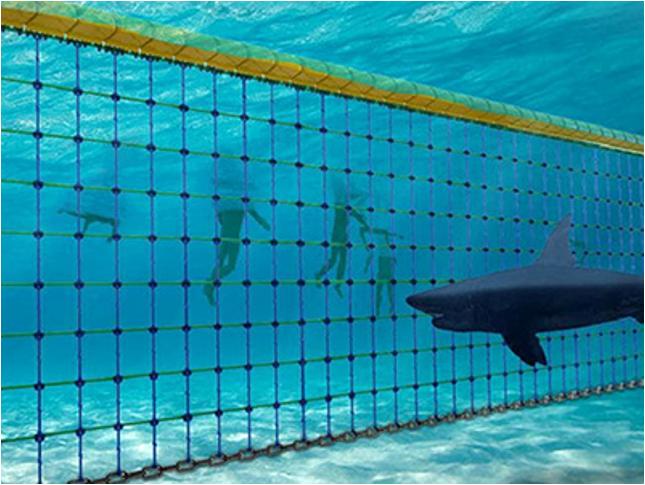
If no shark net, then don’t swim at that beach. Your life depends on it.
NSW coastal beaches have become unsafe to swim or surf. Nature Trail warns this as our Tour Director having been a qualified, experienced and locally knowledgeable Surf Life Saver at Bondi, Clovelly and Coogee beaches (and others) over a ten-year voluntary service. You have been warned. One doesn’t swim in saltwater crocodile infested waters up north (been there flying choppers over the river crocs). Same same not to venture swimming at shark infested coastlines where the politicians have just removed the perfectly protective sound shark nets, so installed since 1937.
Yet there is no notice/signage for visitors at any New South Wales beach about whether there is a defensive working shark net in place or not at a given beach. So it’s sensibly safest to presume that there isn’t any shark net, thus wise to not venture into the sea water.
Government knows best, according to government.
Well, there used to be shark nets all summer up and down the NSW coast at popular surf beaches, so the next have become presumed and the ocean swimming public accepted the historical status quo.
But the politicians got bullied and intimidated by leftie Greens held the shark net removal secret behind closed door meetings to agree to remove the shark nets without telling the general public.
Thus they now have blood on their hands, with a predictable more to come.
At the current time of starting to draft this article (18th June 2026) the State of New South Wales (NSW) had removed all its successful shark nets along NSW coastal patrolled beaches.
This now means that no beach in NSW has any shark net to save lives of swimmers at patrolled beaches from shark attack, and that includes surfer dudes. Mind you, at the remaining plethora of non-patrolled beaches, there were never any shark nets installed.
So, swimming at patrolled beaches has since April 2026 become a life and death choice at any beach in NSW despite it is being patrolled by volunteer surf lifesavers (September to April) or by professional local council paid LifeGuards.
So what is the current official rescue protocol in place to deal with an observed active shark attack mauling on a beach patrolled by volunteer surf lifesavers and or professionally paid council LifeGuards? Jump in the water and punch the shark away?
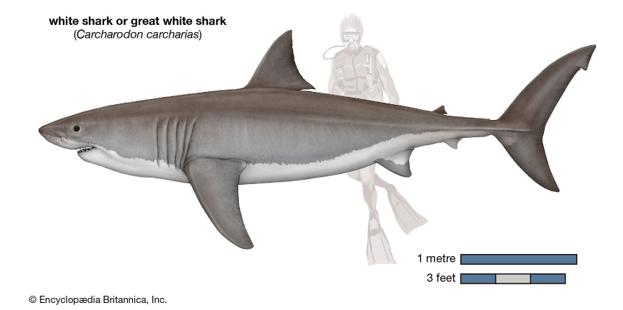
Yeah but a 4m Great White Shark can weigh up to a tonne if it has eaten recently. So it would be like punching a 1 tonne boulder and wouldn’t get you anywhere.
South Africa during the surfing comp ‘J-Bay Open’ finals in Jeffreys Bay, 2015:
Shark net removal is misguided, scary, and makes it now too dangerous to go swimming; them’s the reality facts. Top predator sharks will naturally normally win.
This Wholly Avoidable Tragedy:
Yet The Greens Party campaign has managed to bully the New South Wales Government to remove all its shark nets along the NSW coastline that have long protected swimmers from shark attacks. Like many Sydney beaches, Coogee had shark nets in summer. The nets were removed at the end of March and it looks like they’re to be mothballed. The removal of the nets took place by Monday 30th March 2026.
The Greens Campaign since 2021 and prior:

The Greens: So let the Great White Sharks start their feeding frenzy of NSW beach swimmers!
The Greens have blood on their hands.
On The Greens Party website 12th June 2025 the campaign stated the following:
The Greens have renewed calls for the Albanese government to reject a major expansion of shark nets used in the Queensland Shark Control Program.
It comes as yet another rescue operation is underway this morning to save a whale stuck in a shark net off the Gold Coast.
The Queensland LNP Government has controversially announced plans to expand shark nets, in a move that would need exemptions from already weak federal environment laws.
Quotes attributable to Greens spokesperson for healthy oceans, Senator Peter Whish-Wilson (nickname ‘Fish-Wilson‘):
“The evidence of how damaging shark nets are to our marine wildlife is playing out before our eyes, yet the Queensland government continues to ignore the facts. Shark nets cause mass destruction to marine wildlife, and evidence proves they do not make our beaches safe. In fact, evidence shows shark nets may attract sharks to beaches, where they can feed on marine wildlife caught in the nets.
The LNP’s decision to expand the use of shark nets in Queensland’s Shark Control Program goes against the advice of its own government-commissioned report. It is a desperate distraction to create division within communities and is sadly straight out of the culture war playbook that the LNP loves.
Under federal laws the Albanese government has a legal responsibility to protect endangered marine wildlife, including wildlife killed by lethal shark nets and drumlines deployed by the states of Queensland and NSW.
I’ve written to Minister Watt imploring him to use Labor’s upcoming commitment to reform Australia’s environmental laws to remove existing exemptions to state-controlled lethal shark net programs that risk federally protected species.
Governments can help keep ocean-goers safe by supercharging investment in modern-day alternatives to outdated and ineffective shark nets and lethal drum lines: investing in shark shield personal deterrent devices, shark spotter programs, eco-shark barriers, bite proof wetsuits, and increasing public education are amongst many emerging risk mitigation alternatives….”
Greens Party Senator Peter Fish-Wilson: “She’ll be (shark) right!“
This autumn time of year is still warm enough to swim in togs along this coastline. Many are still down the beach and swimming in the sea, locals and visitors alike. The Easter holiday break (3-5 April 2026) was just days after the removal of the shark nets.
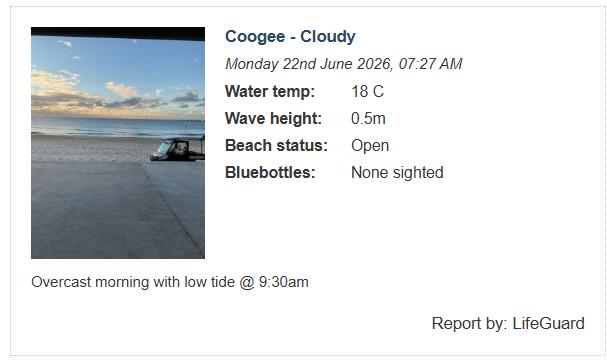
May be with the shark nets now removed, the LifeGuard reports need to add shark sighting status updates. BTW, also the prevailing wave direction at Coogee Bay is SSE. [^SOURCE]
How bloody reckless and negligent of the NSW Government to fail to protect public safety at its beaches! The local volunteer Surf Life Saving patrol season along NSW beaches extends from September through April every year.
Yet many a hardy acclimatised local swimmer of the sea off Sydney do so all year round. So the shark nets are critical safety measure for coastal beach swimmers up and down NSW 365 days all year round. The nets provide the reassurance of passive protection of beach swimmers from sharks.
Whereas other risk mitigation measures (by helicopters and drones) require active vigilance and government funding which is unreliably, fickle like the wind. Trust government to do that 365 days a year?
Yeah, pigs fly.
Many local seaside councils, aware of the year-round visitation to their beaches also employ professional LifeGuards of selected popular beaches ALL YEAR-ROUND as additional caretaker responsibility during and outside the volunteer patrol season. They thus recognise and respect the risks and the statistics will justify the patrol expense and need for close constant surveillance.
The Greens lather over their ‘climate change’ doomsday cult theory, yet hypocritically ignore that ocean temperatures might be rising into the winter months, so attractive to more sea swimmers. Hello!
Almost predicably given multiple shark attacks recently in January 2026, but guess what’s happened of late?
A regular female swimmer at Sydney’s Coogee Beach at around 11am Saturday 13th June 2026 was savagely mauled by a reported Great White Shark. It was reported between 3.5m and 4m long, and the swimmer was just 30 metres off the beach in shallow water, just beyond the surf beakers.
The shark attack has occurred just two months after Coogee Beach’s shark nets were removed. The swimmer has since had her left arm amputated and remains fighting for her life in Sydney’s St Vincents Hospital Emergency and ICU!
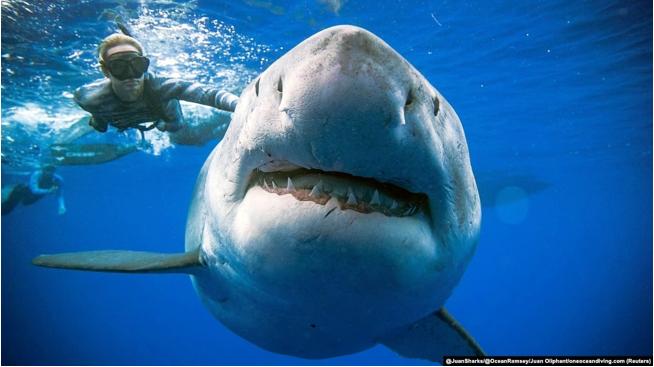
Hey Greens, this is how big Great White Sharks get – 5 metres long!
That Coogee Shark Attack Rescue:
Saturday 13th June 2026 (a mild mid-winter):
The following summary is garnered from the media as well as some suggested insight presumptions of news not known or told by the media, by this author, a former surf life saver of ten years and a former local member of Coogee Surf Life Saving Club.
The media reported that “a woman was pulled from Coogee beach at around 11am after being bitten by a shark”. Witness, bartender Tom Vesper was sitting on the rainbow steps (image below) at the centre of Coogee Beach, about to go for a swim and said he had noticed the woman swimming laps across the length of the beach, in water that was perhaps 10 metres deep.
[Author’s Note: No way! Try more like just 3 metres deep at just 30 metres out from shore. Coogee Bay is quiet a shallow sandy even grade, say compared with Sydney’s Bondi or Bronte or Tamarama shores to the north. Swimming 30 metres out at Coogee up and down the bay, with goggles one can easily see the sand not far below (doing freestyle), although it is over one’s head deep.]
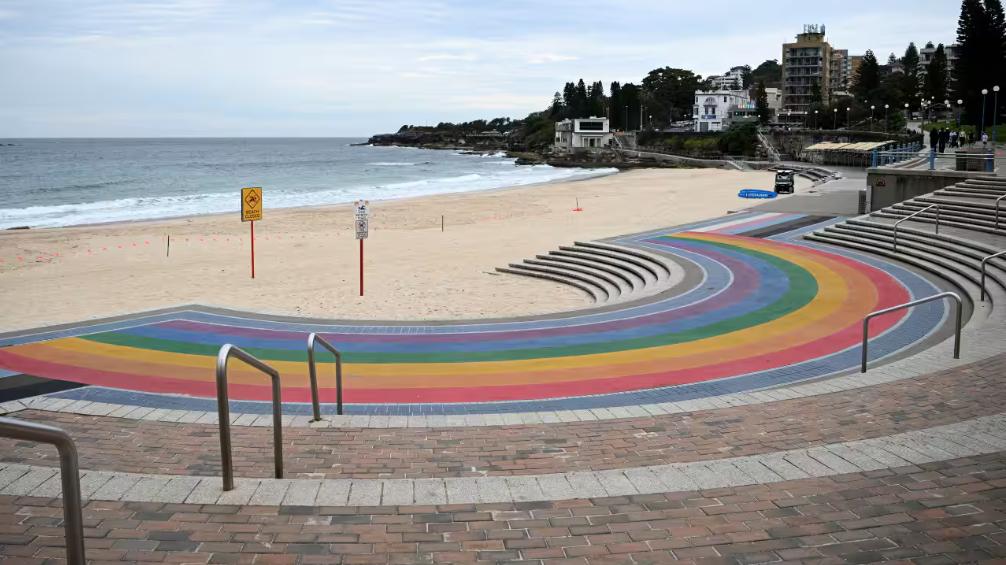
How much did this Greens political paint messaging cost? Local Randwick Council’s ratepayers’ funds should have been more wisely invested in installing a high surf observation tower(s) strategically located at Coogee Beach (and to pay an additional Coogee LifeGuards shark watch crew to man it on frequent shift rotations) so as to better detect the presence of sharks. This is especially given that their employer, Randwick Council, would have well known that the shark nets had been removed in March 2026 by the NSW Government kowtowing to The Greens Party radical lobbying. What matters more – human lives or deviant propaganda, Randwick Council?
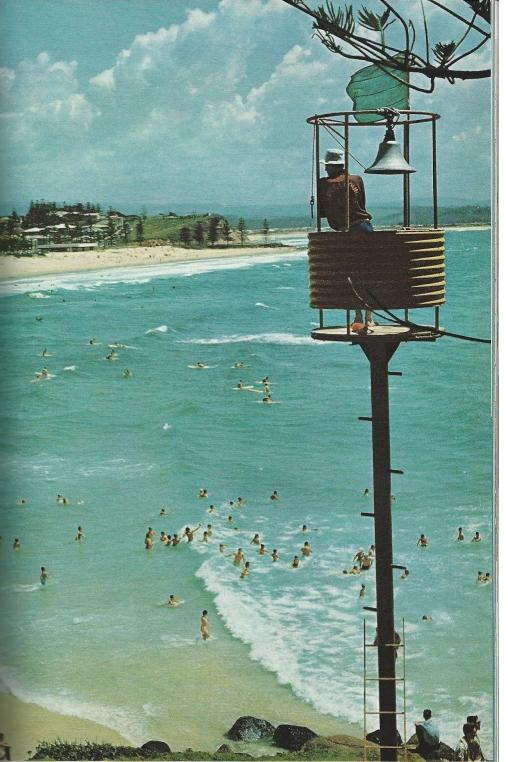
Ye good ‘ol shark tower in America. Needed at every patrolled beach if no shark nets in place. Can spot a wayward incoming shark in seconds.
The female swimmer at Coogee was swimming just 30 metres out from the sand just beyond the small beakers in order to be in smoother water better suited for swimming (likely freestyle stroke?). She was swimming sensibly with two fellow female swimmers at the time.
Reportedly, is a keen swimmer, swimming inside the beach patrol flags, really close to the shore when it happened on a crystal-clear Saturday morning. Like WTF?
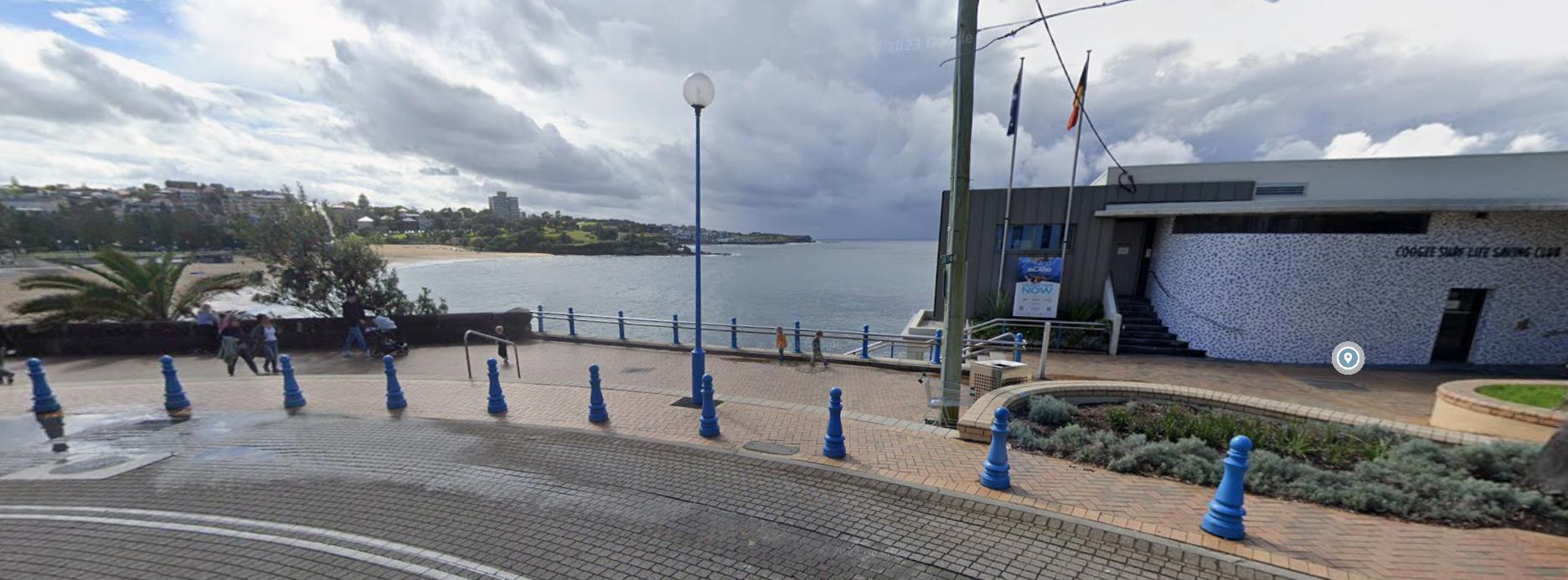
Coogee Bay shown to the left of the rebuilt Coogee Surf Life Saving Club (right). It has widely been regarded by many Sydneysiders as a safe beach to swim at, due to its shallow gradual sand graded bottom, its famous Wedding Cake Island serving as a small wave break to the beach from the prevailing SE swell, and of course thanks to the shark nets (now removed by guvment).
‘Wedding Cake Island‘ is very visible from Coogee Beach and the Coogee Bay Hotel. It is iconic as a small flat rock platform island about 1km off the SE coast of Coogee Beach. Apparently, its name emanates from the rocky islands platform unique appearance off Coogee when in high seas it resembles an iced wedding cake from incoming waves breaking over it.
The Coogee Island Challenge: Twice a year, in April and November, the Coogee Surf Life Saving Club holds a 2.4-km swim event from Coogee Beach which circumnavigates the island.
Yet salt-encrusted locals know.
Sydney’s legendary Pacific Ocean-side culture, “salt-encrusted locals” are the die-hard swimmers, surfers, and early risers who brave the chill year-round. You’ll usually find these salty regulars doing laps before sunrise at the iconic Bronte Baths, Icebergs Pool, or the Wylies Baths in Coogee.
Leah is one.
Aussie rock band ‘Midnight Oil’ crafted their instrumental hit surf-rock track ‘Wedding Cake Island‘ back in 1980, which featured on their EP (mini LP) of that year ‘Bird Noises’.
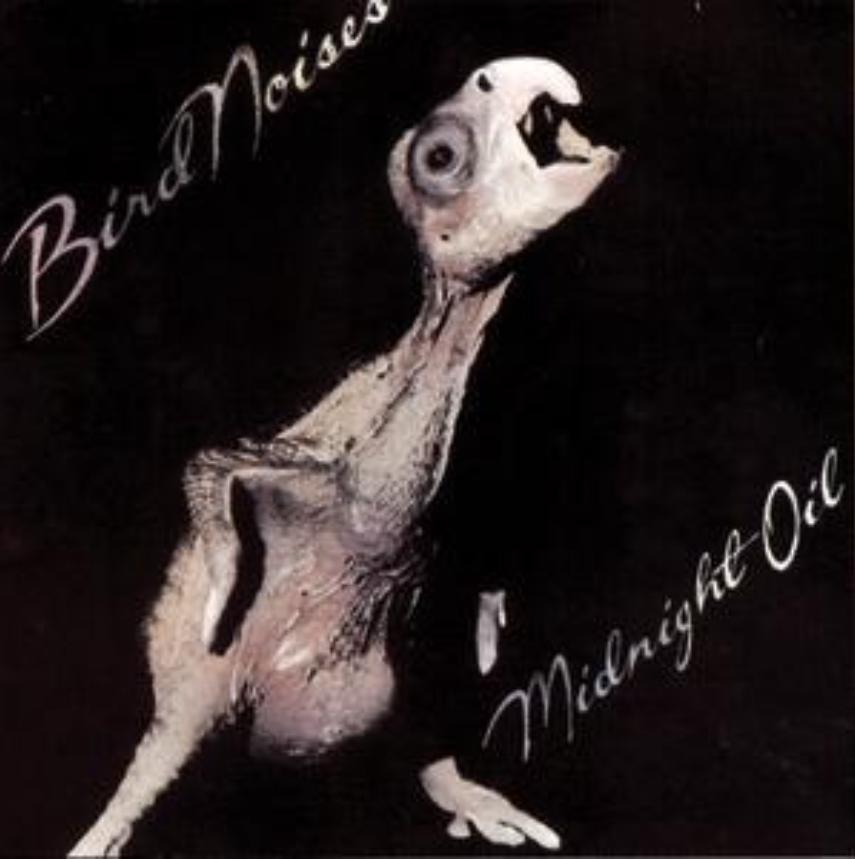
The band played on occasions at the Coogee Bay Hotel’s live band entertainment venue, Salina’s, accessed by foot off Arden Street through the beer garden during those years.
These are, allegedly, the lyrics to Wedding Cake Island by Midnight Oil:
The raising of children, the rearing of young
Used to be simple but look what it’s become
The choice of career, the proper vocation
Out of your hands, all for the needs of the nation
No inhibitions with the modern child
Wasted lessons or pleasure or pain
Easy to follow your natural instinct
Easy to follow, much too hard to learn
Useless expressions and sporting aggression
Don’t waste my time, I can’t wait for the end of the session
What opportunity, the modern child?
Waste passion and wasted mind
Some kids got no time for playtime
Some kids got no time for games
Some kids got no time for playtime
Some kids got no time for games
But no thanks to the looney Greens Party’s warped ideology obsessed with shark net removal above all rational considerations, Coogee Beach’s almost Century of safe sea swimming history is now in reputational tatters including the tourist visitation, save depraved tourism…
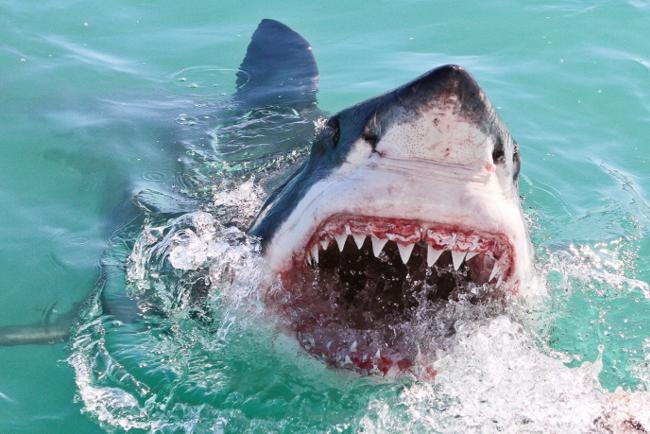
Coogee Adventure Tourism: “Great White Shark Swimming at Coogee! It’s epic dudes!”
The sea conditions at the time were reported as being relatively calm and the water clear.
Whilst the Coogee SLSC volunteer ‘summer’ beach patrol season for 2025-2026 had ended at the end of April (well after Easter), the professional LifeGuards at popular Coogee Beach patrol all year round 366 days a year.
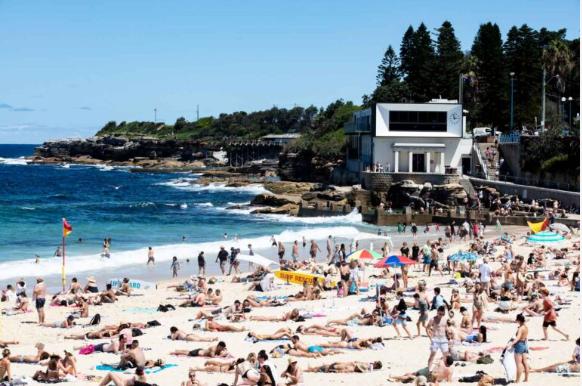
Annual Visitors: Over 6 million visitors frequent Randwick City beaches annually (mainly Coogee Beach), with around 4.7 million visiting during peak spring and summer periods.
They also use beach patrol flags to indicate the safest part of the beach sea area to swim between.
The woman was rightly swimming between the beach patrol flags when the shark attacked her!
Some unseen large shark suddenly bites her leg and as she desperately tried to fend it off, also deep into her left arm. The shark drags her as prey briefly under the water surface.
Witness, Oakley Lamb, said he saw splashing in the water, and blood. The shark attack took place in between the patrol flags right in the middle (as per the footage) which is right in front of the on-duty Coogee LifeGuards and just 30m offshore.
By chance, a paddleboarder close by, Charlie Verco, noticed the attack and raced to the woman’s rescue. He said “I couldn’t fight off the shark”. He described holding the barely conscious woman above water with one arm, trying to reassure her as he immediately started a backpaddling rescue with the other hand back to shore.
Finally then the Coogee Beach shark alarm gets activated by the LifeGuards on patrol.
Charlie Verco (24) was soon later briefly interviewed stating he is a LifeGuard and he was off duty at the time. Without question, he saved her life. That deserves the highest recognition.
Once at waist heigh water depth, a small group of awaiting bystanders (Coogee Beach LifeGuards and public beachgoers) met the victim byth the paddleboard and she was then jointly carried by LifeGuards and the beachgoers up to dry sand just above the waterline. The first aiders then immediately commenced critical first aid and as per protocol Triple 000 would have already been requested by the on-duty Coogee LifeGuards (for an Intensive Care Ambulance and the CareFlight Helicopter).
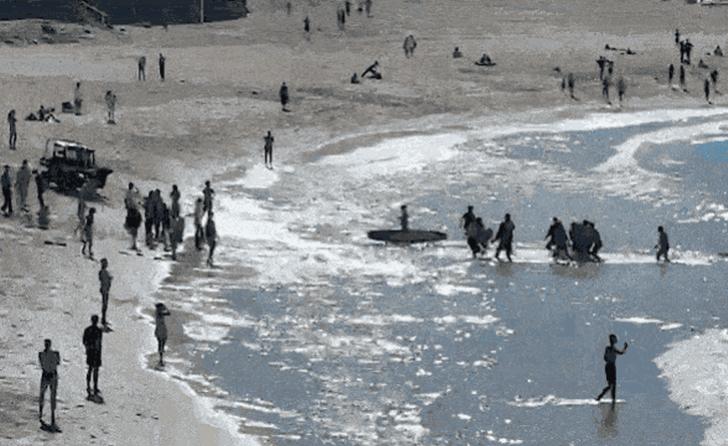
Rescuers carried the injured shark attack victim to shore. [Photo: Sitthixay Ditthavong]
Acknowledged, that this medical incident was an out-of-the-blue real and life-threatening emergency rescue, unexpected and so rare (if not unheard of in living memory) for Coogee Beach. The surf lifesaving rescue priorities were duly taken without hesitation to the credit of all involved, something like… fight off the shark if possible, reach the victim, secure a hold and keep head above water, to ensure breathing, reassure, get the victim back to shore ASAP, carry above the waterline and commence critical first as appropriate – ie: in this case stop the blood loss, etc, etc.
In the heat of the rescue moment, the above-mentioned lifesaving priority actions come first.
Charlie had put his life on the line to save the victim. This must not be understated. He’s a true lifesaving hero. The entire rescue crew did their job brilliantly – they saved the victim from dying! Coogee surf rescue should be proud! It was so rare and an historic rescue that deserves to go down in the annals of Australian Surf Life Saving excellence – training, risk taking, spontaneity in an individual’s response, and the close team effort dedicated to save the life of a victim.
But Surf Life Saving we learn from this tragedy, before the next shark attack, now the shark nets have been stupidly and negligently removed from under them. In hindsight, the bare sand proved to be problematic for infection to develop. There was no observed stretcher, nor a patient table (say under a collapsible marquee – like the volunteer surf lifesavers use ) nor a dedicated and equipped patient trailer on the back of the quad bike(s), nor even a tarpaulin to lay over the sand to protect such wounds from exposure to the sand and to bacteria contamination within.
On the beach she was quickly treated by on duty LifeGuards, and fortuitously also by an off-duty emergency physician who quickly stabilised her (NSW Ambulance Inspector Mike Corlis said) before called-in emergency paramedics soon arrived at the beach scene.
Police and paramedics administered critical advanced first aid onsite.
That Shark?
After that shark attack, drone footage was fortunately taken by Stephen Denneny, director of One Shot Creative, of the shark off Coogee Beach minutes afterward. Randwick Council (Coogee LifeGuards) jet skis patrolled the beach following the attack, with its staff estimating the shark to be at least three to four metres in size.
Marine biologist with Humane World for Animals Australia, Lawrence Chlebeck, said the shark in video footage of the water scene appears to be a Great White Shark.
Denneny said the shark remained in Coogee Bay for 30 to 45 minutes before making its way north towards Gordons Bay. Baitfish are attracted to faecal matter, and sharks are attracted to baitfish.
“Great white sharks are apex predators that inhabit coastal, shelf, and continental slope waters around Australia, spanning from central Queensland, around the southern coastline, and up to the North West Cape of Western Australia. They are legally protected in Australian waters to help stabilize and conserve their vulnerable populations.”
[CSIRO].
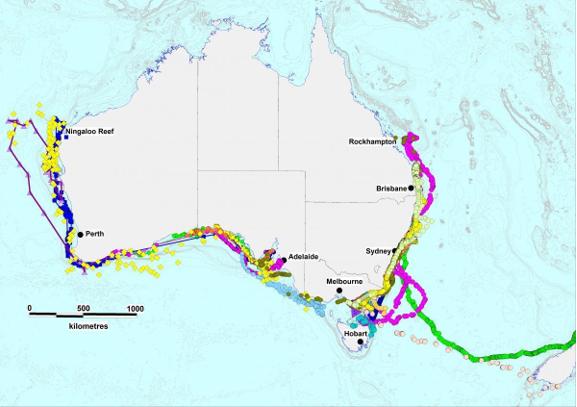
Great White Sharks – Australian Migration Map. In a nutshell, they follow the fish. [Marine Biodiversity Hub’s National Environmental Science Programme (2015-2021)].
Fishing Club 800 metres from Coogee swimming?
Requoting the media’s account on the day (above):
“Denneny said the shark remained in Coogee Bay for 30 to 45 minutes before making its way north towards Gordons Bay. Baitfish are attracted to faecal matter, and sharks are attracted to baitfish.
Now therein lies a potential contributory factor to that shark attack at Coogee Bay. The coastal bay immediately north of Coogee Bay, being Gordons Bay (formerly Thompsons Bay) is a designated aquatic reserve for maritime wildlife, yet still allows historical amateur fishing in open runabout outboard fitted boats.
Gordons Bay is tiny, and has rock platforms around it on both sides of the wee inlet and with noticeably steeper water access, than Coogee Bay and far narrower. It teems with fish.
Gordons Bay has long been home to a small local Gordons Bay Fishing Club for many decades. The club includes a series of parallel old timber boat ramps up the small beach suitable for open runabout boats. Plus the club has a small shed used mainly for cleaning freshly caught fish, and housing related kit.
The relevant question is what do the fishers do with the entrails (guts) of caught fish at Gordons Bay, and of any unwanted bait?
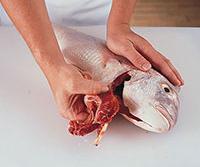
Where do the fish guts go, over the wharf side into the seawater? “Come on sharky sharky!“
If fishers discard fish guts back into Gordon’s Bay sea waters, then this will attract fish and sharks, which will be able to follow in now that the shark nets have been removed.
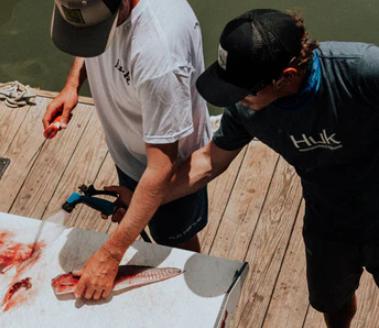
“Just chuck it overboard” – chumming the waters for sharks?
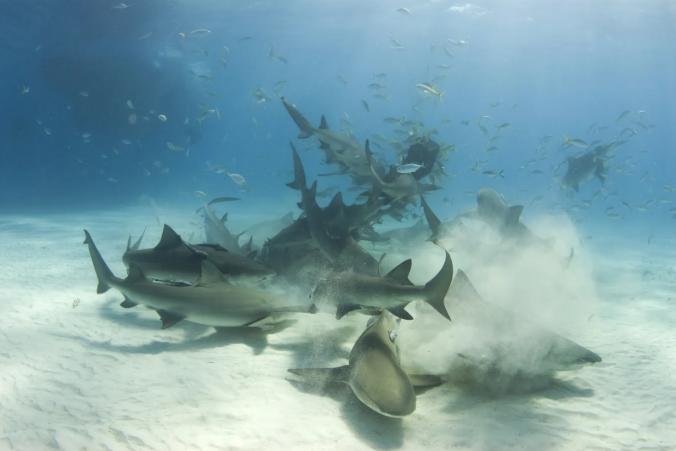
Unintended consequences or what?
The Great White Shark that attacked the female swimmer in Coogee Bay was last observed swimming towards Gordons Bay. Why?
Was it returning to where it had come from or to a new feeding ground from the south? It is not known – no GPS location device had been obviously fitted. No aerial monitoring was conducted prior so as to early detect this ~4m monster shark. The NSW Government’s recent shark net removal facilitated (invited if you like) a shark free-for-all feeding frenzy.
And Gordons Bay is typically rich in marine life:
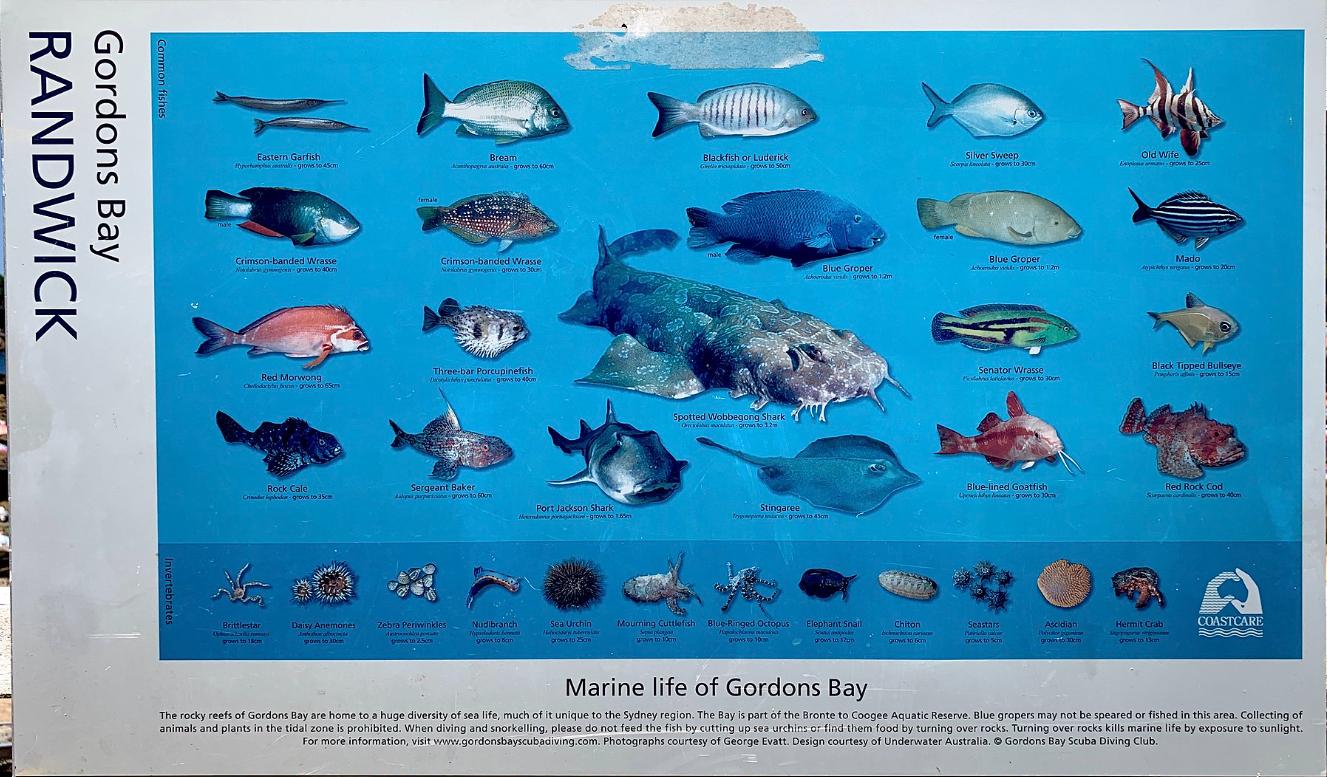
The ‘baitfish’ of Gordons Bay. Gordons Bay is part of the NSW Government’s ‘Bronte-Coogee Aquatic Reserve’. This is shark smorgasbord prey.
Gordons Bay is also situated adjacent to Coogee Bay, about 800m northward. The prevailing coastal ocean current here is from the SSE.
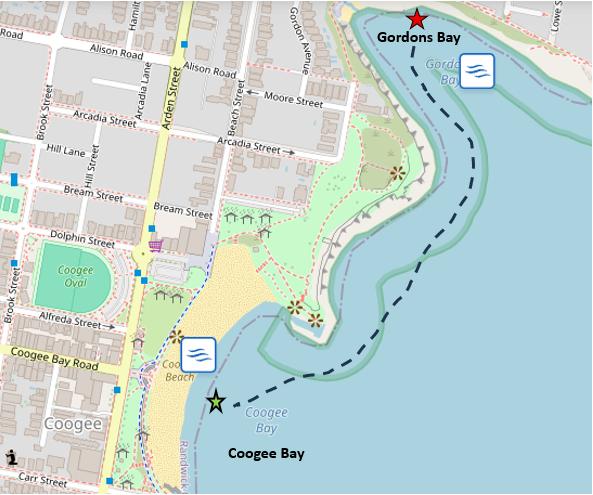
This map shows the juxtaposition of Gordons Bay (used mainly for fishing) despite its abundant marine wildlife, to Coogee Bay (used mainly for swimming and surfing). The superimposed dotted line would have been the approximate track of this Great White Shark after the attack. [Source: ^https://fishingpoints.app/forecasts/oceania/australia/new-south-wales/w/coogee-bay/]
As a familiar formal local, this is conjecture, yet no-one else is conjecturing, yet we have a serious shark attack just happen so who else is doing the homework and analysis, else running for culpability cover?
We posit whether coastal fishing is compatible with coastal swimming. This compatibility would seem far less so given that all the NSW shark nets have been removed. The human actions of coastal fishing, coastal swimming and shark net removal would seem to be a perverted way of attracting sharks to attack swimmers (and surfers).
Has removing the shark nets also made the fishing club an unfettered lure for sharks? Has removing the shark nets made the fishing club too dangerous for swimmers at Coogee Beach just south around the point, and similarly at Clovelly Beach just north around the other point?
Coogee Beach crowd typically on a summer’s weekend. Now that the shark nets have been removed, what’s the difference between a patrolled beach and an unpatrolled beach?
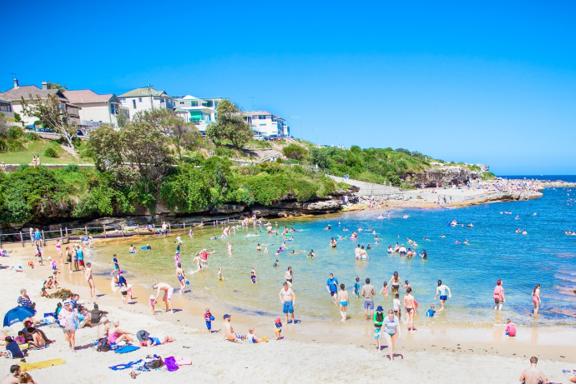
Clovelly Beach crowd typically on a summer’s weekend. Clovelly is a small narrow inlet rather than a bay. It is a patrolled by voluntary surf lifesavers in daylight hours during the warmer months (September to April) volunteer Surf Life Savers from the Clovelly Surf Life Saving Club adjacent. This author was a volunteer surf life saver there in the mid-1990s. It is also now patrolled all year round by professional Randwick City Council LifeGuards.
The Greens have thus created a new adventure sport – Shark Swimming downunder – Queenstown NZ. Eat your heart out!]
A Shark’s Sense of Smell?
Sharks can detect smells in the sea normally from up to 400 metres away, depending on the direction and strength of the ocean currents, the potency of the smell (particularly targeted fish blood) and also on the breed of shark.
Scent molecules (such as blood) must physically travel through the water (current) to reach the shark’s olfactory organs. [‘Olfactory’ is derived from the Latin word olfacere (“to smell”) meaning anything relating to or connected to the sense of smell.] In rare cases with strong, consistent currents and highly concentrated attractants, this range can stretch to a few kilometres.
Olfaction vs. Breathing: Sharks have nostrils (nares) located under their snouts, but unusually they are used exclusively for smelling, not for breathing. Water continually flows through these tubes as the shark swims.
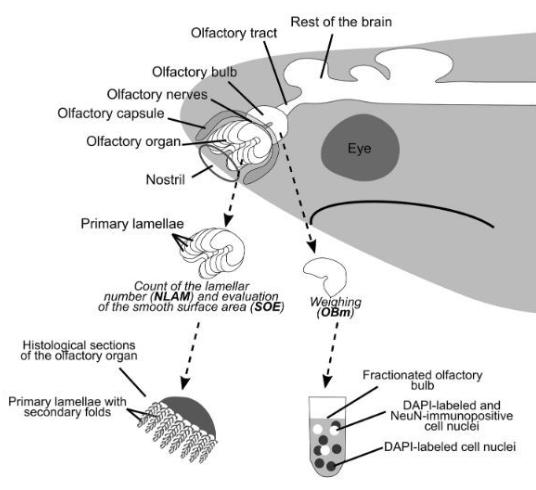
A shark’s unique olfactory organ
Certain shark species, notably Great White Sharks, Tiger Sharks, and Nurse Sharks through evolutionary survival have biologically developed advanced large olfactory organs, which equip them with the strongest olfactory abilities (more acute smelling sense) than other sharks.
Beyond Smell: Once a shark gets close to its prey, it uses other sensory organs on its face and snout called the ‘ampullae of Lorenzini‘. This acts as a sixth sense, allowing them to detect the faint electrical impulses naturally emitted by living animals.
Vibration Detection: They use their lateral line system—a row of pressure-sensitive pores running along their bodies—to feel vibrations and pressure changes from splashing (such as swimmers) prey up to 100 metres away.
The Great White Shark has one of the most powerful olfactory systems in the animal kingdom. It’s olfactory bulbs account for roughly 18% of its total brain mass, which is the highest proportion among all shark species. This evolutionary adaptation allows it to detect microscopic amounts of scents, such as fish oil or blood, diluted in millions of litres of water.
The Paramedic Transfer to Hospital Emergency Department:
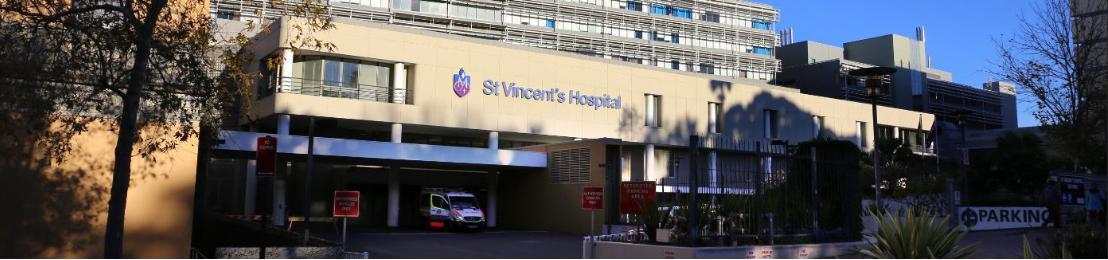
The life-threatened injured patient was then transported to the nearest major emergency hospital, St Vincents Sydney, to have immediate emergency theatre-surgery ASAP.
However the transport mode was convoluted and caused serious delays.
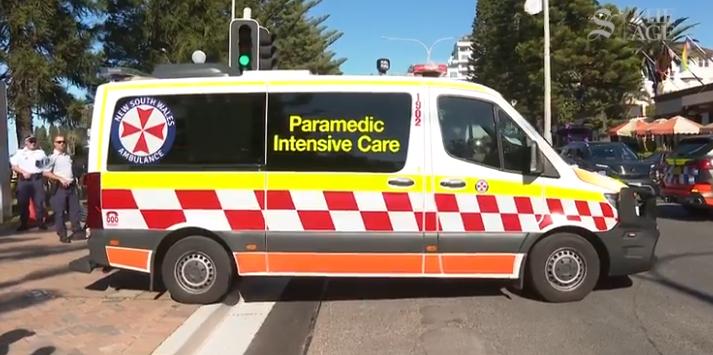
The ambulance departs Coogee Beach with Leah as a critical patient in the back with intensive care paramedics that day.
Yet we note that the current state of the ambulance transfer remains a governmental shambolic logistical convoluted mess and delay, that is, multi-modal (by road, then by air, then by road again) to the nearest best equipped emergency trauma hospital at St Vincents. How long did that all take and did the delay multi-modal delay contribute to Leah losing her left arm and to the onset of infection spreading through her body (septicemia)?
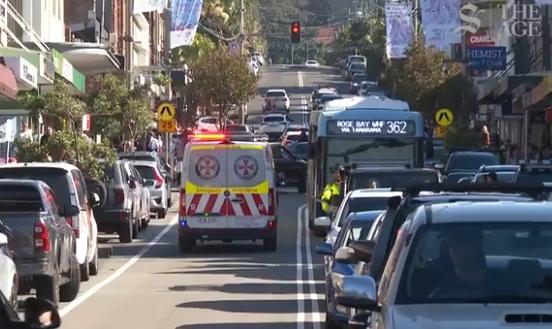
The paramedic intensive care ambulance departs the Coogee Beach scene, but not fast to hospital directly (being too congested with traffic and too far) but ever so slowly to nearby a rugby oval to a helicopter. But that was just the start of the EVAC logistics.
This took place via emergency ambulance from Coogee Beach esplanade to the nearby Coogee Oval, through busy holiday traffic, where a waiting CareFlight helicopter that had been summoned and had just landed.
Yet the ambulance chose the busy Coogee Bay Road route, and predictably got stuck in traffic congestion at this busy beachside suburb. Why not less congested Arden Street to Dolphin Street? Did the ambos friggen know the area, had they done any test scenario drives between any Eastern Sydney beaches to St Vincents, or perhaps just slackly relied on Apple Siri GPS navigation?
The critically injured patient was then transferred from the ambulance to the CareFlight helicopter to be airlifted towards the nearest major emergency hospital – ‘St Vincents Hospital Sydney‘.
Technically the air route from Coogee Oval would be just a short 3 nautical mile direct flight, that is, if St Vincents Hospital was equipped with a dedicated emergency heliport atop the Emergency Department roof (with interconnecting patient elevator infrastructure, etc). Yet it has never had one! Why bloody not?
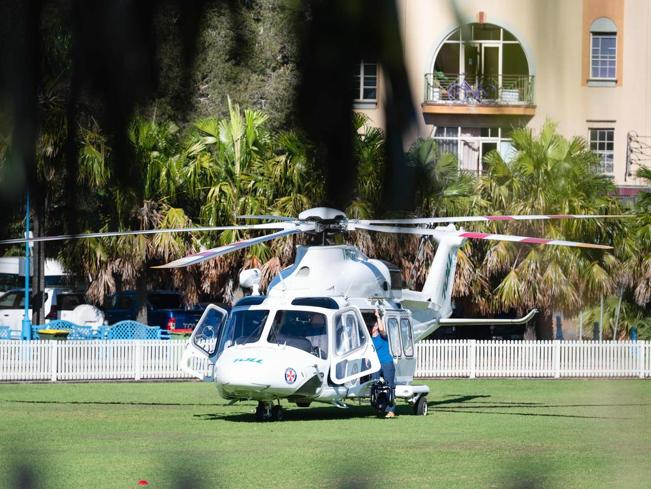
CareFlight’s rescue helicopter, an Italian purpose-built AgustaWestland AW139, awaits the patient on nearby Coogee (rugby union) Oval.
The woman was taken to hospital “semi-conscious and breathing,” Surf Life Saving NSW said in a statement.
Compounding transfer delay, St Vincents Hospital Sydney at 390 Victoria Street Darlinghurst is situated in a congested old downtown part of inner Sydney densely surrounded by residences. To date in 2026 this major emergency hospital still has no helipad. So standard procedure for incoming CareFlight helicopters with such emergency patients is to land at the closest nearby former Army Victoria Barracks parade lawn.
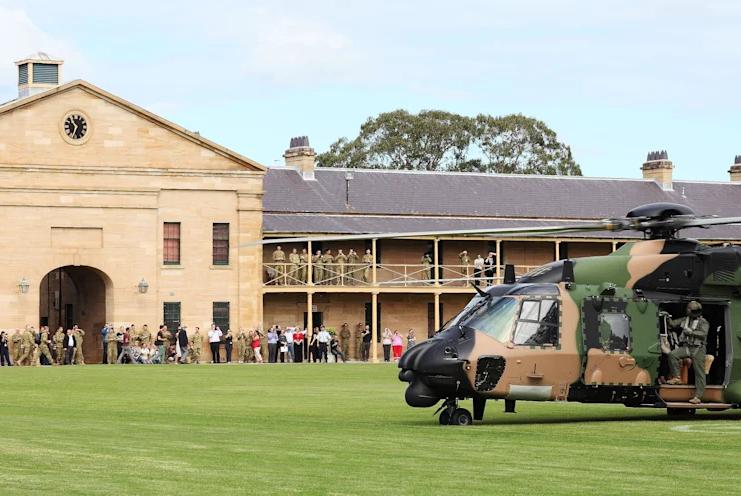
Victoria Barracks in Paddington: Yet this vital unique landing zone for life-threatening emergency helicopter incoming to St Vincent’s Hospital is currently proposed (as some retired asset) set to be sold off by the owners, Australian Defence Force, likely to become more sausage machine high-rise apartment blocks. So where then will the CareFlight helicopter incoming to St Vincents land then? Forward emergency logistics planning anyone?
[Author’s side note: The Australian Federal Government plans from 2026 to sell the 176-year-old Victoria Barracks in Paddington, Sydney, alongside 66 other of its historic Defence properties nationwide. Supposedly it’s to raise $1.8 billion for “military modernisation”. Yet, what of Australia’s military heritage? And surely, if Defence is so desperate for cash, and ‘modernising’, why then is it set to buy three second-hand Block IV Virginia-class nuclear-powered submarines from the United States at AUD$6.2 billion? Each of these Block IV’s was designed and built from 2014, making the technology by Australia’s proposed acquistion date of 2032 nearly 20 years old and that’s before the ADF’s Navy training begins. That price is just the beginning (the sub pricing), whilst the real ‘Total Programme Cost’ is forecast to be AUD $368 billion (2032-2055) and that’s pre-blowout. The $1.8 billion is just a 0.04% fraction of the $368 billion, so might be lucky to cover the costs of the ADF’s outsourced accountants. How many ADF staff are certified financial accountants, let alone CIMA-certified management accountants?]
Back to the EVAC…
The flight from Coogee Beach directly to St Vincents of 3 nautical miles would take just a few minutes, so providing lifesaving fastest speed patient emergency transfer flying over and avoiding city traffic congestion, straight to the hospital’s ED operating theatre.
Yet the NSW Government’s ignorant and antiquated standard emergency patient combo transfer is backward and substandard in 2026. The necessitation of using road ambulance from Coogee Beach (or any other Sydney eastern suburbs beach) to similarly rely upon awkward multi-transport mode logistics is archaic.
Another waiting ambulance from the Victoria Barracks vacant lawn to St Vincent’s Hospital compounds patient transport logistics and adds vital minutes to the patient’s survivability and recoverability risks.
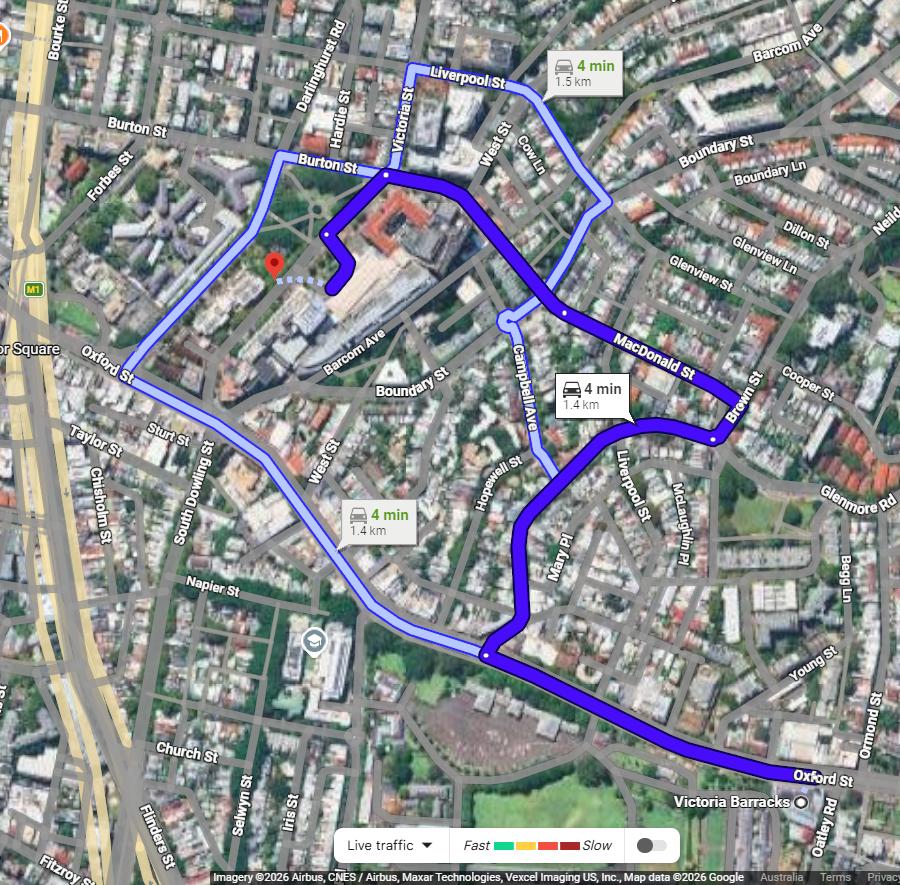
The road route and distance between Victoria Barracks to St Vincents hospital is a 1.4km ambulance drive along busy inner Sydney streets (dark blue line – with sirens screaming), plus add the delay of patient transfers between three modes of emergency transport.
So how long does it take emergency shark attack patients to go from Coogee Beach to the Operating Theatre? Too Long! What about from the other surf beaches of Sydney’s coastal eastern suburbs?
Sydney’s coastal eastern suburbs south to north, if you know the place:
- Little Bay Beach
- Maroubra Beach
- South Coogee Beach
- Coogee Beach
- Clovelly Beach
- Bronte Beach
- Tamarama Beach
- Bondi Beach
Been there. We well know all these.
What is a human life worth? And we’re in 2026, not 1922!
This poor woman is fighting for her life after being mauled by a shark at one of Australia’s busiest beaches and this EVAC ‘milk run’ all the NSW Government can offer? This is addition to the NSW Government removing the shark nets and inviting a spate of shark attacks, so the shark attack was a consequence of the NSW Government’s own making.
If Leah had access to a Kings Counsel team, she could sue the pants off them for knowingly gross culpable negligence and ruining her life.
Heliport needed for St Vincents Hospital Sydney NOW!
Hey Greens Party, read this and get on board, that is if you’re serious about saving human lives ahead of “endangered” Great White Sharks:
St Vincents Hospital Sydney is currently Sydney’s only major emergency hospital servicing central Sydney and in particular Sydney’s eastern suburbs region (see red dashed line outline on the aerial map below).
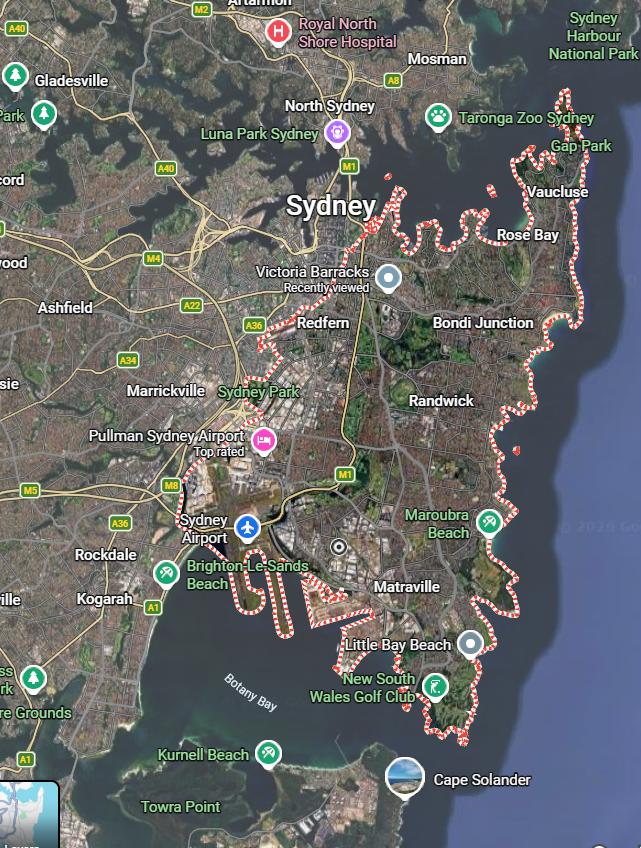
St Vincents Hospital Sydney is close to Victoria Barracks shown by the marker on this aerial map.
Yes, there are other hospitals near to Coogee Beach. For instance, closer to Coogee Beach is the Prince of Wales General Hospital in adjacent Randwick. Yet it does not have the capablity nor expertise nor the advanced medical resources to reliably treat major trauma emergencies such as shark attack victims presenting in a critical life-threatening condition.
Tell me I am wrong!
St Vincents daily does and can to shark attack casualties, and this is oroven and so thisis where poaramadics delivbere Leah.
Yet, St Vincent’s still has no heliport/helipad.
Westmead Hospital does have a suitable ED and helipad, but it is about 13nm direct flight from Coogee Oval. Actually that might have been better for Leah, except that (politics again) has Westmead way overloaded with queues in ED and it has been long under-resourced by the NSW Government. There’s no use dying on a stretcher waiting for lifesaving surgery in a hospital corridor at Westmead.
St Vincents Hospital did, to the medical team’s credit, ultimately and thankfully saved Leah’s life. No question.
Yet had St Vincents Hospital Sydney a roof-top emergency heliport like Westmead, Leah would have arrived at the ED operating theatre surely within a few minutes from Coogee Oval. Perhaps would her arm had a better chance with shorter EVAC time then been saved?
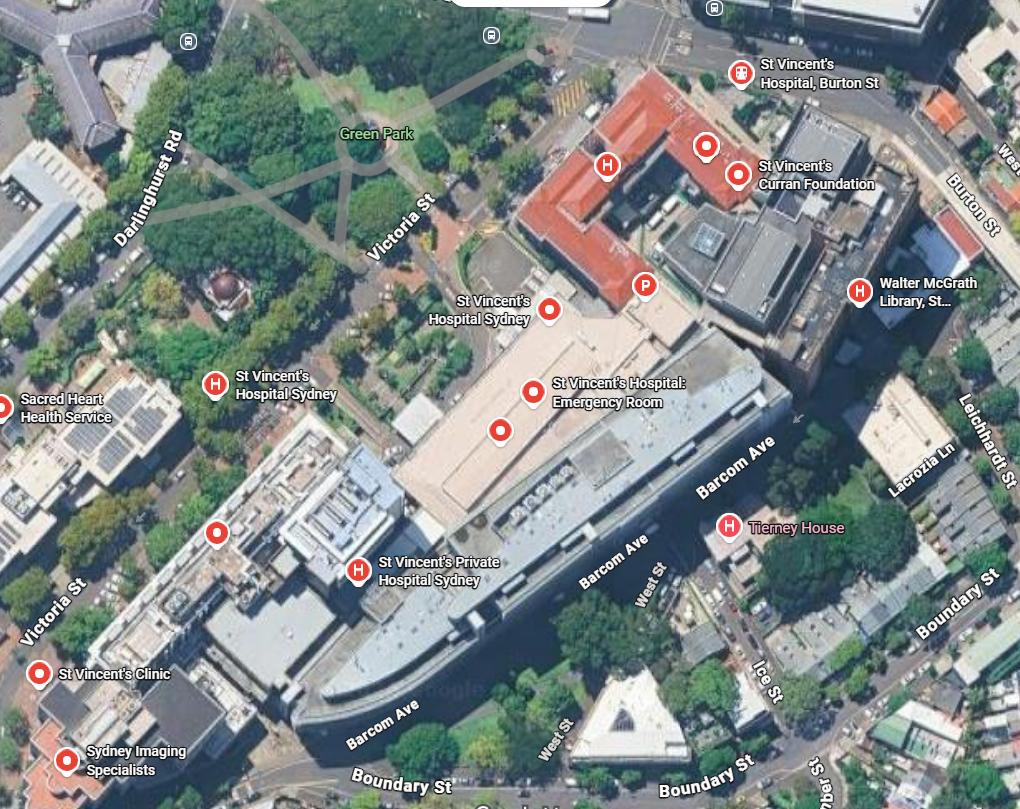
St Vincent’s Hospital Sydney complex has a large footprint in Paddington.
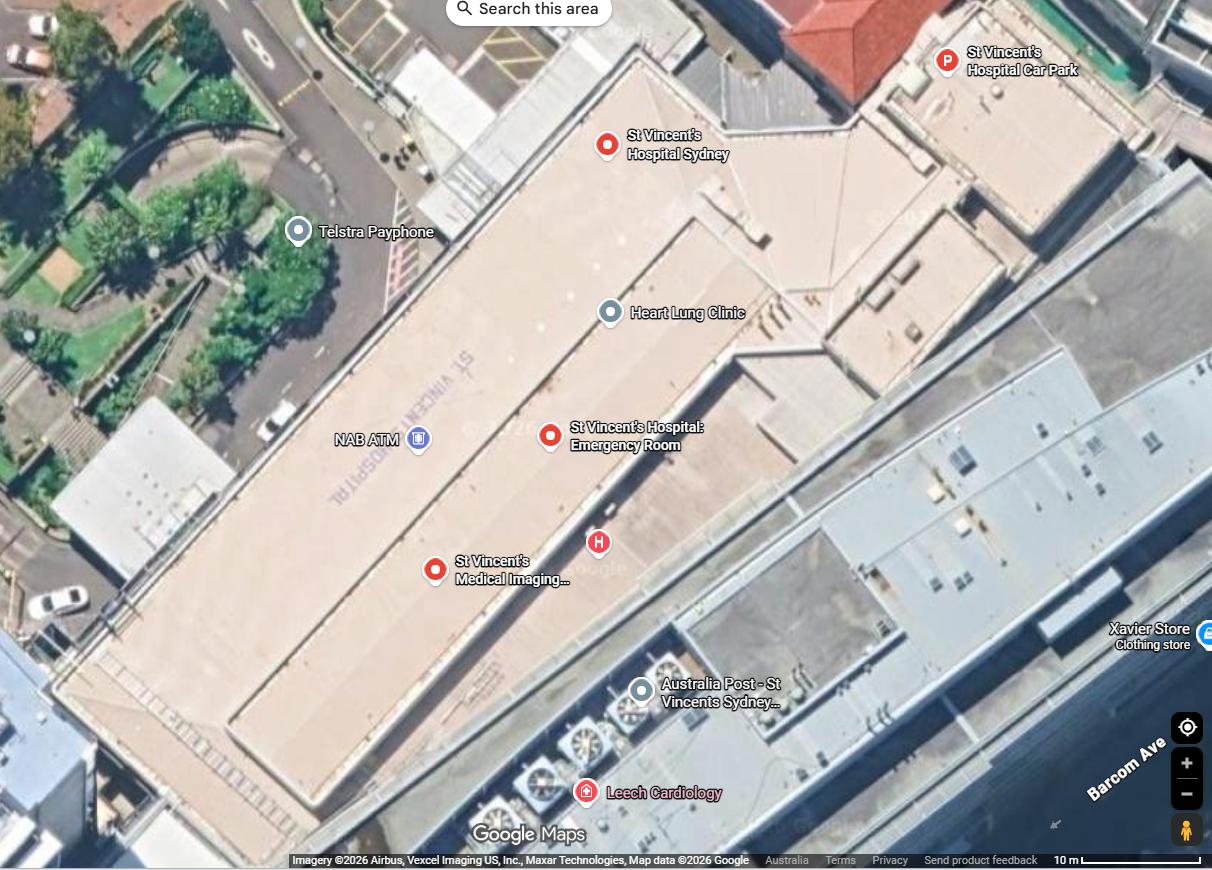
St Vincent’s Hospital Sydney’s Emergency Department’s roof area could readily have room for a n emergency heliport atop it, just like Westmead Hospital out west already does. Of course, demaneing full compliance with due standards of aviation design (per C.A.S.A.), council safety standards and civil engineering and compliances standards met. But the hurdle is of lack of political will yet again out of imbred Macquarie Street.
Here’s our recommendation:
St Vincents Hospital Sydney deserves urgent NSW taxpayer funding to get a roof-top heliport above its Emergency Room so as to be equipped to immediately respond to any medical emergency within its local human catchment of tramua emergecies – including to save the lives of now the likelihood of regular shark attack victims.
Suggested design:
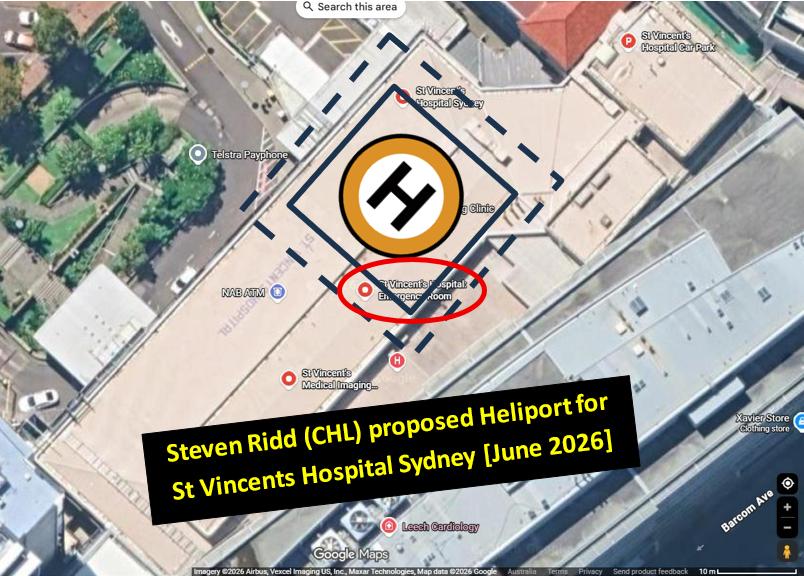
St Vincents Hospital Sydney in alliance with C.A.S.A., Sydney City Council and best pratice civil engineering ought to consider and construct this A.S.A.P.
[saembeddoc url=”https://naturetrail.com.au/wp-content/uploads/2026/06/Guidelines-for-heliports-design-and-operation-CASA-advisory-circular-139-r-01.pdf” download=”all” viewer=”browser”]
Else, what are the alternative options to protect people from shark attack?
Perhaps with the ideological removal of all the shark nets, given the predicable emergency consequences, St Vincents Hospital Sydney might need to be state funded for a new dedicated Shark Attack ED Ward, perhaps several ED out-branches specialised to surgically treat shark attack victims located coastal and closer, and timelier, a transfer from the frenzied action. Perhaps say strategically positioned and each with helipads and standby CareFlight Helicopter Airbus H145 each between Tweed Heads and Merimbula. What’s the cost of all that? What’s the cost of a human life?
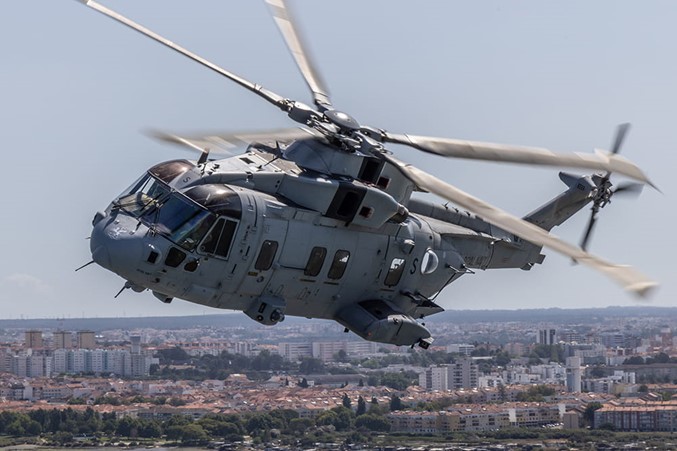
Best evac option: AgustaWestland AW139
Patient’s Hospital Treatment:
This trauma patient presented in a critical condition to the LifeGuards on the beach and then to the road ambulance Paramedics having just under an hour previously suffered the shark attack. What the medical emergency was comprised multiple severe and deep lacerations from the shark bites to the victim’s arms and legs, multiple bone fractures, significant blood loss and shock from the attack by this very large powerful shark. Obviously, the shark had treated the swimmer as prey.
NSW Ambulance Inspector Mike Corlis attending, stated:
“She has quite massive wounds to her left lower leg and her arms.”
The patient was transferred by emergency services from Coogee Beach to St Vincent’s Hospital ED with serious arm and leg injuries.
Footage of the attack location taken Stephen Denneny, director of One Shot Creative, shows a patch of dark water that was most likely blood. The victim would have lost much blood from severed arteries. Such arterial blood loss from multiple limbs is life-threatening.
Since being admitted to ED the patient has undergone multiple surgeries, including tragically (but obviously a lifesaving surgical decision) of the amputation of her left arm.
She was placed in a medically induced coma to protect the brain from swelling, to reduce the brain’s oxygen demand from conscious activity, prevent secondary injuries and to fully sedate the patient to enable immediate surgery and allow the surgeons to insert a breathing tube to control and monitor breathing.
Given the extensive open wounds contaminated with sand and debris, the risk of infection is extreme. Infection can deteriorate into septicaemia (blood poisoning) in the bloodstream infection caused by bacteria, viruses, or fungi. It occurs when germs multiply in the blood and spread throughout the body, which can trigger sepsis, a life-threatening inflammatory reaction that can cause organ failure, which is deadly. This author experienced an early onset of septicaemia at Nepean Public Hospital due to medical neglect, yet he was only there for a routine colonoscopy, but rushed into ICU when the proper doctors arrived next morning. Never go to Nepean Hospitals, unless you enjoy Russian Roulette with your life.
Subsequent media reports confirmed the identity of the victim as Leah Stewart (34), a local of Coogee, and clearly a regular swimmer at Coogee Beach. She’s a primary school deputy principal, mother and dedicated ocean swimmer, remained on life support in the intensive care unit at St Vincent’s hospital after being mauled by a suspected 3.5-metre great white shark.
“It’s such a tragic situation,” her older brother Joshua Stewart told the Guardian. “Leah is so full of life, she’s so energetic, she loves the ocean, she was a keen swimmer, she was swimming in the flags, really close to the shore when it happened on a crystal-clear Saturday morning. She’d done all the right things.”
Leah and Joshua’s mother, a registered nurse, was keeping a bedside vigil at St Vincent’s while the rest of the family was trying to maintain a semblance of normal life for Leah’s 18-month-old daughter, who wanted to know where her mummy was.
He confirmed Leah had undergone an arm amputation and remained in a critical condition, with the family bracing for further possible life-altering news regarding injuries to her legs.
While the medical team had largely managed to get on top of his sister’s extreme blood loss, the full extent of the long-term damage remained unknown.
“At the moment, we’re not a hundred per cent sure … we’re still waiting on further news from the hospital,” he said. “There are multiple, quite serious injuries.”
“Sadly, it will involve prosthetics as well,” Joshua said.
“This has been negatively life-changing for Leah. It is just such a tragic and horrific circumstance.”
The family expressed profound gratitude to the community and the first responders, including the 24-year-old lifesaver Charlie Verco, who paddled directly into the bloodied water to pull the unconscious teacher on to his board.
“We’ve got so much gratitude for all of those people that supported her, from that first rescue on the beach through to the helicopter team that took her over to the hospital, and the doctors, nurses and support staff.”
Deep Community Support for Leah
Leah’s bother Josh Stewart launched a GoFundMe campaign on Monday to prepare for Leah’s predicted specialised medical expenses over an extended period.
The links is: https://www.gofundme.com/f/support-leah-stewart-victim-of-shark-attack-in-coogee
Leah has tragically sustained “life-threatening” injuries including multiple bites across her arms and legs, lacerations and fractures throughout her body and extreme blood loss. She has subsequently lost her left arm.
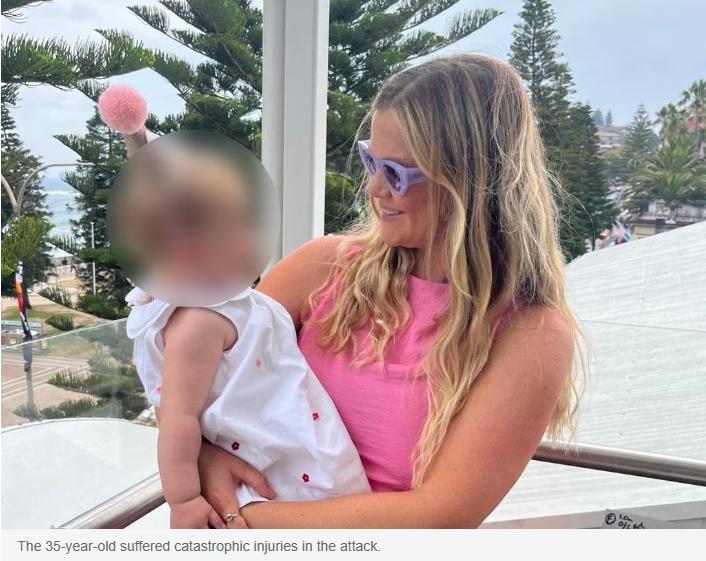
Our thoughts and prayers Leah. Always know that you helped save your own life.
Medical update 24th June 2026:
The first words from a Sydney mum who has woken from a coma after being attacked by a shark at Coogee were “I love you”, her brother has revealed.
Leah Stewart was attacked at the popular beach on June 13.
She suffered life-threatening injuries with bites to her arms and legs, multiple fractured bones and massive blood loss.
Her brother Joshua Stewart posted an update on Wednesday saying the beloved mum had been woken from a coma.
Joshua:
“After a week of life-support and repeat surgeries, doctors were able to extubate Leah and reduce her level of sedation to bring her out of the induced coma for a short period of time. This allowed Leah to share her first words, ‘I love you,’ with her mum and partner Fernando who have been by her side in ICU since the incident.
Her first thoughts were with her daughter August and wanted to check she was okay. This is a lot faster than anyone expected, and for us this feels like a miracle and is everything so many of us have hoped and prayed for over the past week.”
Leah’s family say doctors were able to wake her from a coma for a short time. She will remain in ICU for “some time”, her brother Joshua said.
Joshua:
“She has undergone five days of surgery over the past week, and is scheduled for further surgeries today and more through the coming weeks. Leah has a long road ahead and still remains in critical care, but this is such a positive first step and gives us hope for Leah’s long term recovery. Again thank you so much for everyone who continues to support Leah, through your care, prayer, love and generosity.”
The 34-year-old suffered catastrophic injuries in the attack.
Leah’s brother Joshua said it was a ‘long road ahead’ for his sister.
Joshua:
“Now, we believe that that science is available, but it’s not being commercially rolled out anywhere else in the world. And that that means that we have to invent it for Australian conditions. So give us time to do that. We think it can make a difference.”
Experts attribute the spate of attacks in January to heavy rainfall making sea water murky and attractive for sharks to hunt fish.
[Author’s Note: This author had swum laps up and down Coogee Beach at this same 30m distance out just beyond the breakers up and back hundreds of times in the past. So this tragedy hits home deeply. Who warned swimmers of Coogee that the shark nets had suddenly been removed after 89 safe protective years of there being no shark attacks? If it ain’t broke dont fix it. I felt safe freestyling the laps up and back from the Surf Club paralleling the gentle salt sea of Coogee northward to near Giles and back early mornings daily for five years (1997-2001). Sad this. And wrong. ]
Slow Ambos likely contributed to amputation
Media video footage (which will likely be deleted for arse covering), showed the Paramedic Intensive Care road ambulance slowly departing the Coogee Beach emergency scene on Saturday 13th June 2026.
Here t’is:
What is odd is that in that media video, this ambulance was observed not deploying its sirens and not taking any urgency to get this critical patient immediately to the ED hospital. Rather it just cruised up Coogee Bay Road like a tourist. May be the drivers were eating fish and chips enroute? Did they know the Coogee roads or have any protocol to know the best route to expeditiously meet up with the CareFlight helicopter at Coogee Oval?
The route the ambulance took up Coogee Bay Road was predicably congested with visitors on that sunny Saturday. Check the above image.
Yet the victim of the shark attack was in a critical desperate life-threatening condition – major blood loss, severed arteries and bones in arms and legs by a bloody Great White Shark!
The current state of play it seems to transfer a trauma patient from Coogee Beach to the best ED hospital ward remains logistically multi-modal cumbersome. Yet to compound the critically urgent transfer delay, the ambo dudes decide from Coogee Beach to casually cruise up congested Coogee Bay Road to Coogee Oval to meet the CareFlight Helicopter?
One’s not making this up as some conspiracy theory – check the image above!
One’s well familiar with Coogee itself, having lived, walked and swum there for 8 years.
Let’s start with the evidence from the media footage. The CareFlight helicopter landed here, and note the unique building in the photo behind.
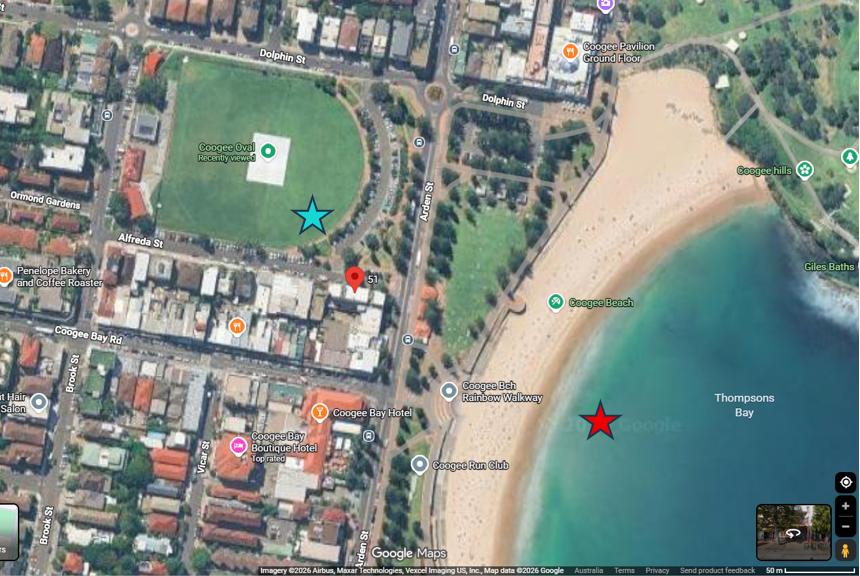
Subsequent research shows that the building behind the helicopter is 51 Alfred Street in Coogee, running south of Coogee Oval. See Google Maps street view image below.
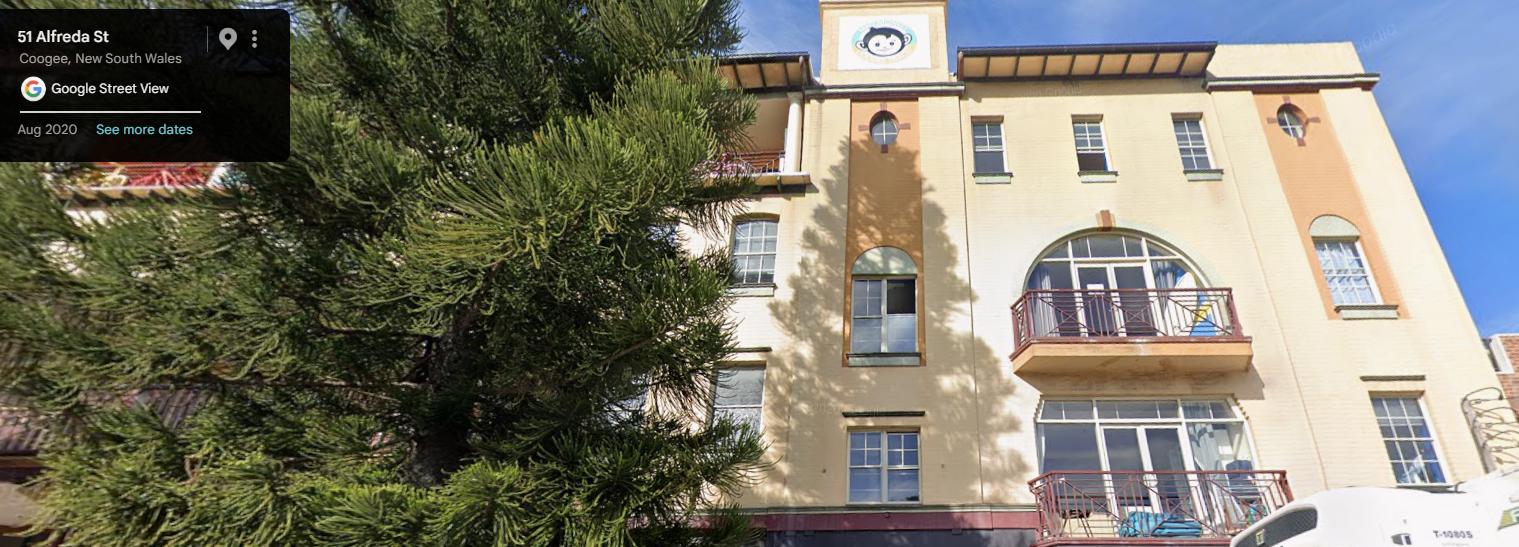
So then, here’s a logistical aerial view showing the geographical juxtaposition between the shark attack location in Coogee Bay and the helicopter landing site on nearby Coogee Oval. The red location icon is 51 Alfred Street.
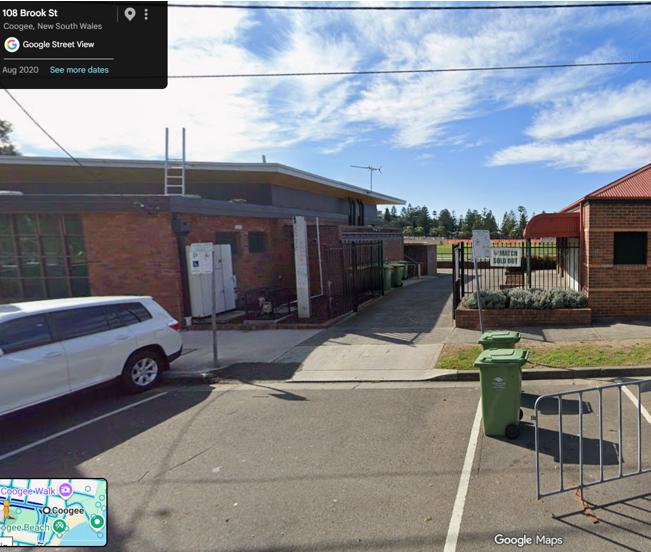
This is the access to Coogee Oval off Brook Street:
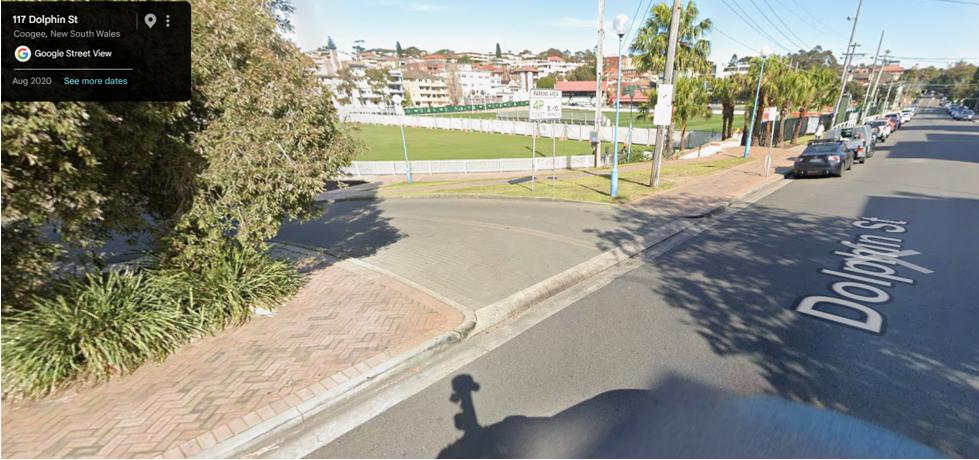
Local knowledge would have instead recommended accessing Coogee Oval via Arden and then Dolphin Streets – the other sides of the square road route.
This is the access via less congested Arden Street and then Dolphin Street. The problem is that no emergency access is provioded for ambulances to an awaiting emergency helicopter.
Too little Too late:
AFTER the shark attack…
Jet-Ski Patrols:
Jet-ski patrols were observed off Coogee Beach. The shark had been observed swimming towards Gordons Bay. Did the patrol check Gordons?
Drones:
Randwick Council AFTERWARDS ordered drones sent up for media footage as a “we are acting’ (not) token gesture.”
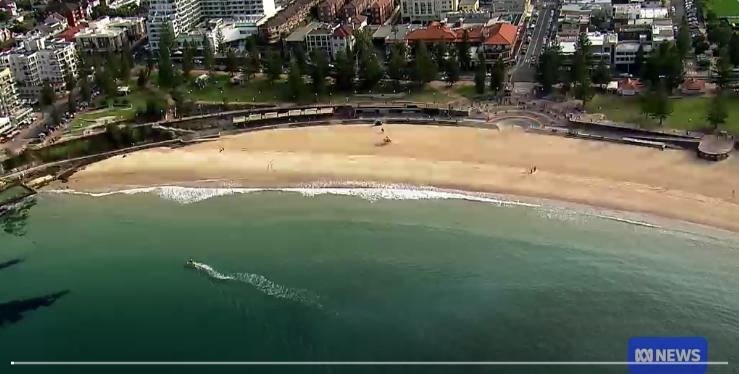
Randwick (Greens) Council Shark goneski – so all clear. Nothing to see here. Yeah but didn’t the video dude see it swim towards Gordons Bay?
Additional drone surveillance has been organised for Bondi and Bronte beaches for Saturday and Sunday, with further flights in the area to be assessed.
The state government authorised a temporary Civil Aviation Safety Authority exemption to allow continuous, low-orbiting AI drone surveillance directly over Coogee beach for the remainder of the week to monitor any further shark movement.
Big of them, after the fact!
Beach Closures: Randwick and Waverley councils closed all their beaches.
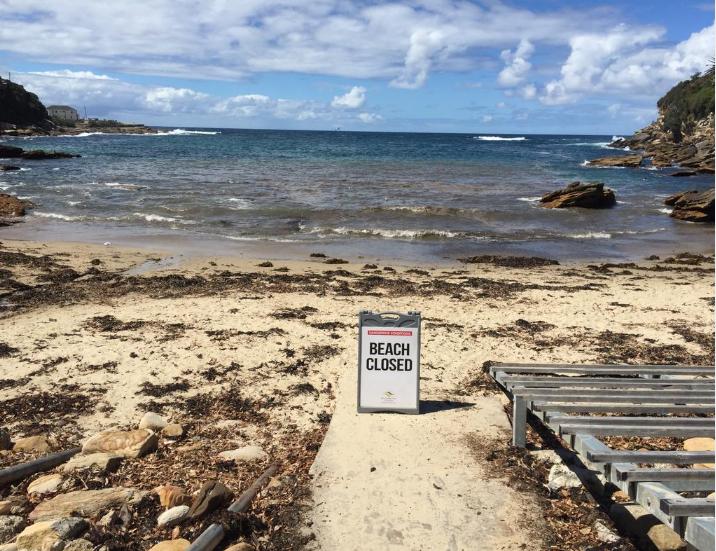
Nearby Gordons Beach (where that same shark was later seen heading toward) was later closed by Randwick Council as a publicity gesture.
Politicians on the scene:
Randwick Mayor Dylan Parker, who arrived at the beach just after the incident, said the woman had been “in pretty bad shape”. The understatement of the decade!
Randwick (Indian-expat) Mayor Parker:
“There are lots of very shaken-up people, but we are so thankful for the heroic efforts of that individual and council lifeguards in providing that immediate first aid and CPR.”
Well, Labor Party Mayor Parker get your facts correct!
- Actually, the poor bloody victim was more shaken up, hello!
- “Heroic efforts of that individual and council LifeGuards”. The so-called “individual” was an off-duty lifeguard, Charlie Verco (24). So as Randwick Mayor, being responsible ultimately for Randwick’s Council employed LifeGuards, and indeed claiming in his Bio to be a volunteer surf lifesaver himself at Maroubra Beach, yet has Dylan Parker ever met any of the LifeGuards. He obviously was not aware that the prime rescuer was on Randwick Council’s lifeguard crew at Coogee.
Best seek a replacement media advisor or 35 like Labor Premier Chris Minns, because he has no clue. Perhaps this Labor Party’s Randwick Mayor Dylan Parker was despatched out of the country on non-Randwick political business at the time? He’s got a degree in politics and is a Labor hack.
Dylan’s BIO claims on the loves Randwick and is passionate about making it a better place. As Mayor, Dylan is proud to lead a community with strong environmental values and goals.
- Supporting our community sporting clubs. (what about surf lifesaving resources?)
- Ensuring that only suitable and sustainable development is approved.
- Preserving our green space and canopy cover as well as improving our world-class parks, sporting facilities and walking tracks.
- Enriching Randwick City’s arts, culture and nightlife.
- Delivering affordable housing so that our next generation can afford to live in our community
A qualified surf lifesaver requires minimum lifesaving skills sets and a swimming fitness regime to reliably perform surf rescue in order to be able to have a chance to be awarded the Surf Bronze Medallion.
So then, how can a lifesaver with established sagging chest pectoral muscles poses the strength to even meet the training prerequisites such as to be able to complete a 400m pool swim in 9 minutes of less.
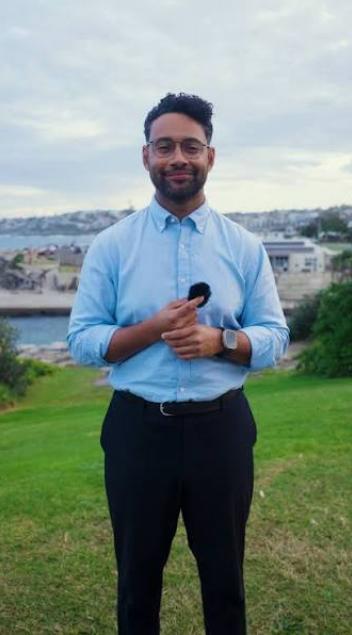
Could this Dylan Parker pass a Surf Bronze Medallion test including a 400m swim out through surf to qualify as an active volunteer surf lifesaver on patrol by Surf Life Saving Australia? Check the pectorals for a start. Is that why they gave him the IRB gig?
In order to be a fit swimmer in pounding surf and at the time able to swim out and rescue a fledgling swimmer in distress, the upper body muscular strength from regular targeted exercise and supplemented by body building is to primarily develop advanced capability in three muscle groups demanded by surf swimming:
(1) Shoulders (deltoids)
(2) Upper rear of arms (triceps)
(3) Chest muscles (pectorals)
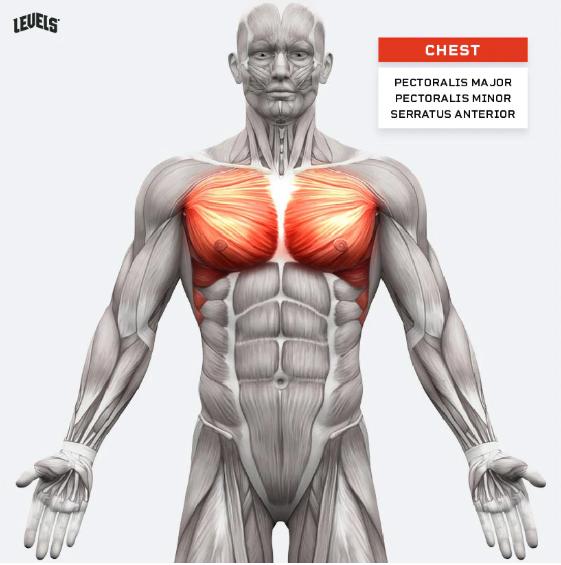
Developed strong pectoral chest muscles needed to swim solo out into pounding surf to rescue a sea victim. Dylan Parker?
[Author’s Note: One didn’t do the Bronze test in some sheltered pool workshop; it was out in full medium surf at Bondi Beach.]
Dylan Parker is a hypocrite rocking up at the shark attack scene at Coogee anyway, stating the woman had been “in pretty bad shape”. A Labor Party member, he was elected Mayor of Randwick on 12th October 2024 by making a deal with The Greens Party. He’s a Greens proxy, which mean that he backs The Greens campaign of shark net removal.
On that Tuesday evening, Labor’s Dylan Parker was elected Mayor with the help of the Greens, with the third year of the council term again to be handed over to the Greens – likely to be Philipa Veitch.
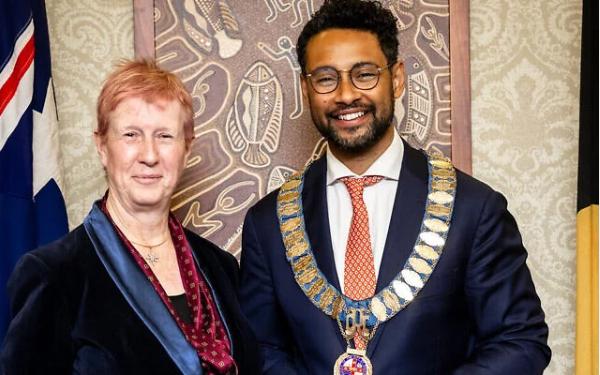
Labor’s Dylan Parker (right) has been elected Mayor of Randwick Council after another Labor/Greens alliance. Greens Philipa Veitch (left).
On Tuesday 26th February 2025, Randwick Council, under Mayor Dylan Parker, voted NO to the continued use of shark nets, meaning none of the eight coastal Sydney councils with shark nets have supported their continued use.
The former prime minister Tony Abbott (a volunteer surf lifesaver himself of Sydney) has contributed a video to social media demanding a cull of the predators. “It’s so wrong that we don’t cull sharks after attacks,” Abbott said. “It’s so wrong we don’t put people before sharks.”
The NSW agriculture minister, Tara Moriarty, initially refused to rule out a cull on Sunday but the premier, Chris Minns, shut down the proposal on Monday afternoon, on the grounds that great whites were a protected species. “We’re not going to be contemplating a cull. I’m not convinced it would work,” he said.
Tell that to the Coogee Bay shark attack victim!
Spate of recent shark attacks:
The Coogee incident follows a recent spate of fatal attacks along the coastline of NSW and Australia in early 2026 (summer).
Experts attributed the January attacks to heavy rains. Chris Pepin-Neff, a shark bite policy researcher at the University of Sydney, said then that the public should be warned when it is unsafe to swim at beaches after 20 millimetres of rain because of increased faecal matter and pollution from estuaries.
North Steyne Beach (Manly) was among a number of Sydney beaches closed after shark sightings and incidents in January 2026.
Surf Life Saving NSW chief executive Steve Pearce said it was the fourth serious shark attack since September 2025. Pearce said that while the volunteer Surf Life Saving patrol season ended in April, additional drone surveillance has been organised for Bondi-Bronte on Saturday and Sunday, with further flights in the area to be assessed. Drones were flying in 14 locations for the rest of the month, he said.
His death followed the killing of 38‑year‑old Perth father Steven Mattaboni off Rottnest Island on 16 May, and 39‑year‑old Queensland spearfisher Michael Jensz at Kennedy Shoal south of Cairns on 24th May. Both Western Australian attacks are believed to have involved great whites, while evidence points to Jensz having been taken by a bull shark.
In January 2026, NSW made international headlines after recording four shark attacks in 48 hours.
There were four suspected bull shark attacks in three days across NSW beaches. Two resulted in people being hospitalised in critical condition, while the other two escaped without serious injuries.
The first of those maulings also occurred in Sydney’s east, near Shark Beach. A 12-year-old boy, Nico Antic, died after being bitten by a bull shark at Nielsen Park in Vaucluse inside Sydney Harbour. Nico was rushed to hospital in a critical condition after being rescued by mates, police said at the time. He later died from his injuries.
Nearby there is an island rightly named Shark Island in Rose Bay.
There were also three other suspected bull shark attacks on NSW beaches, resulting in two hospitalisations and a narrow escape for an 11-year-old boy whose surfboard was bitten.
The most recent fatal attack in Australian waters happened on 6th June, when 35‑year‑old diver Daniel Turpin was bitten by a suspected 4.5‑metre shark while spearfishing with his family off Michaelmas Island near Albany.
On Monday 29th January 2024 just before 8pm (still daylight), a 29-year-old woman named Lauren O’Neill was severely bitten on the right leg by a bull shark while swimming off a private wharf near Billyard Avenue in Elizabeth Bay, well inside Sydney Harbour. Swift life-saving first aid from quick-thinking neighbours—including a nearby veterinarian who applied a tourniquet—likely saved her life.
Michael Porter, who is her neighbour, said he heard a “soft yell for help” outside his window.
Porter:
“I looked outside and saw Lauren propped on the ladder, external to the harbour pool, trying to climb in, and behind her was her leg, which was limp and completely open, and a pool of dark red blood behind her. Straight away, I grabbed my phone, starting sprinting outside and called triple-0. So we ran out — my wife’s a vet — and she basically bandaged it up. The bone’s broken and it’s pretty hectic actually. We got some bandages, we kept her warm, and my wife basically bandaged her up, stopped the bleeding because if she got bitten out there [further from shore] she wouldn’t have survived.”
Mr Porter said the vet “absolutely saved her life, in my opinion there is no question about it”.
Emergency services, including paramedics and a rescue helicopter, responded to triple-0 calls from neighbours and she was treated at the scene for a serious injury to her right leg. “She has been taken to St Vincent’s Hospital in a stable condition,” police said in a statement.
Shark attack survivor and former navy diver Paul de Gelder said he hoped the woman was OK.
“My best wishes go out to the young lady that was bitten yesterday. In the days to come of healing, if I can be of any help or support then I welcome her to reach out.”
Mr de Gelder sustained horrific injuries to one of his arms and legs when he was attacked by a bull shark during a counter-terrorism exercise in Sydney Harbour in 2009.
No shark nets, no swimming safety! The Greens play politics with human lives.
Green have blood on their hands. Vote Greens? No bloody way!
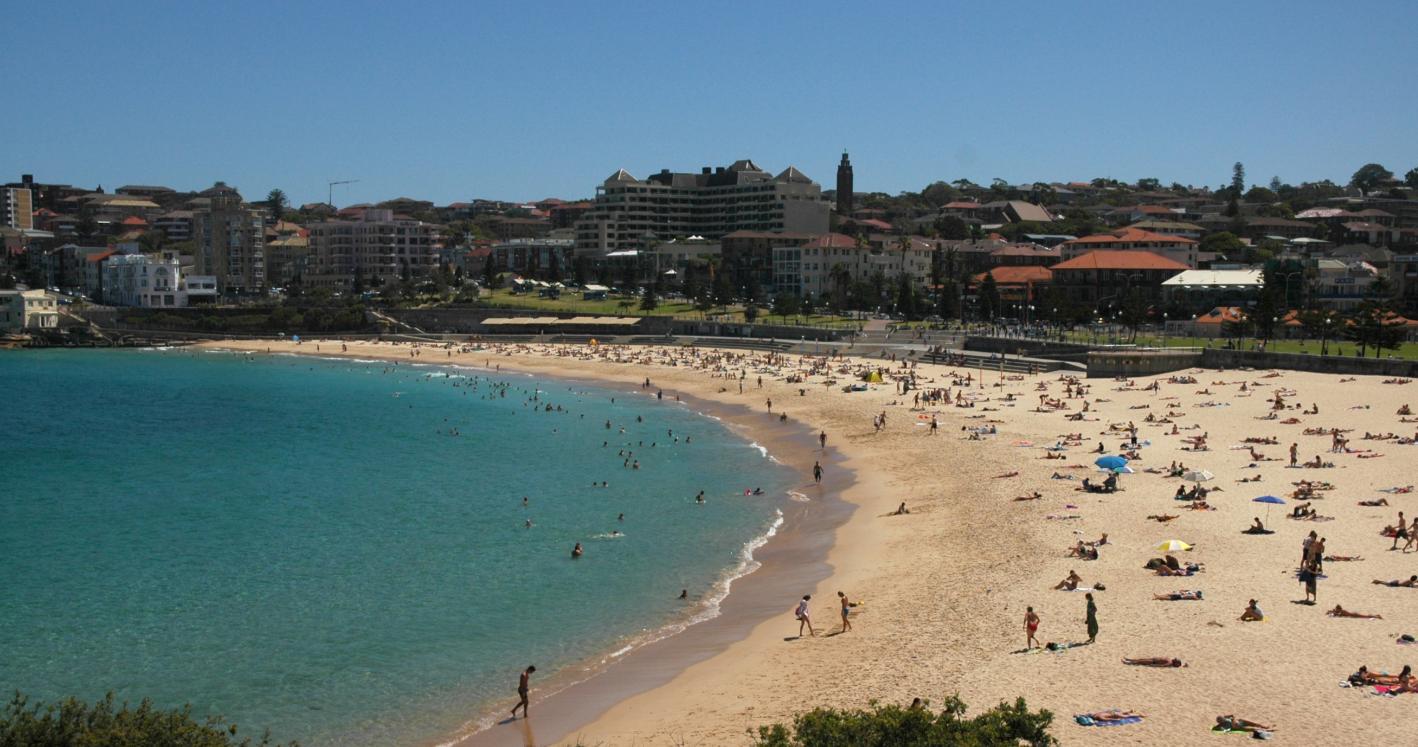
Sydney’s Coogee Beach late morning with typical beachgoing crowd numbers.
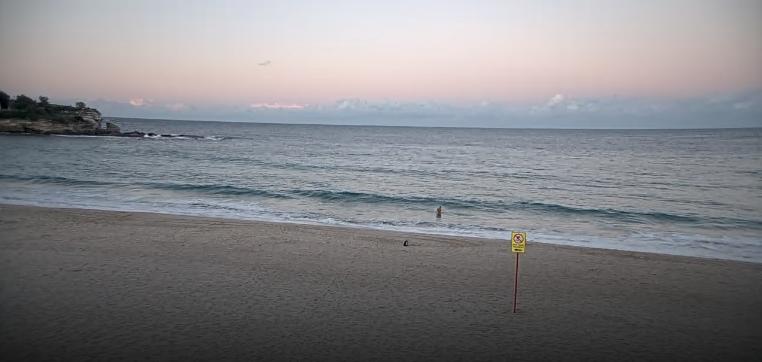
Coogee Beach going forward…
Our Local Experience and Knowledge:
This author, Steven Ridd, was a Coogee local between 1993 and 2000, so 8 years, and well familiar with both Coogee the suburb and particularly with its beach with its comparatively shallow surf bay itself.
Knowing the shark nets were out there beyond the breakers, throughout those eight years, one swam Coogee Beach around 6:30am up and down from the club house and back every day before work, plus at weekends. This fitness regime included a 2km walk from home each way and then after a 1-hour gym session at the old rusty version of Coogee SLSC, before it got the fancy revamp after the 2016 storms. One was rather fit.
Steven had previously gained my Surf Bronze Medallion at Bondi back in 1987. I voluntarily patrolled beaches at Bondi, Fairhaven (Vic), and Clovelly over a ten-year period. He then joined Coogee SLSC in 1998 and that’s when he started his daily early morning exercise regime including a sea swim paralleling the beach at about 30m offshore from the Coogee Surf Club up towards Giles Baths then back. The swimming distance is about 1km overall.
It was never a problem nor fear because the shark net was out there protecting Coogee Bay.
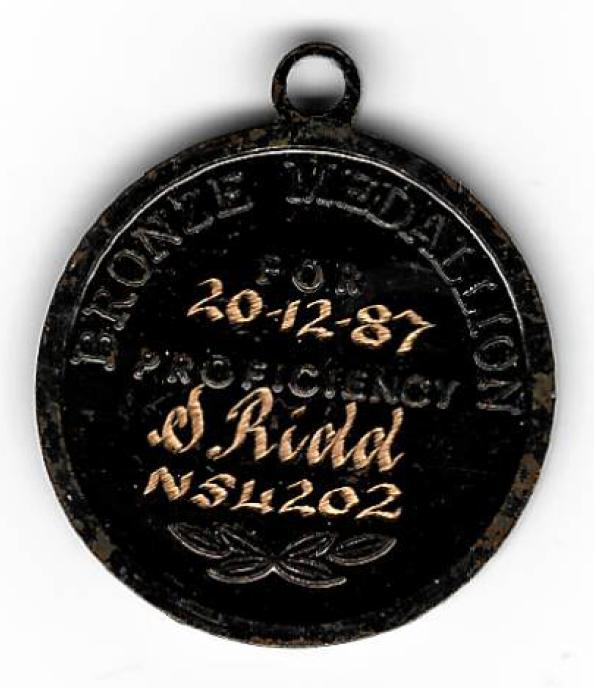
This author’s Surf Bronze Medallion proficiency attained with Bondi Surf Bathers Life Saving Club back in December 1987, ahead of ten years surf patrol voluntary service.
Drones are nice to complement the shark spotting
Active surveillance does not replace the passive security of shark nets – jet skis, helicopters, drones with cameras, patrollers watching the sea from the patrol beach.
Yet whilst the ignorant Greens Party frothed at the bit over their concerns about shark nets, the NSW Government under Premier Chris Minns was well aware that Australia’s Civil Aviation Safety Authority (CASA) had banned the use of drone cameras at Coogee Beach.
So the Minns NSW Labor Government removed the shark nets while aware that there were no drones allowed to serveil Coogee Beach for possible sharks that traditionally frequent that coastline to prey for food. So this left uninformed swimmers off Coogee Beach at the mercy of shark attacks. The Minns Government is culpable of gross negligence.
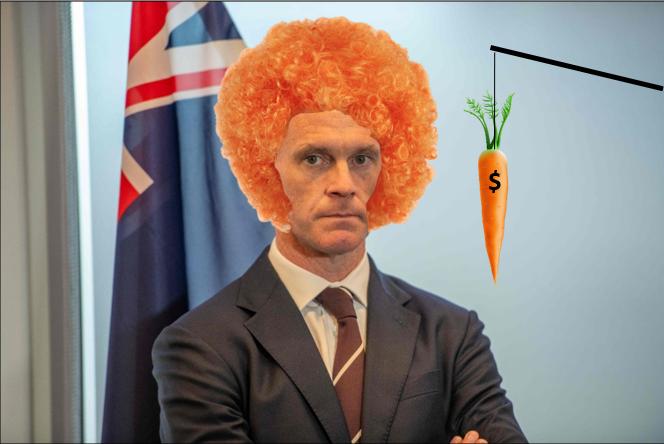
NSW Premier Chris Minns is culpably negligent
Yet, fact check, the drone legal altitude limit is just 400 feet AGL, whilst the airliners landing at Sydney Airport have a minimum altitude of 5000 feet AGL over Coogee Beach, so the unlicensed bureaucrats claim there could be a collision? Seriously?
What about the Surf helicopters at 400+ feet AGL? CASA are arse-covering idiots. CASA’s CEO Pip Spence commenced as the CEO and as Director of Aviation Safety has no clue.
She banned the use of drones at Coogee Beach. But she’s an economist and a politician, never a pilot. Before joining CASA, Pip’s claim to fame was Deputy Secretary for the Arts at the whopping Department of Infrastructure, Transport, Regional Development, Communications, Sport and the Arts, etc. She has blood on her hands too!
Legal minimum vertical separation between all aircraft is 1000-2000 feet, not 4600 feet. So go figure. And by the way, helicopters mustering cattle up in northern Australia’s outback come a hell of a lot closer than 1000 feet vertical to fellow heli-musterers. Like it’s whites of the eyes stuff.
This author holds a licenced Commercial Helicopter Pilot (with Low Level Endorsement) and a private fixed-wing pilot licence.
Leah’s shark attack reignited calls to cull shark populations to protect swimmers, but NSW Premier Chris Minns has said the great white shark population cannot be targeted as it is protected.
Shark nets, which are temporarily removed during the winter whale migration season, will be reinstalled at the start of September.
And surprise surprise, Minns has suddenly found $34 million in his consioidated revenue to funds drones. But not shark nets, so as ato howtow to The Greens. There must be an election looming. [SOURCE: ‘NSW beaches to get dawn-to-dusk drone patrols in $34m anti-shark program’…Premier Chris Minns says he wants to restore confidence to beachgoers after series of shark sightings and attacks, Sun 28 June 2026 ^
https://www.theguardian.com/australia-news/2026/jun/28/nsw-beaches-to-get-dawn-to-dusk-drone-patrols-in-34m-anti-shark-program.]
Tell that to Leah, you shits!
The Excellent Safety Record of Shark Nets
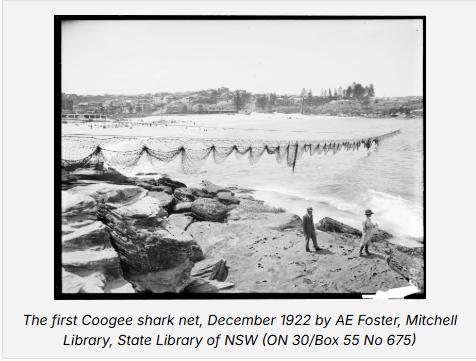
Shark net meshing was first installed off Sydney beaches. In fact, it was way back in 1922 that NSW’s first “shark-proof fence” net was installed by Randwick Council as an experiment at Coogee Beach following a fatal shark attack at the beach, but it was destroyed by severe weather before its official opening. The suburb made headlines around the country with its ‘shark-proof fence’ and the promise of ‘safety-first surfing’.
Yet Randwick’s current mayor, an anti-shark net activist, obviously is not one to respect Randwick’s heritage such as shark nets historically protecting the safety of ocean swimmers from shark attack at Coogee and Maroubra. Dosey Parker just rocked up after the shark attack, to which he holds culpability, for a selfish media sound bite. Perhaps he ought to have then same day gone for a dip up and down the length of Gordons Bay.
In November 1929, Coogee Beach successfully opened a formalised, enclosed shark net area to the public, which stood until the infrastructure was again destroyed by heavy seas in 1934.
By October 1937, it was the NSW Government that officially deployed the first widespread offshore mesh nets at 18 popular Sydney’s coastal beaches spanning from Palm Beach south to Cronulla. Since then there have been zero fatalities from shark attack off any Sydney beach. The only fatal shark attack at a netted beach in New South Wales (NSW) during this entire 89-year period occurred in Newcastle, not Sydney, in 1951.
So, if it ain’t broke don’t fix it.
May be the problem ain’t the shark nets per se, but the type of shark nets used. History recalls that the initial first two attempts at Coogee itself in 1922 and 1929 failed due to ocean storms, but then the 1937 shark nets funded by the NSW Government worked for 89 years.
We’re now in 2026. Cannot a better shark net be designed instead of a black and white hissy fit simplistic keep or remove option? Why not a trial of different shark net types rather than a blanket simplistic one-size-fits-all statewide removal. Pollies are so dumb.
So which are “Sydney Beaches”?
Now, by “Sydney” we don’t just mean Sydney’s eastern suburbs surf beaches along the Pacific Ocean like Coogee Beach (and technically from Bondi Beach south to Little Bay Beach). Nor do we mean the Northern Beaches of Sydney (technically from Shelly Beach north to North Palm Beach). Nor do we mean Sydney Harbour beaches inside the heads of Port Jackson and westward on both the southern and north shores.
Instead, by “Sydney” we extend mean what the NSW Government terms as ‘Greater Sydney’. Now that’s the following huge chunk of NSW from Macquarie Street north out to Newcastle and beyond, south out to Nowra and Goulburn, and west out to Bathurst and Mudgee. See map below. The green parts haven’t become red..yet.
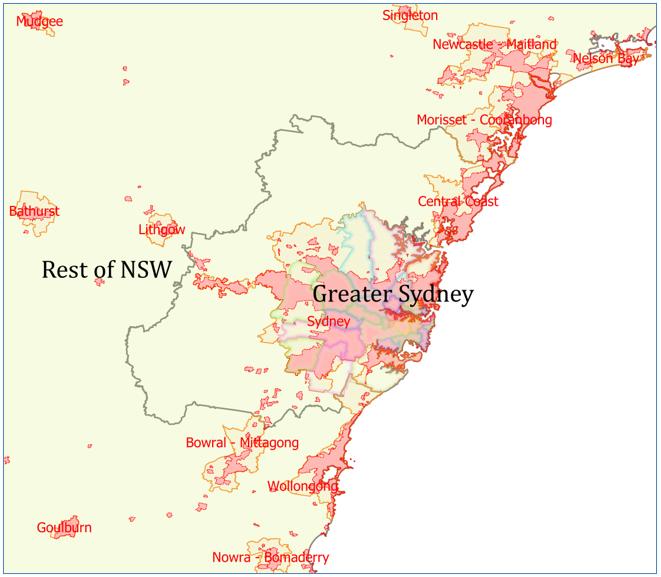
Simplified Map of the NSW Government’s Greater Sydney
Since 1st January 2015, the NSW Government got really too big for its boots and had its urban department for drinking water (and sewerage) take over the State of New South Wales to become WaterNSW. See proposed map of Greaterer Sydney below.
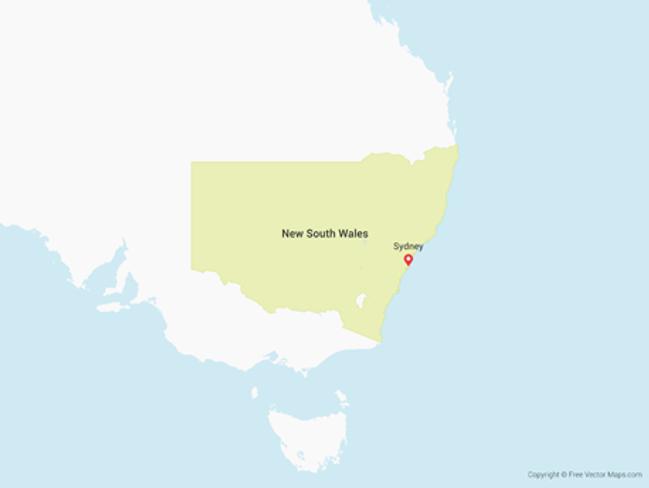
The NSW Government’s even Greaterer Sydney – so lookout Broken Hill, Byron Bay and Eden!
By 2021 (under NSW Premier Gladys Berejiklian) the WaterNSW bureaucrats to boot got a new flash skyscraper dedicated all to themselves at Parramatta {city}.
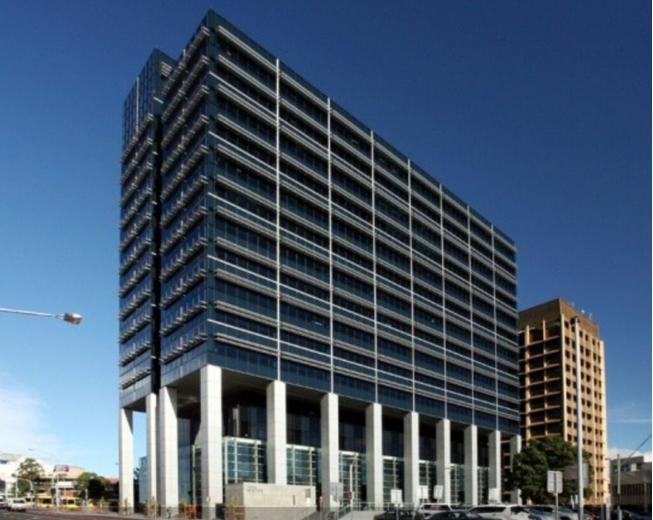
WaterNSW Skyscraper now at Darcy Street, Paramatta {city}.
Not bad for what used to be the mild-mannered Sydney metropolitan ‘Board of Water Supply and Sewerage’ until 1995 (under Premier Bob Carr) when it got its name politically changed to ‘Sydney Water’. That’s mass immigration for you.
NSW Minns Labour Government Culpably Negligent
There are calls for stronger shark mitigation strategies across NSW.
(The Coogee Bay) shark attack incident (of 13 January 2026) has underscored the need for stronger protections for beachgoers across the state, Central Coast local councillor Jared Wright said.
Wright:
“Coogee Beach does not have an active SLSNSW drone patrol or shark listening station. I have always been of the view that these protection measures need to be rolled out at as many beaches as possible, as quickly as possible.”
Sharks are closer than we think. Here are the tell-tale signs they’re nearby
drones were being used at 14 locations statewide on Saturday, but not at Coogee, SLNSW said.
In April, Surf Life Saving NSW announced shark bite trauma kits would be installed at every surf club across the state following a wave of attacks.
How about shark nets? They’ve worked perfectly along the NSW coastline patrolled beaches for 89 years since 1937.
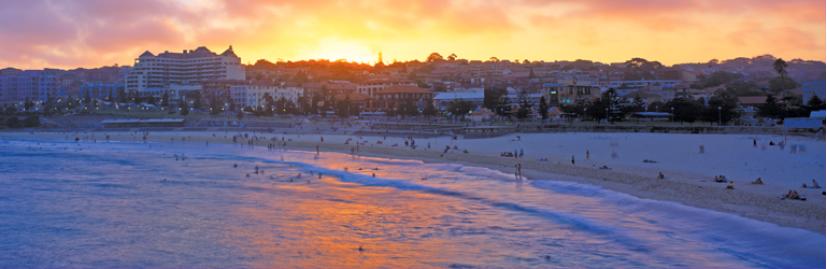
Coogee Beach is no longer safe
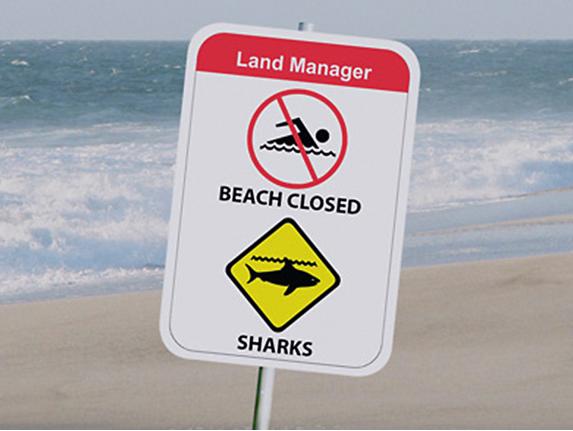
Shark Mitigation abandonment by NSW Minns Labor Government
NSW Sharksmart Programme?
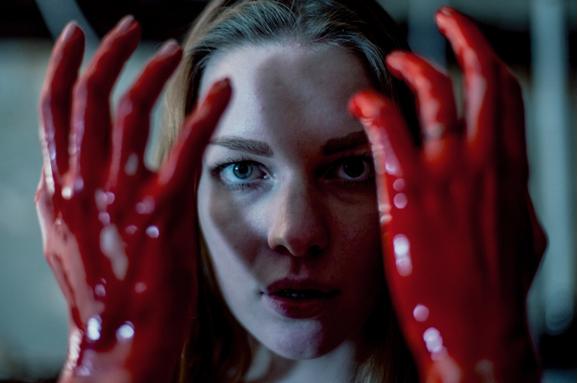
Blood on their hands
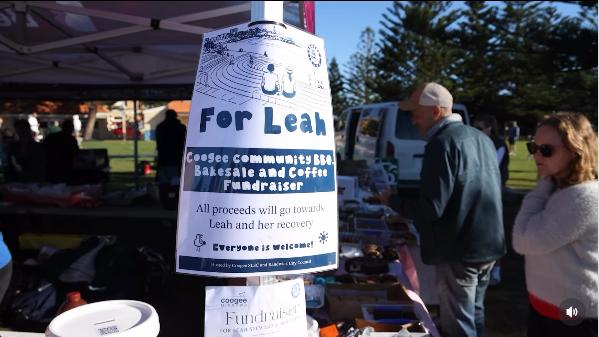
The Greens Party should be stumping up the fundraising. The Greens shoudl have their revenue amputated.
Postscript:
References and Further Reading:
[1] ‘Woman fighting for her life after shark attack at popular Sydney beach‘, 2026-06-13, by AAP, ^https://www.sbs.com.au/news/article/woman-attacked-by-shark-at-coogee-beach/75lijsbsh
[2] ‘‘It just turned into havoc’: Woman in critical condition after shark attack at Coogee Beach‘, June 13, 2026 by Julie Power, Jessica McSweeney, Kate Aubusson and Rachel Rasker, ^https://www.smh.com.au/national/nsw/woman-bitten-by-shark-at-coogee-beach-20260613-p606hu.html
[3] ‘Shark nets across NSW removed a month earlier than usual‘, Sunrise (TV magazine programme), 2026-04-01, 7News,
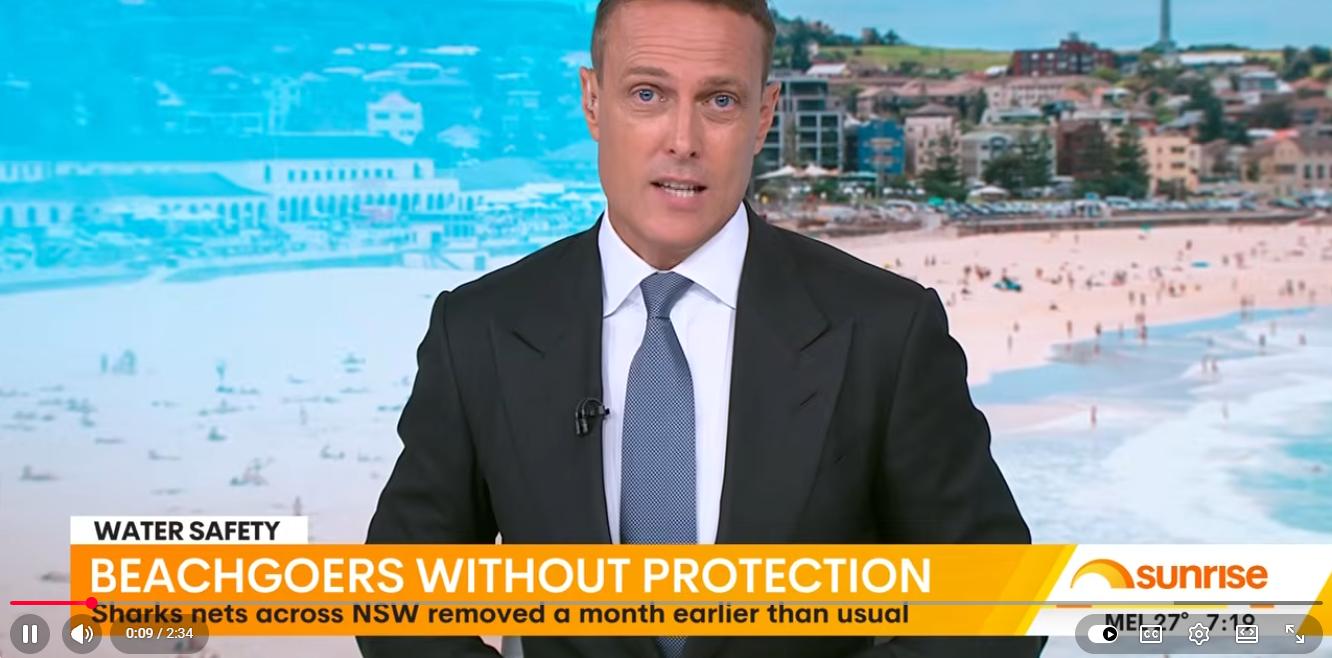
[4] ‘Shark Management‘, Randwick City Council, (not doing too well these days – ask Leah Stewart), ^https://www.randwick.nsw.gov.au/facilities-and-recreation/beaches-and-coast/shark-management
[5] ‘Life-changing’ injuries: family reels from ‘tragic situation’ as Coogee shark attack victim loses arm‘, by Kelly Burke, Mon 15 Jun 2026, ^https://www.theguardian.com/australia-news/2026/jun/15/coogee-shark-attack-woman-survivor-leah-stewart-sydney-arm-amputated
[6] (Greens Propaganda): ‘Nets Out Now‘, 2025-06-12, The Greens website, ^https://greens.org.au/news/media-release/nets-out-now-0
[7] ‘Sydney mother mauled by shark at Coogee Beach has undergone ‘multiple surgeries”, family says’, By Miriah Davis, ABC media, Mon 15 Jun 2026, ^https://www.abc.net.au/news/2026-06-15/nsw-shark-victim-family-leah-stewart-coogee-beach/106800208
[8] Gordons Bay, ^https://www.randwick.nsw.gov.au/facilities-and-recreation/beaches-and-coast/beaches/gordons-bay
[9] ‘Woman suffers serious leg injury in bull shark attack in Sydney Harbour‘, by Paulina Vidal and Jesse Hyland, ABC media, Mon 29 Jan 2024, ^https://www.abc.net.au/news/2024-01-29/sydney-elizabeth-bay-suspected-shark-bit-woman-hospital/103402808
[10] ‘A long road ahead’: Family of Coogee shark attack victim share health update St Vincent’s Hospital shared a statement on behalf of the young mother’s family, after hundreds took part in a swim to support her’, 22 Jun 2026, by Sarah Keszler and Hayley Taylor, 7News, ^https://7news.com.au/news/a-long-road-ahead-family-of-coogee-shark-attack-victim-share-health-update-c-22465451
[11] ‘Shark Nets‘, ^https://www.sharksmart.nsw.gov.au/shark-nets
[12] ‘Coogee Bay weather and sea conditions‘, ^https://www.windfinder.com/forecast/coogee
[13] ‘Key Results of the NSW Shark Management Strategy‘, 2015, a $16 million report by the Department of Primary Industries (DPI), within the NSW Government (but acted upon?), ^https://www.sharksmart.nsw.gov.au/technology-trials-and-research
[14] Randwick Mayor Dylan Parker, by Randwick [city} Council (website), ^ https://www.randwick.nsw.gov.au/about-us/council-and-councillors/mayor-and-councillors/cr-dylan-parker#:~:text=Enriching%20Randwick%20City’s%20arts%2C%20culture,to%20live%20in%20our%20community
[15] (Randwick Mayor Dylan Parker a Green proxy), ‘Liberals disappointed by new Labor/Greens alliance‘, 2024-10-09, Australian Jewish News, ^https://www.australianjewishnews.com/liberals-disappointed-by-new-labor-greens-alliance/
[16] About Dylan Parker, ^https://streamly.video/expert/dylan-parker
[17] Human muscle groups, ^https://levelsprotein.com/blogs/guides/the-ultimate-muscle-groups-guide?srsltid=AfmBOorVgaDDXWuc5_9fBqg2gBnqH5GPoI-X-uWr-MCgZhMs8Z1c23k_
[18] ‘The Ultimate Muscle Groups Guide & How To Best Train Them‘, by Levelsprotein (website), Intro: ^https://levelsprotein.com/, Details: ^https://levelsprotein.com/blogs/guides/the-ultimate-muscle-groups-guide?srsltid=AfmBOorVgaDDXWuc5_9fBqg2gBnqH5GPoI-X-uWr-MCgZhMs8Z1c23k_
[19] ‘LifeGuard Report – Coogee‘, Monday 22nd June 2026, by Coogee LifeGuards, Randwick {city} Council, ^https://www.randwick.nsw.gov.au/facilities-and-recreation/beaches-and-coast/lifeguard-reports
[20] ‘Surf Life Saving Australia‘, ^https://sls.com.au/about-us/
[21] ‘Bronze Medallion Intensive Course‘, by Surf Life Saving Northern Beaches Inc., ^https://www.surflifesaving.net.au/school-programs/community-education/bronze-medallion/
[22] ‘Chumming‘ – (American English) “is the blue water fishing practice of throwing meat-based groundbait called “chum” into the water in order to lure various marine animals (usually large game fish/sharks) to a designated fishing ground, so the target animals are more easily caught by hooking or spearing. Chums typically consist of fresh chunks of fish meat with bone and blood, the scent of which attracts predatory fish, particularly sharks, billfishes, tunas and groupers. In the past, the chum contents have also been made from “offal”, the otherwise rejected or unwanted parts of slaughtered animals such as internal organs”, ^https://en.wikipedia.org/wiki/Chumming
[23] ‘Why Are Shark Attacks Increasing in Australia? Shocking 2020 Stories‘ , by Wild Waters – Animal Documentaries, YouTube, ^https://www.youtube.com/watch?v=nqt_d6wFARc
[24] ‘Shark Snout Study‘, (Study Explores Shark Nose Shape, Size and Link to Sensitivity of Smell), 2022-11-29, by Gisele Galoustian, Florida Atlantic University, ^https://www.fau.edu/newsdesk/articles/shark-snout-study.php
[25] ‘Great White Shark’s olfactory bulbs (smell sensor organ), ^https://www.whitesharkprojects.co.za/news/smell-ya-later/
[26] ‘Shark Country‘, by Shark World, ^https://www.youtube.com/watch?v=N5GmWS_Ww14
[27] ‘How I survived a shark attack in the Whitsundays‘, 2020, victim Justine Barwick, on documentary video by ‘Australian Story’ programme, ABC TV, ^https://www.youtube.com/watch?v=YvDmrGFRhSc
[28] ‘Sydney mum Leah Stewart woken from coma after Coogee shark attack‘, 2026-06-24, by Blair Jackson, News Corp, ^https://www.news.com.au/travel/travel-updates/incidents/sydney-mum-leah-stewart-woken-from-coma-after-coogee-shark-attack/news-story/8ae4cd232aeae898318332a6472403da
[29] ‘Guidelines-for-heliports-design-and-operation‘, December 2024, by Civila Aviation Safety Authority (CASA), Australian Government, official Advisory Circular (AC) Ref: ‘AC 139.R-01, v3.1, File Ref: D24/504641, “The purpose of this AC is to provide guidance in the planning, design, and operation of heliports to support the safe and efficient operation of helicopters”, ^https://share.google/MOqARaT0zGvfF4mse
Copy of document is embedded as a PDF below, available freely for download.
 Loading...

 Reload document
  Open in new tab
 [30] ‘Heliports‘, by Tim Tucker, Commercial Helicopter Pilot USA, (his website), “I’ve been an FAA Designated Pilot Examiner (DPE) in helicopters since 1984 and have conducted over 8000 private pilot through ATP practical tests. I am authorized to conduct tests in, not only Robinson’s three models but also 12 other make & models. My 21,000+ flight hours are split about 60-40 civilian vs military.” We reckon he knows a thing or two about helicopters. ^https://www.timtuckershelicopterworld.com/, ^https://www.timtuckershelicopterworld.com/post/heliports
[31] ‘Shark victim no longer critical but needs more surgery‘, 2026-06-25, by Aaron Bunch, The Senior (website), Australian Community Media, ^https://www.thesenior.com.au/story/9299484/shark-victim-no-longer-critical-but-needs-more-surgery/
[32] ‘Shark attack hero shares the story of terrifying Coogee rescue‘, Jun 25, 2026, by Mark Bouris, Straight Talk with Mark Bouris | Podcast | YouTube, ”
Charlie Verka recounts the harrowing experience of coming to the aid of a swimmer during a shark encounter at Coogee Beach. The discussion explores the importance of surf life-saving training, the challenges of decision-making in high-adrenaline emergency situations, and how these vital skills can directly impact survival rates in unpredictable ocean environments.
“Our thoughts are with the woman injured in the attack as she continues her recovery. There is a GoFundMe for the woman injured in the attack, to help with her recovery and ongoing expenses. If you’re able to, please consider donating: https://www.gofundme.com/f/support-le…
Less than a fortnight after rescuing a woman during the great white shark attack at Coogee Beach, Charlie Verco joins us to reflect on what happened. Charlie shares what he saw, the decisions he made under immense pressure, and why years of surf lifesaving training prepared him for this terrifying moment.
We spoke about:
The moment Charlie realised the shark alarm was real
What happened when the great white surfaced just metres away
How he brought Leah safely back to shore on a racing paddleboard
Why managing fear, rather than being fearless, made all the difference
How surf lifesaving and Nippers shaped his response
His views on shark safety, drone surveillance and Australia’s approach to managing risk
His message to Leah, whom he has not yet had the chance to speak with.
00:00 Introduction
02:41 Molokai Training
05:41 The Coogee Shark Attack
08:41 The Rescue
19:41 The Influence of Surf Lifesaving
32:41 Managing Fear Under Pressure
34:41 Ocean Safety Advice
Watch Podcast:
^https://www.youtube.com/watch?v=FH2dbU8UXME
[33] “I was very concerned by the lobbying of (Randwick) council last year for the removal of shark nets when only last season a 4.6m white pointer was caught in a net at Maroubra Beach as 1,200 kids enjoyed water activities. I voted against the removal of shark nets at Coogee Beach.
As an environmentalist I am conscious of protecting marine life however not at the expense of human life. And until technology is able to replace nets thereby protecting people I strongly reject the proposal to remove physical barriers. I wish Leah Stewart identified as the victim of the Coogee Beach shark attack a quick recovery.”
SOURCE: noeldsouza2036 (Edited•https://www.instagram.com/p/DZm79huq8hp/ [Author’s Note: Mark Zuckerberg owns and controls Instagram and its content, so we reference it rarely, but we make an exception in this case.)
[34] ‘NSW beaches to get dawn-to-dusk drone patrols in $34m anti-shark programme‘, Sun 28 Jun 2026, by Penry Buckley, The Guardian, ^https://www.theguardian.com/australia-news/2026/jun/28/nsw-beaches-to-get-dawn-to-dusk-drone-patrols-in-34m-anti-shark-program
[35] ‘Why are shark attacks incresing in Australia‘, video on YouTube by Wild Australia, ^https://www.youtube.com/watch?v=nqt_d6wFARc
[36] ‘US Sailor shoots at shark to save fellow sailors…‘, by The Daily Aviation, ^https://youtu.be/zfGFp4tAOWQ
[37] ‘Wedding Cake Island‘, instrumental sound track by Australian Rock Band ‘Midnight Oil’ , 1980, of their Bird Noise EP, ^https://en.wikipedia.org/wiki/Bird_Noises
[38] ‘Selina’s‘, Coogee Bay Hotel, ^https://www.youtube.com/watch?v=T3rOwpVP0pc
[39] ‘Great White Shark stalks kayak fisherman in Australia‘, by Ken Gerke Adventure Angler, ^https://www.youtube.com/watch?v=7EZa6bTpung
[40] ‘3m Bull Shark caught in north coast river (NSW)‘, by Australian Bull Shark Chronicles, ^https://www.youtube.com/watch?v=Ra1z8Wmisus
[41] ‘All the bullsharks‘, by Drone Shark App, ^https://www.youtube.com/watch?v=c-UeUWgfY68