Cutty Sark and Gipsy Moth legends
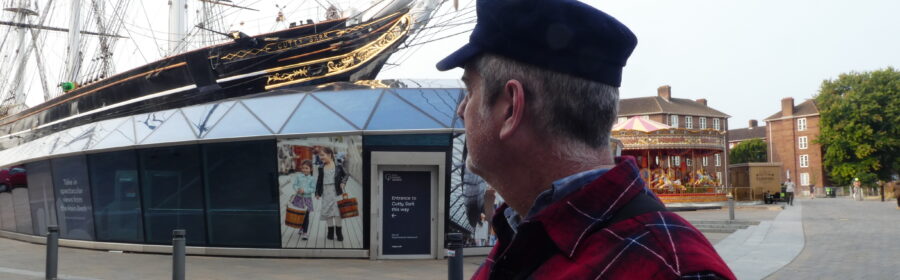
In 2024, Nature Trail’s Tour Director Steven Ridd with family, travelled afar, indeed to old England; not for the first time but.
One’s ancestry is 100% British Isles – actually from all five countries within and pre-Norman Conquest (1066 AD) and the pre-Dane Invasion of Britain (793 AD). The old English surname ‘Ridd’ is Anglo-Saxon centred around Tawstock in North Devon (ol’ Wessex), England – been there…
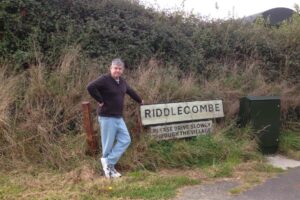
Our Tour Director in North Devon, England in 2016 – ancestral pastoral region of the Ridds.
Regarding our most recent listed trip in 2024, one’s planned excursion to London specifically included a dedicated full-day trip to Maritime Greenwich on the Thames River, one being a licenced Commercial Coxswain from ‘downunder’. We recommend such a trip highly.
Of British ancestral stock (out of British 1840s poverty/famine & convicts), this 6th generation Australian had first ventured to Britain back in 1986 as a fresh adult (age 22) venturing to self-experience an Australian ‘grand tour‘ of sorts to the colonist motherland on some college ‘work experience certificate’. But upon arrival to only to be then held under suspicion by UK Customs at Gatwick for few hours to check my visitation status – friggen fond memories recalled for another article perhaps.
Previous trips to the the British Isles have included 1986 (age 22), 2006 (age 42), 2010 (age 46), 2016 (age 52) and 2024 (age 60) and we’re not finished! My wife and I respectively emanate from Belfast heritage. Trips since 2006 have been mostly family focused.
Way back in 1979 when English music band Dire Straits released their hit track ‘Single Handed Sailor’, the lyrics were encouragingly formative as one was then a 15-year-old impressionable youth naturally pondering a promising future and adult life with yet unknown adventures beckoning.
Mark Knopfler’s insightful and inspiringly brilliant lyrics to this 1979 Dire Straits song ‘Single Handed Sailor‘ (one was aged 15 – in the old days that the age young men joined the Navy or Merchant Navy – at age 16 one tried to):
“Two in the morning, dry-dock townThe river roll away in the nightLittle gipsy moth, she’s all tied downShe quiver in the wind and the lightYeah, and the sailing ship just held down in chainsFrom the lazy days of sailShe’s just a lying there, silent in painHe lean on the tourist railA mother and her baby and the college of warIn the concrete gravesYou never wanna fight against the river lawNobody rules the wavesYeah, and on a night when the lazy wind is a-wailingAround the Cutty SarkThe single-handed sailor goes sailingSailing away in the darkHe’s up on the bridge on the self-same nightThe mariner of dry dock landTwo in the morning but there’s one green lightAnd a man on a barge of sandShe’s a gonna slip away below himAway from things he’s doneBut he just shouts, “Hey man, what you call this thing?”He could have said “Pride of London”On a night when the lazy wind is a-wailingAround the Cutty SarkYeah, the single-handed sailor goes sailingSailing away in the dark.”
Seven years hence, one ‘grand toured’ to ancestral Ol’ Blighty. Forty five years hence, one as a Commercial Coxswain, re-grand toured to the heart of sailing – Greenwich.
The ‘gipsy moth’ is the embodiment of wanderlust and free-spirited wild travelling.
How so appropriate for a sheltered teen of a privileged Camberwell Grammar private school upbringing from privileged Melbourne’s leafy Balwyn?
We post some photos of one’s recent 2024 world pilgrimage from Antipodean landlocked Katoomba to this incredible 17th Century British naval Maritime Greenwich…
Made it to Greenwich, London!
Boats are famously named Gipsy Moth (often spelled Gypsy Moth) to honor pioneering British aviator and sailor Sir Francis Chichester.
He named a succession of his yachts after his beloved de Havilland DH-60 Gipsy Moth bi-plane, which he used to set groundbreaking aviation records in the 1920s and 1930s.
Before becoming a legend of the sea, Chichester was an acclaimed aviator.
In the late 1920s, he bought a de Havilland Gipsy Moth biplane, which he modified for extreme, long-distance flights. He famously used it to fly from the UK to New Zealand and complete the first flight across the Tasman Sea. When he transitioned from flying to sailing after World War II, he decided to carry over the lucky name from his aviation days.
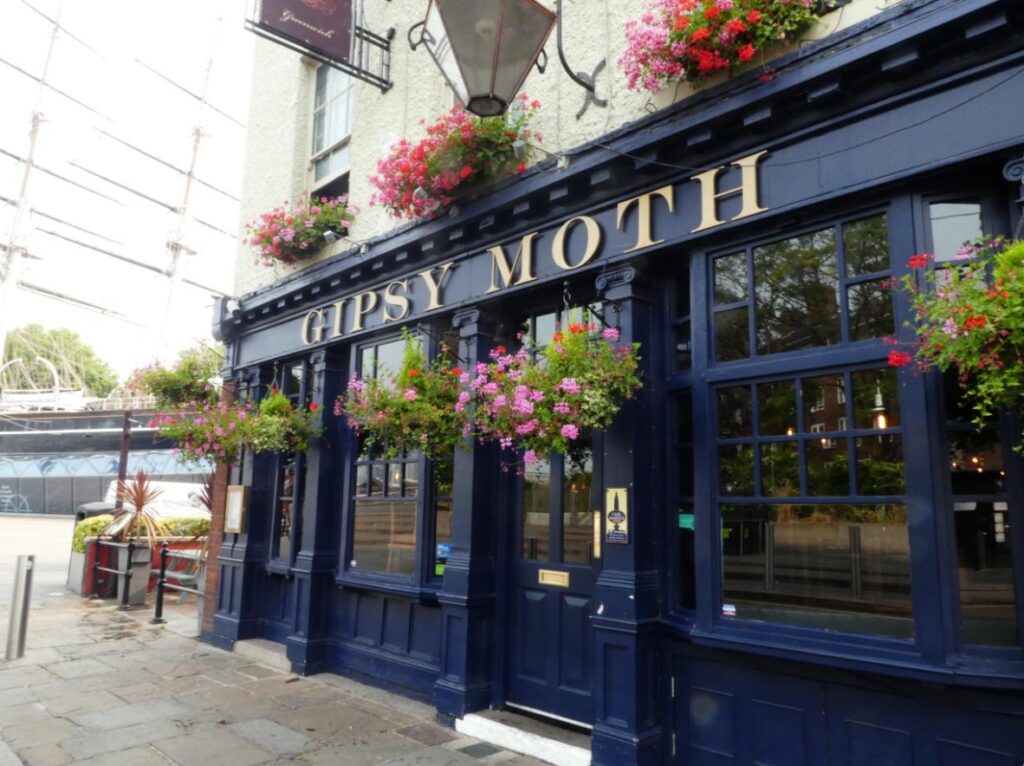
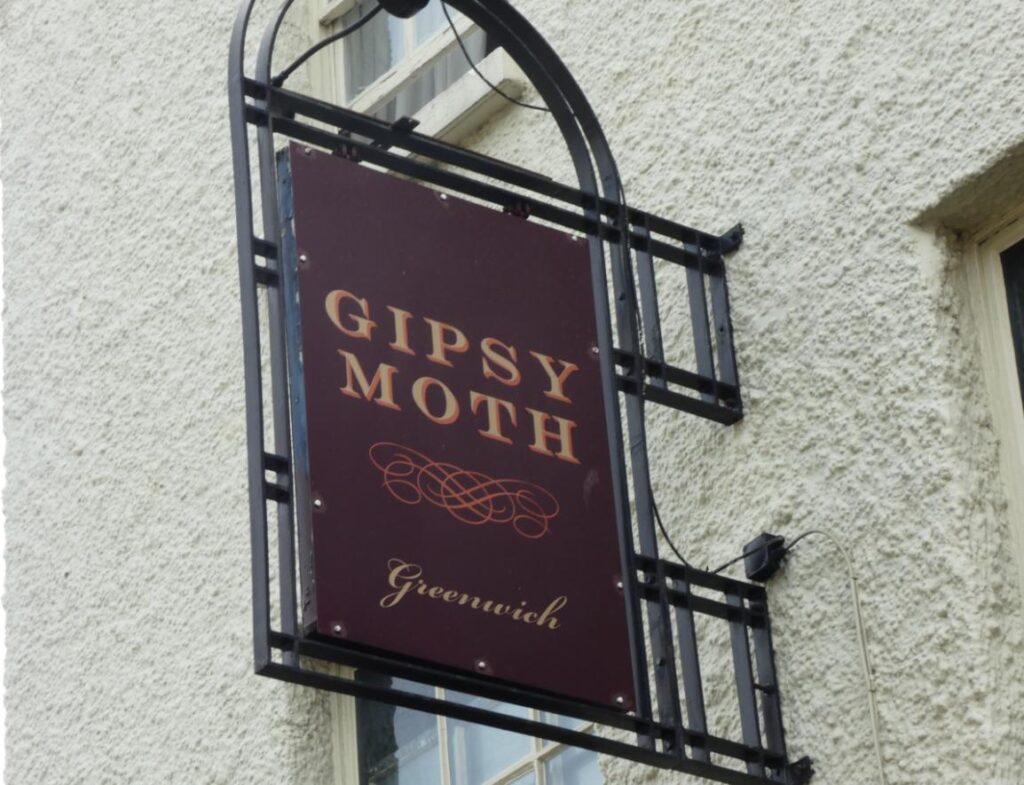
An English pub with the Gipsy Moth namesake is situated at Greenwich adjacent to Cutty Sark ‘s dry dock.
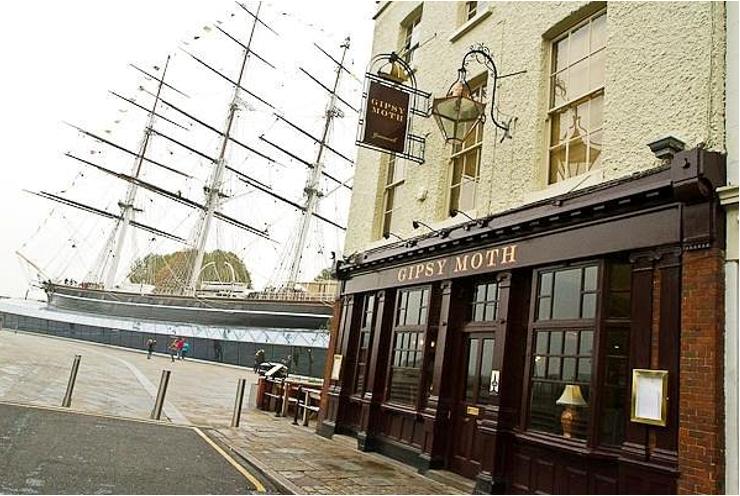
The Gipsy Moth is a historic Greenwich pub located at 60 Greenwich Church Street.
“Originally operating as The Wheatsheaf, the pub was renamed in the mid-1970s to honour Sir Francis Chichester’s iconic Gipsy Moth IV yacht, which completed a record-breaking, single-handed circumnavigation of the globe.
The pub itself sits in a Late-18th-century, Grade I listed building.
The name commemorates Chichester’s famous 54-foot ketch. In 1968, the boat was put on permanent display in a dedicated dry dock right next to the Cutty Sark (located directly in front of the pub). Though the boat was eventually removed for restoration in 2004, the pub kept its famous nautical namesake.
Pub Layout: It features a traditional, wood-paneled nautical interior that stretches into a Victorian-style conservatory and a sizeable beer garden.
Offerings: Today, the pub is a popular tourist and local spot, offering classic British pub grub, cask ales, and views of the Cutty Sark.”
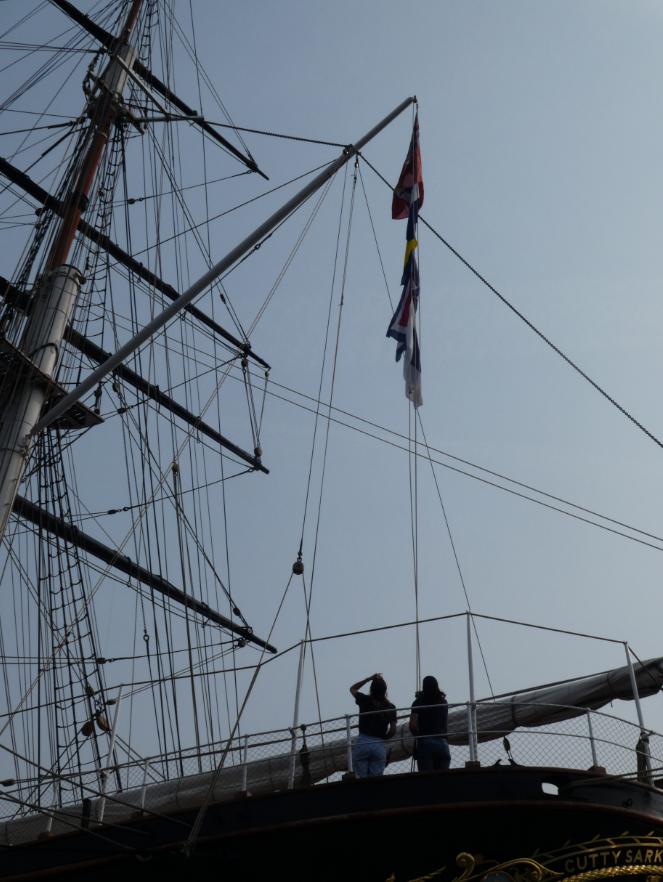
The ‘Cutty Sark’?
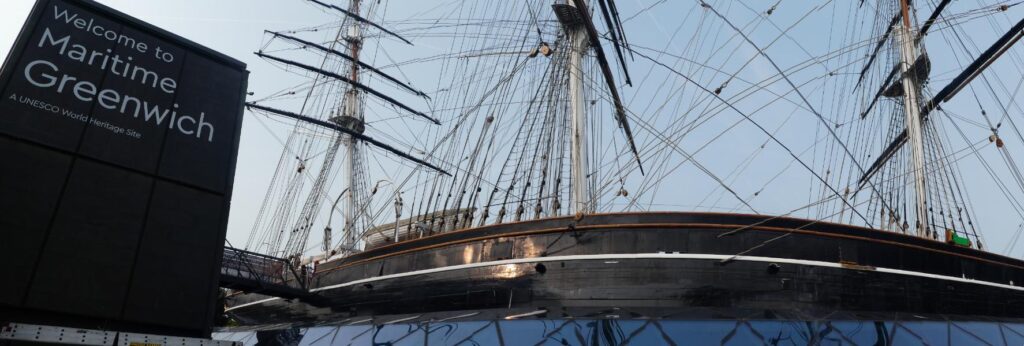
“The mariner of dry dock land”
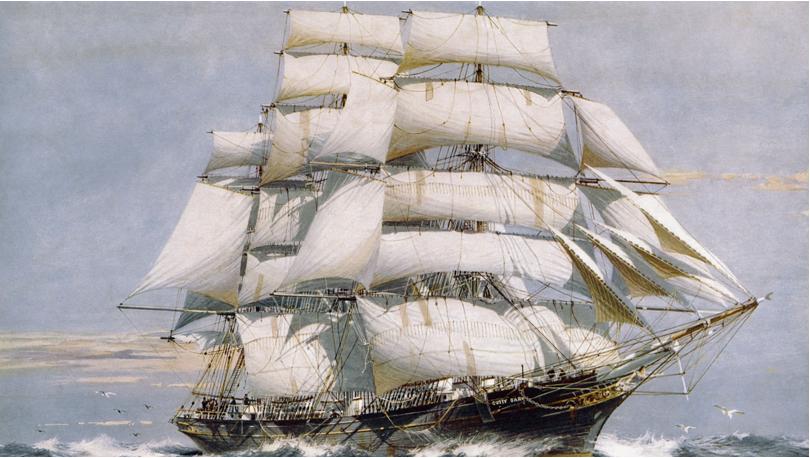
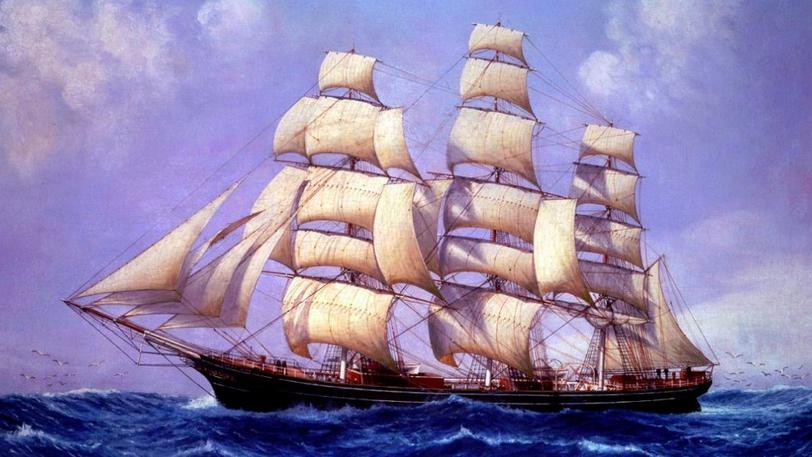
Cutty Sark plying in full sail in its day
“Cutty Sark Statistics:
Tonnage: 963 tons
Sale Area: 32,000 sq ft
Best day’s run: 363 nautical miles
Highest measured speed: 17.5 knots”
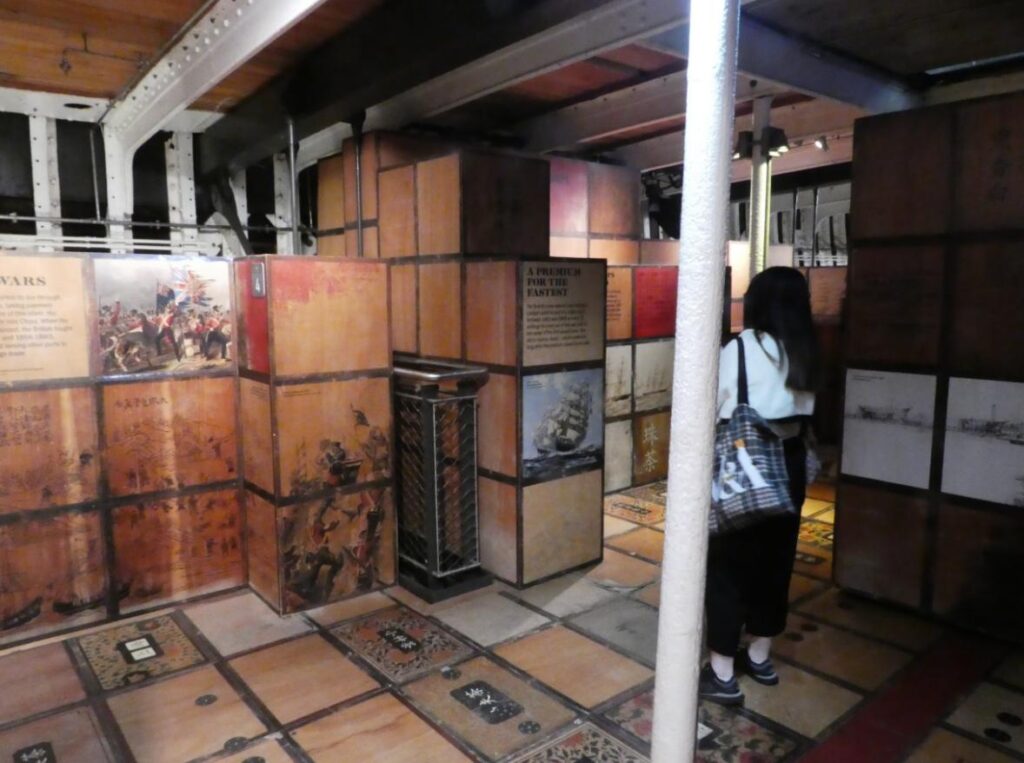
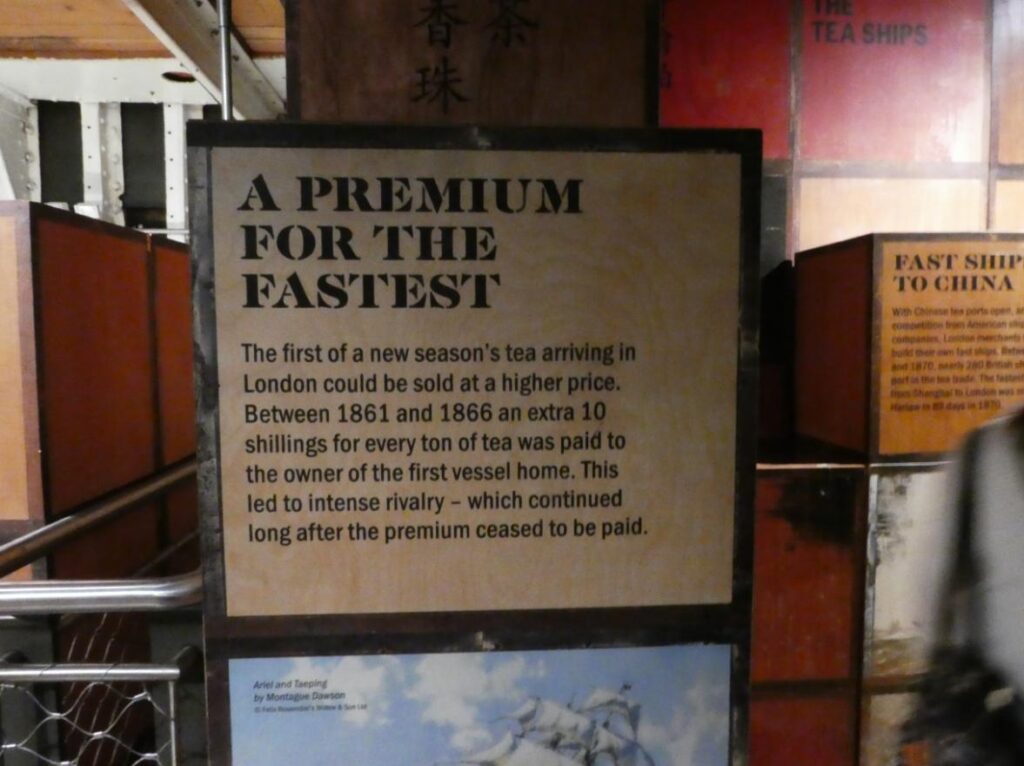
“Built in 1869 and now the world’s sole surviving tea clipper, Cutty Sark’s iron framed teak hull has been raised over three meters, allowing visitors the jaw-dropping experience of walking directly underneath its keel to appreciate the spectacular underwater lines that made it the fastest ship of its time.
This beautiful tea clipper, the fastest ship of its time and the last survivor of its type, is preserved in dry-dock as a tribute to the ships and men of the Merchant Navy in the days of sail, and as a testimony to London’s distinguished maritime past. Built of teak on an iron frame by Scott and Linton, Cutty Sark was launched at Dumbarton in Scotland in 1869.”
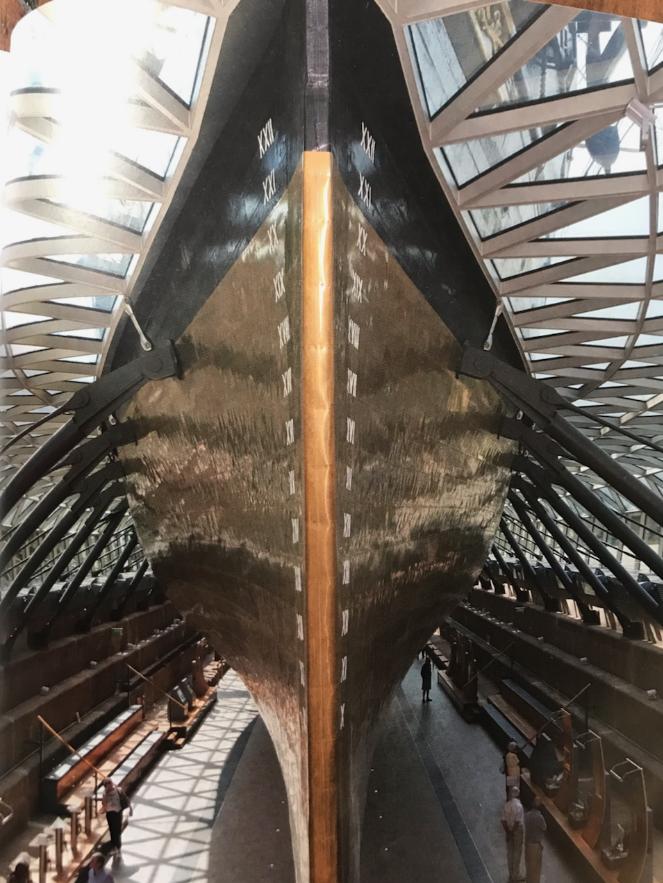
Cutty Sark’s “copper-bottomed” hull on full display.
A copper-plated (or copper-sheathed) hull refers to the historical naval practice of affixing thin copper sheets to a ship’s wooden hull below the waterline.
Pioneered by the Royal Navy in the 18th century, it was designed to prevent destructive shipworm infestations and severely reduce marine organism fouling, which vastly improved ship speed and maneuverability.
Before copper plating, wooden ships were highly susceptible to a wood-boring mollusk known as “shipworm” (Teredo navalis), which could compromise a ship’s structural integrity. Additionally, barnacles and algae would cling to the hull, creating drag and slowing ships to a crawl.
The Solution: The Royal Navy discovered that copper, when exposed to seawater, naturally releases ions that are toxic to marine life and prevent organisms from adhering to the hull. The Terminology: Because copper bottoms kept naval vessels incredibly reliable and seaworthy, it gave birth to the idiom “copper-bottomed,” meaning trustworthy and guaranteed.
“Ironically, the same year saw the opening of the Suez Canal, which spelt the end of the high-value sailing trade in tea for which Cutty Sark was designed.
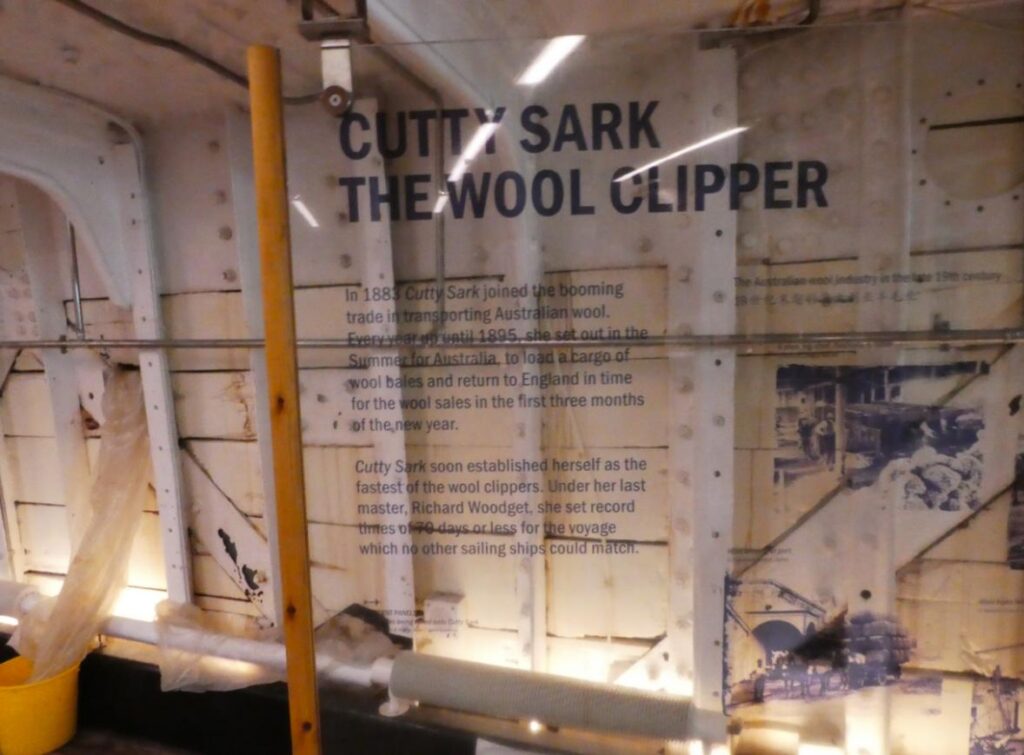
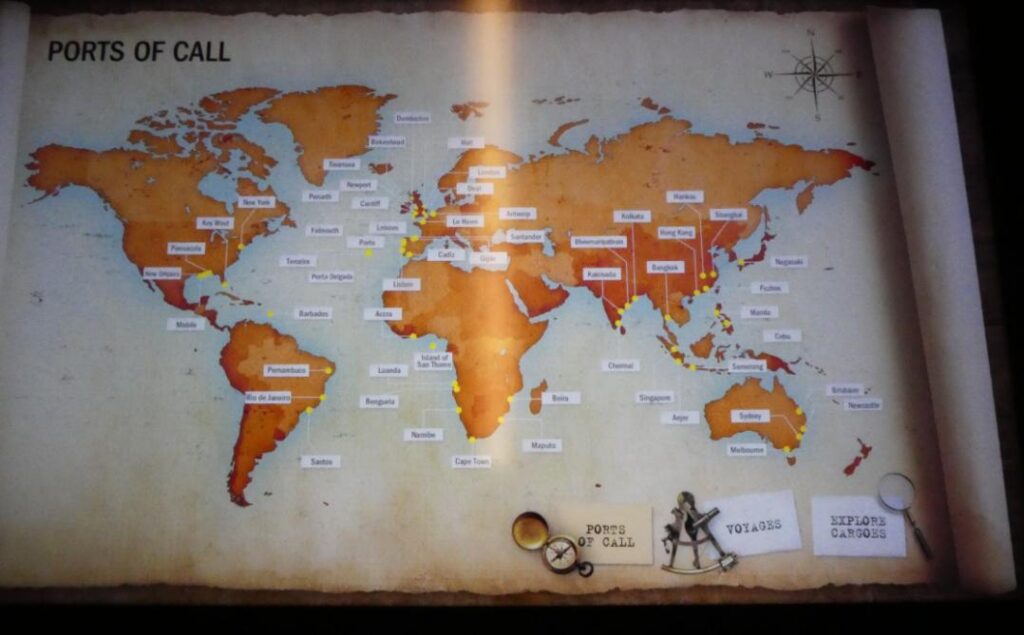
The ship’s fastest passages, on which it really made its name, were in the Australian wool trade, to which it turned after 1877, principally under the command of Captain Richard Woodget between 1885 and 1895. Immensely strong and powerful, the ship was famous for overhauling both sailing and steam vessels, the most celebrated of many occasions being in 1889, when it overtook the new P&O mail steamer Britannia on the run into Sydney.
On Woodget’s first voyage in 1885, Cutty Sark defeated its old tea-trade rival Thermopylae on the voyage from Sydney by a full week, arriving off the coast of Kent after 73 days at sea.
From 1895 Cutty Sark was in Portuguese ownership as the Ferreira, but was bought back in 1922 by Captain Wilfred Dowman of Falmouth. In 1938 the ship was brought to Greenhithe on the lower Thames as a training ship for the Thames Nautical Training College.
When
no longer needed for this purpose, the Cutty Sark Preservation Society, formed in 1952, ensured its survival. The ship was moored off Deptford as part of the Festival of Britain in 1951. In 1954 it was moved into its specially built dry-dock, and after three years of restoration was opened to the public by Queen Elizabeth II.”
Why is the ship called Cutty Sark?
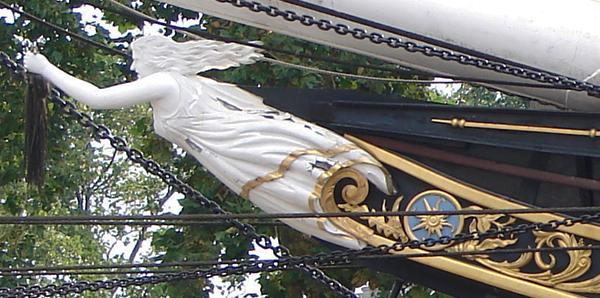
Cutty Sark’s figurehead – A figurehead is a carved wooden decoration found at the bow of ships, generally of a design related to the name or role of a ship.
“Cutty Sark’s name comes from the famous poem Tam O’Shanter by Robert Burns. It is about a farmer called Tam who is chased by a scantily-clad witch called Nannie, dressed only in a ‘cutty sark’.
It is a rather peculiar choice of name for a ship however. According to legend – and indeed in Robert Burns’ poem – witches are unable to cross water!
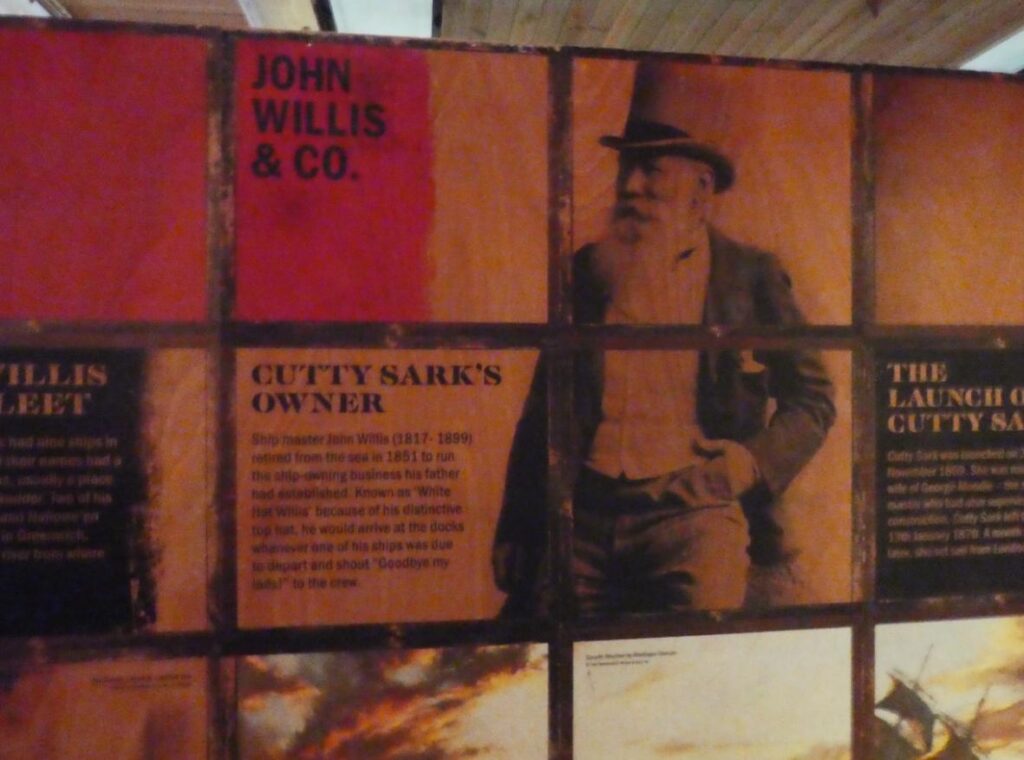
The original owner of Cutty Sark, a man called Jock Willis, was the person who gave the ship its name, although it was allegedly suggested to him by the ship’s designer Hercules Linton.
We do not know definitively why Jock selected this name. It could reflect his patriotism, choosing a name inspired by Scotland’s most famous poet. Another ship in his fleet was named Halloween, which is also the name of a Burns poem.
Mrs Moodie – the wife of the first master of the ship George Moodie – officially named the ship when it was launched in Dumbarton on 22 November 1869.
Robert Burns’s poem Tam O’Shanter is the basis for the name Cutty Sark. The poem is based on a Scottish legend about a farmer of the same name.
After drinking at a pub one night, Tam starts his journey home on his trusty old horse Meg. But on his way he is transfixed by the sight of witches and wizards dancing around a bonfire in a churchyard.
One witch in particular, Nannie, catches his attention. She is young and beautiful and wearing only a cutty sark. Afraid but unable to drag himself away, Tam loses himself and shouts out, ‘Weel done cutty sark’ in appreciation of her dancing.
Alerted to his presence, the witches pursue Tam, with Nannie in the lead. Knowing that witches can’t cross water, Tam and Meg head for the river Doon. Just as they are about to cross, Nannie reaches out and grabbs Meg’s tail, which mysteriously comes away in Nannie’s hand, saving Tam’s life.”
SOURCE: Royal Museums Greenwich, ^https://www.rmg.co.uk/cutty-sark/history/why-ship-called-cutty-sark
After 50 years in its Greenwich dry-dock, and despite further restoration, Cutty Sark’ s structure had badly deteriorated as a result of rainwater ingress and complex, long-term corrosion processes in its wrought-iron frame.
In November 2006 a major new conservation programme was begun to counter the metal decay and consolidate the wooden hull planks. In May 2007, however, a major fire badly set back the project, although with fortunately minimal loss of original fabric .
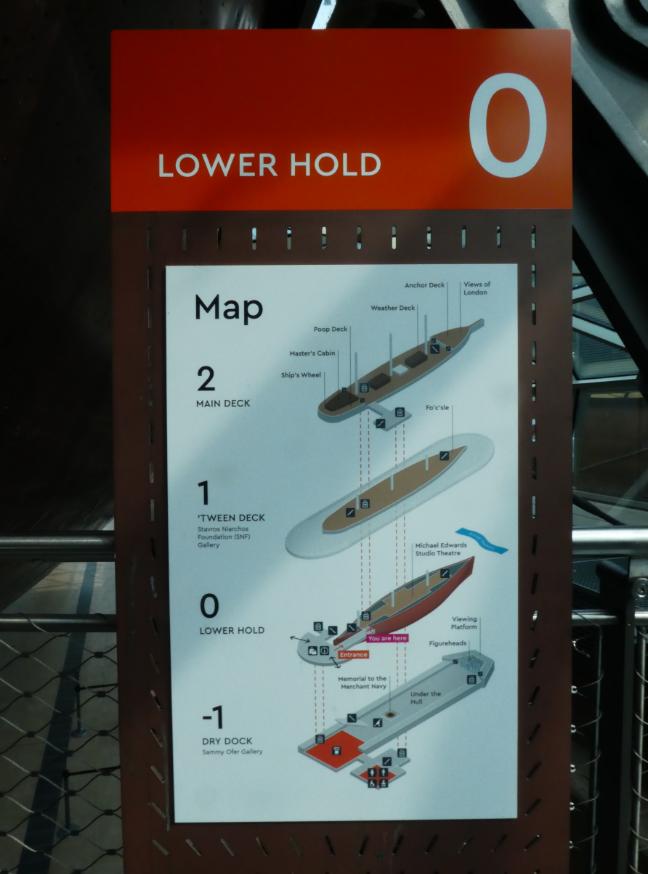
When the ship reopened in 2012, it had been permanently raised over 10 feet (3 m) and surrounded by a dramatic glass canopy covering the dock . This design allows the space underneath the hull to be used for interpretation of Cutty Sark and its history, the display of its extensive figurehead collection (there are over 80) and for events to take place.
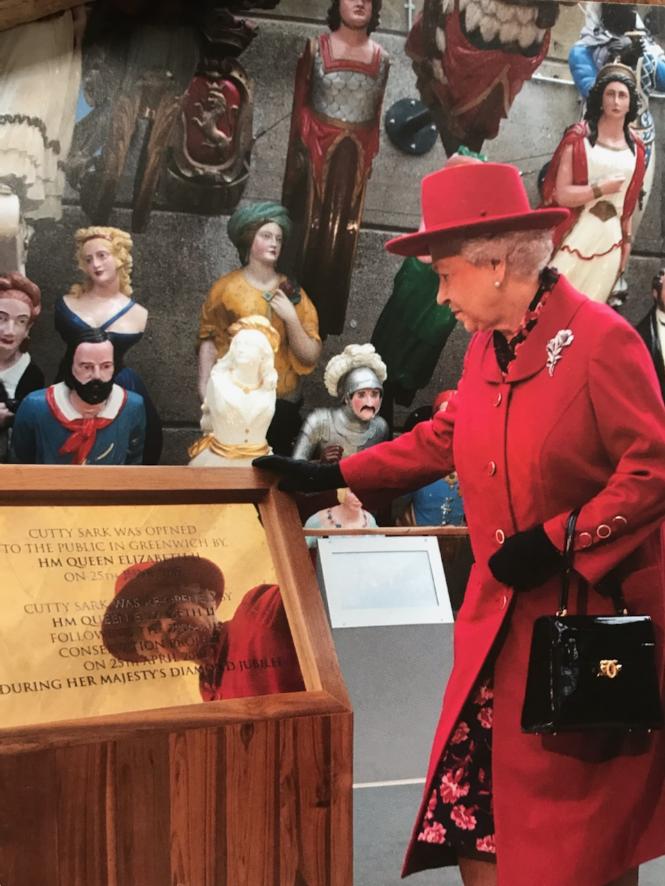
Her Majesty the Queen revisits Cutty Sark’s dry dock home on 25th April 2012 during her Diamond Jubilee (60 years on the royal throne)
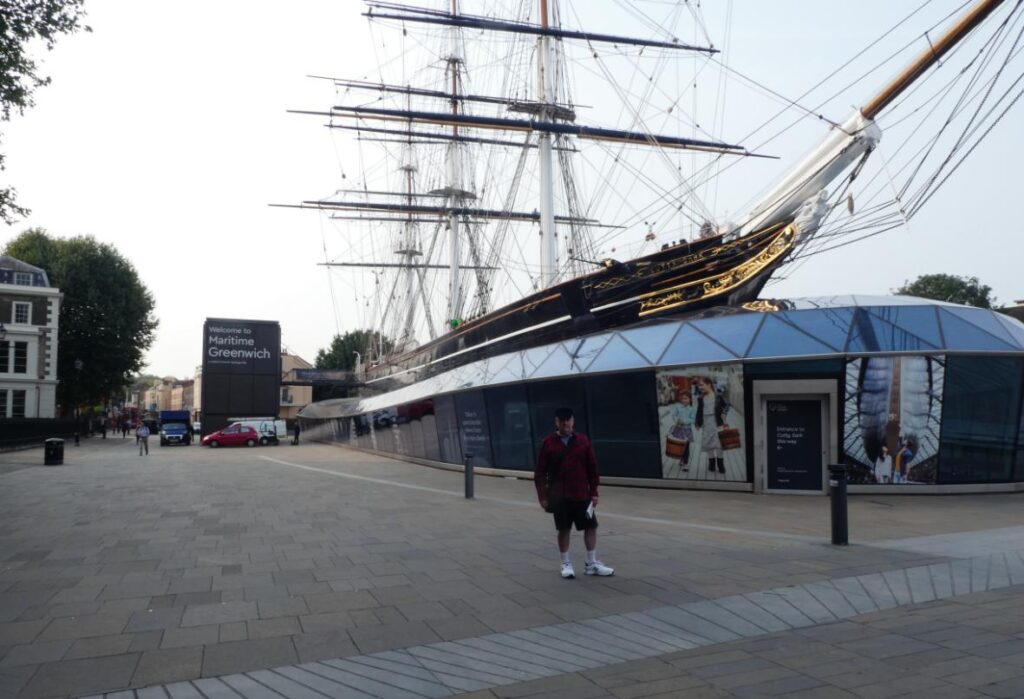
This coxswain’s pilgrimage – one’s finally arrived at Cutty Sark, Maritime Greenwich, Naval Centre of the World.
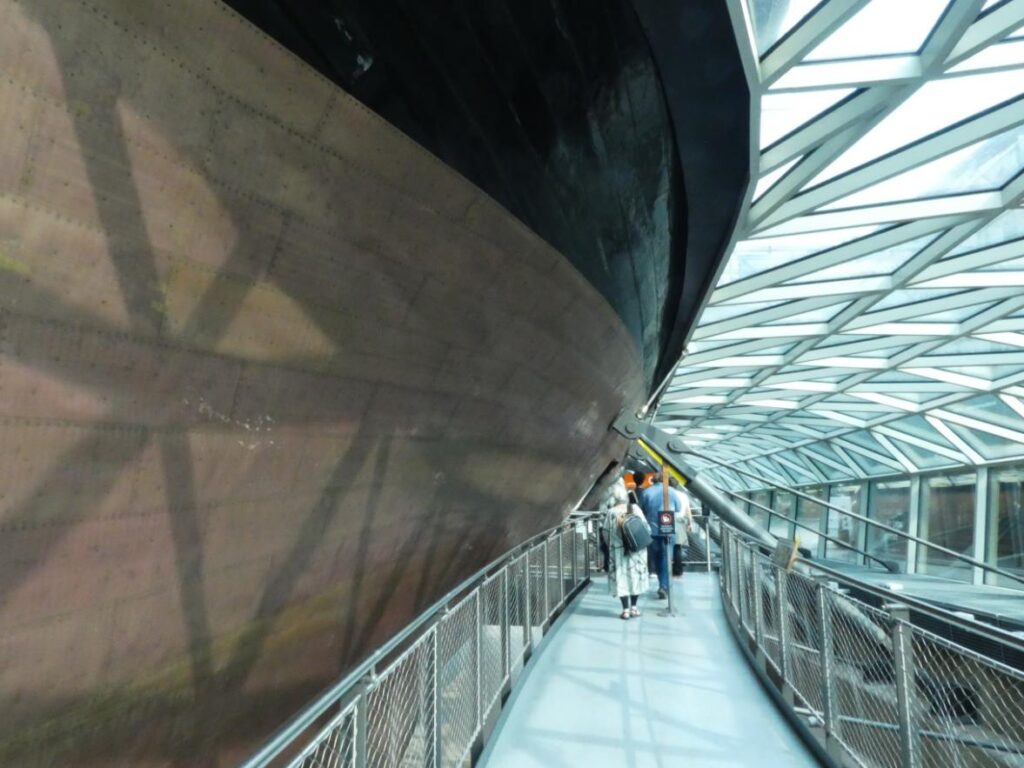
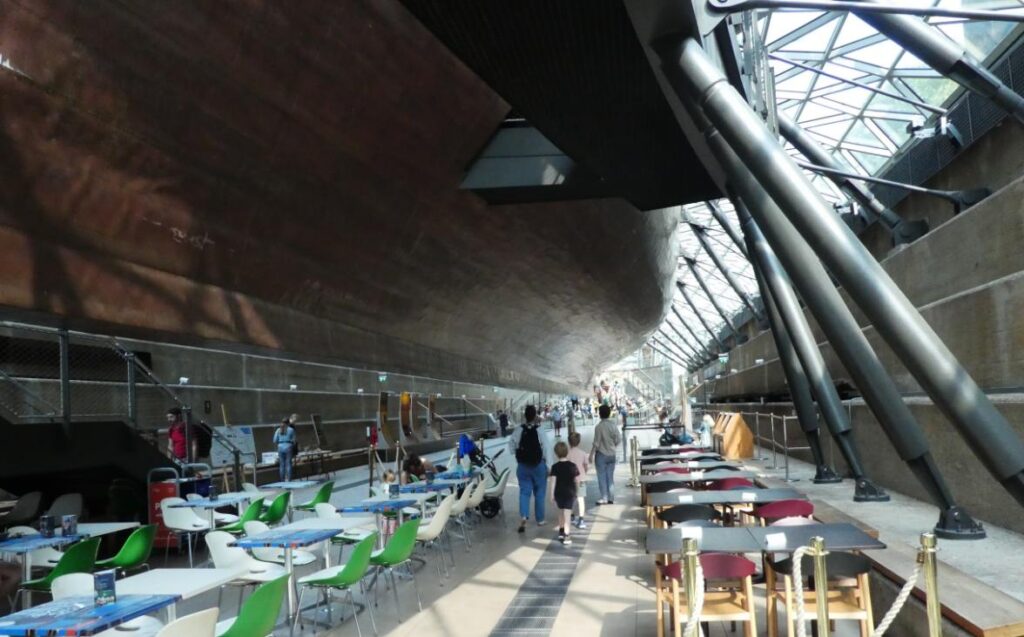
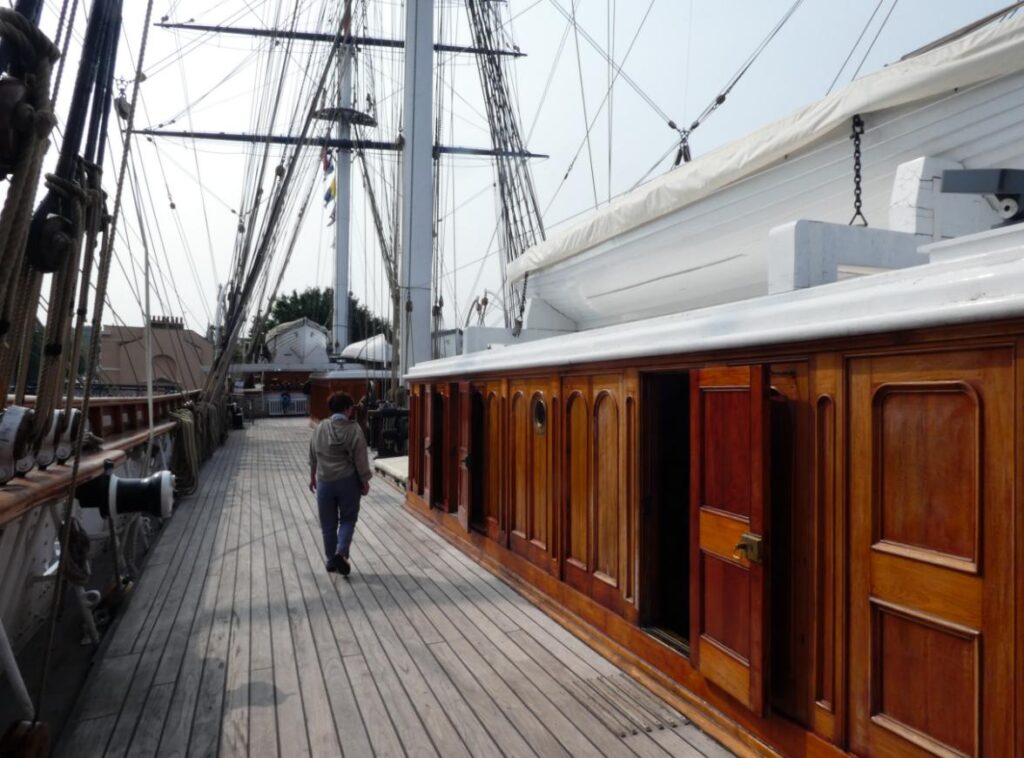
But he just shouts, “Hey man, what you call this thing?…He could have said “Pride of London”
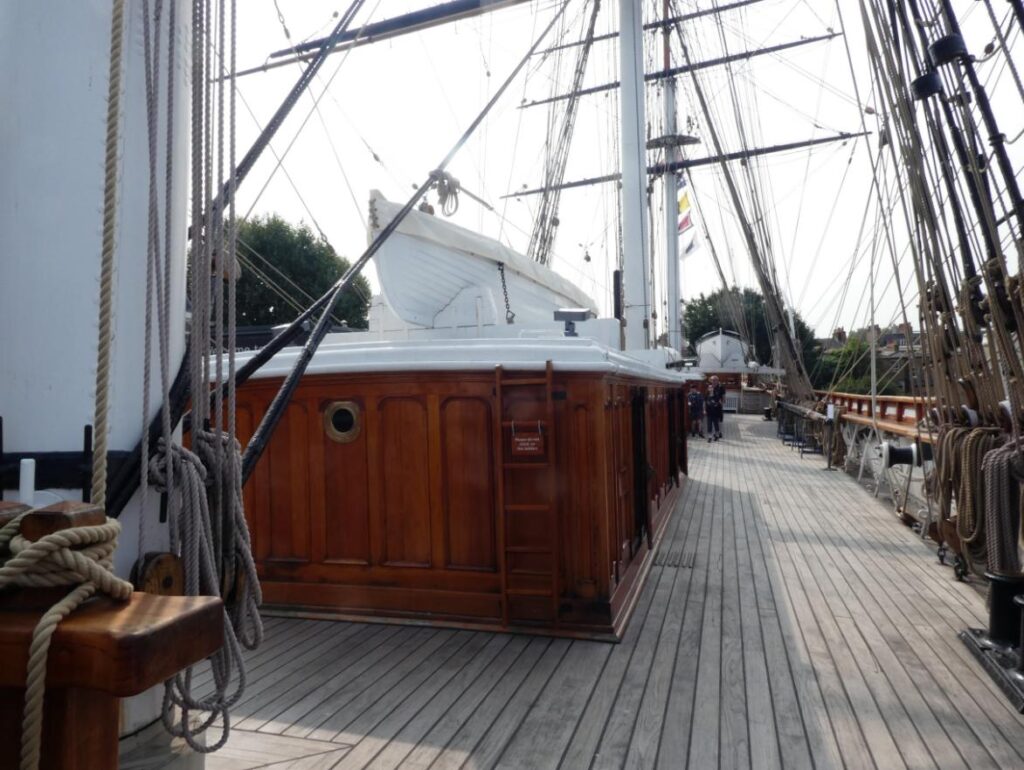
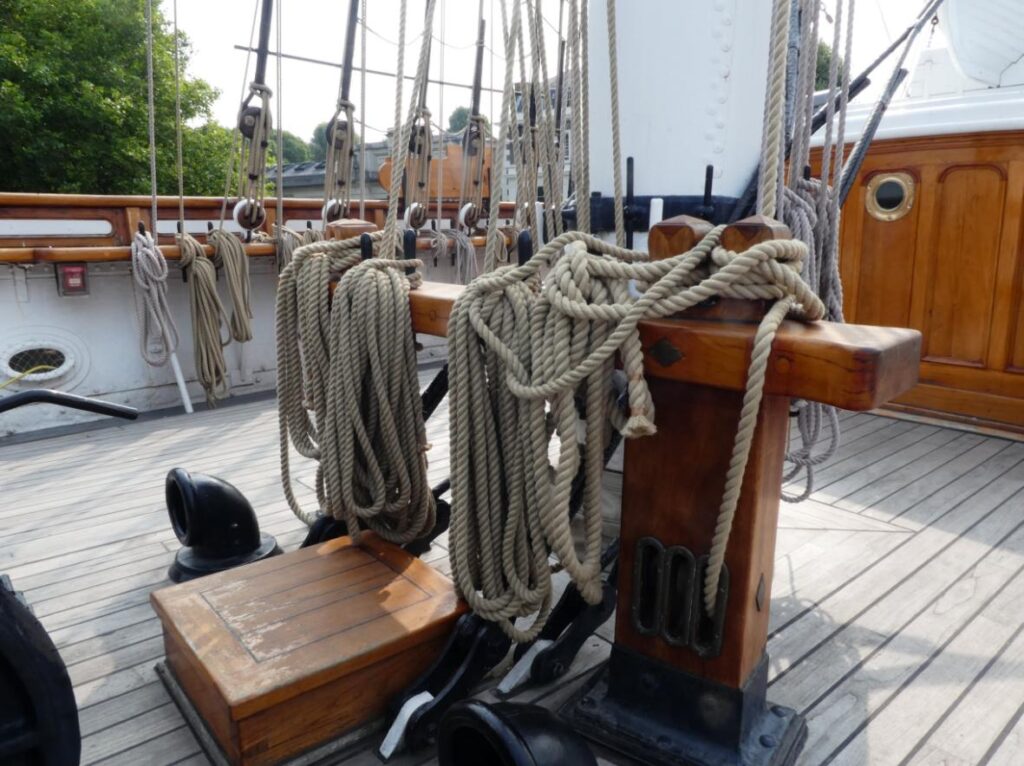
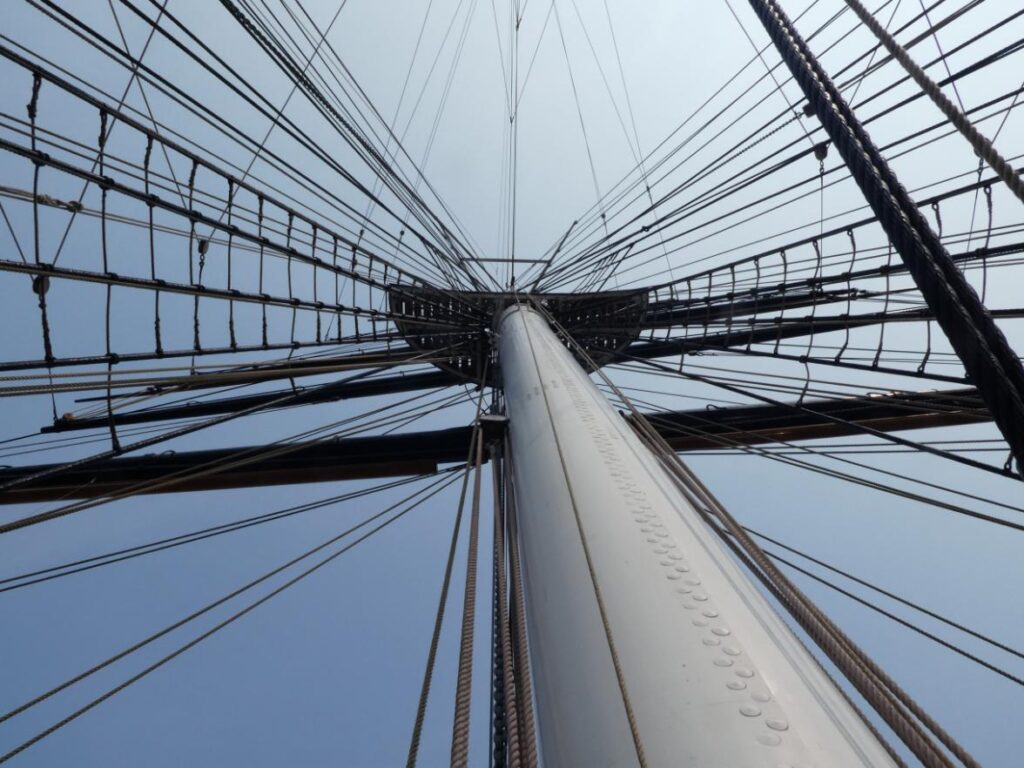
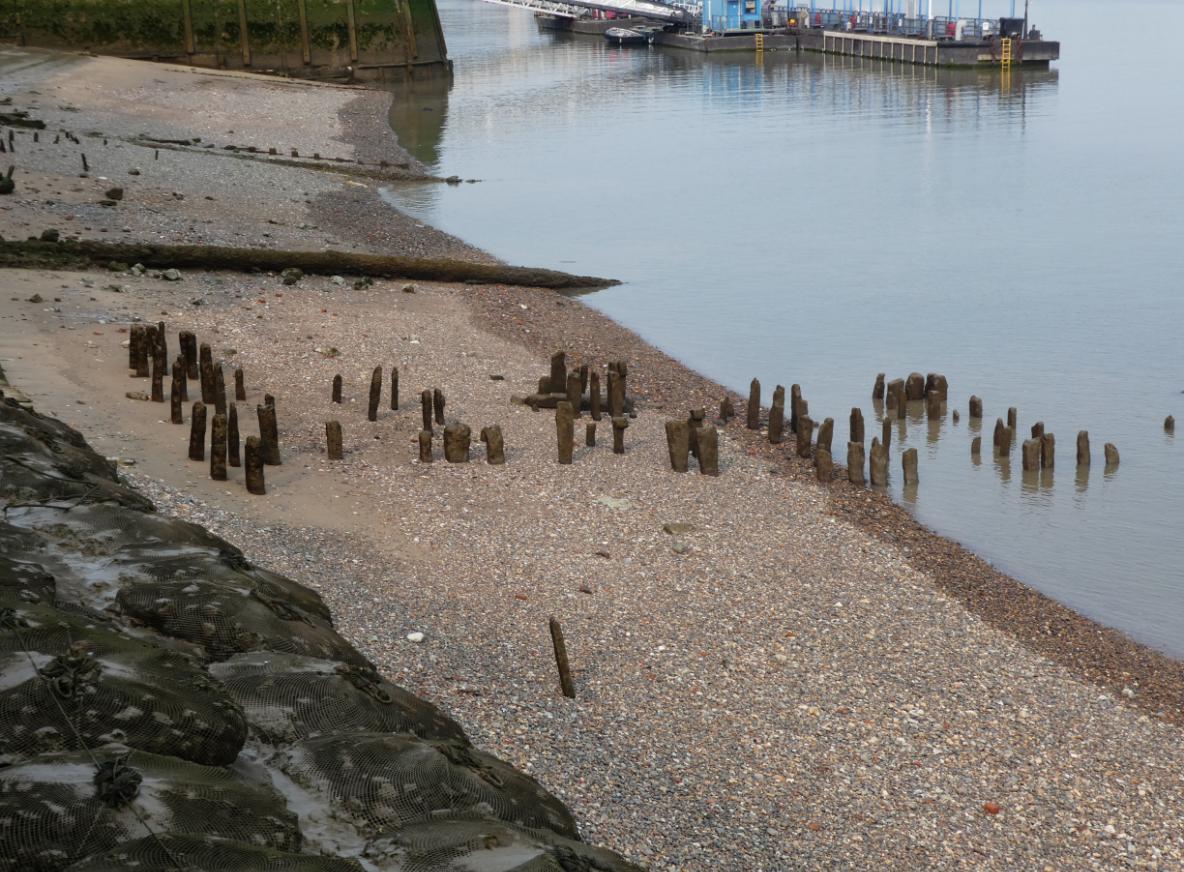
“Sailing away in the dark”
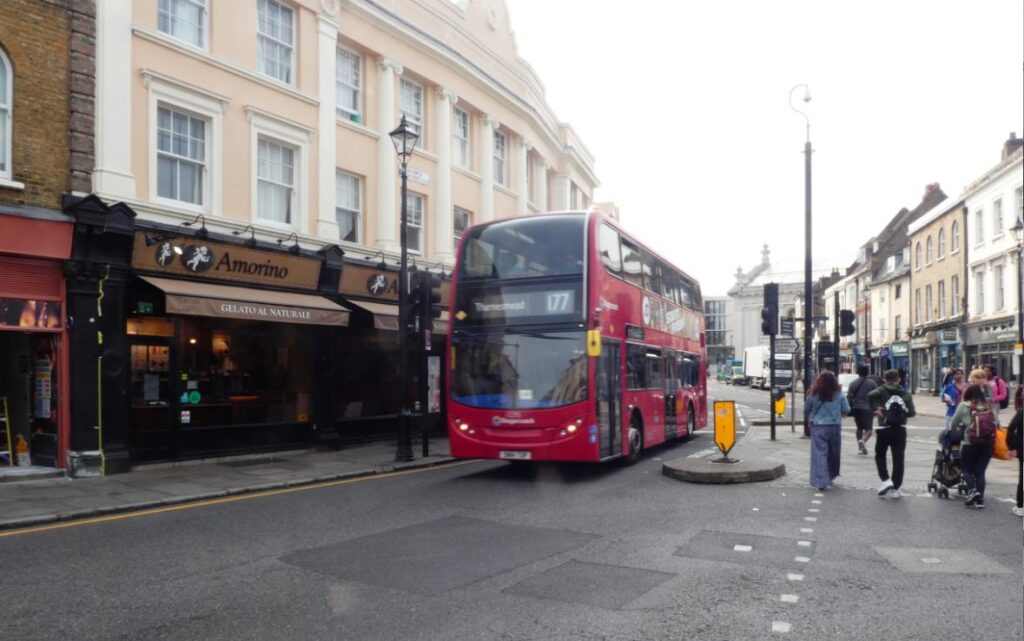
Greenwich – “dry dock town”.
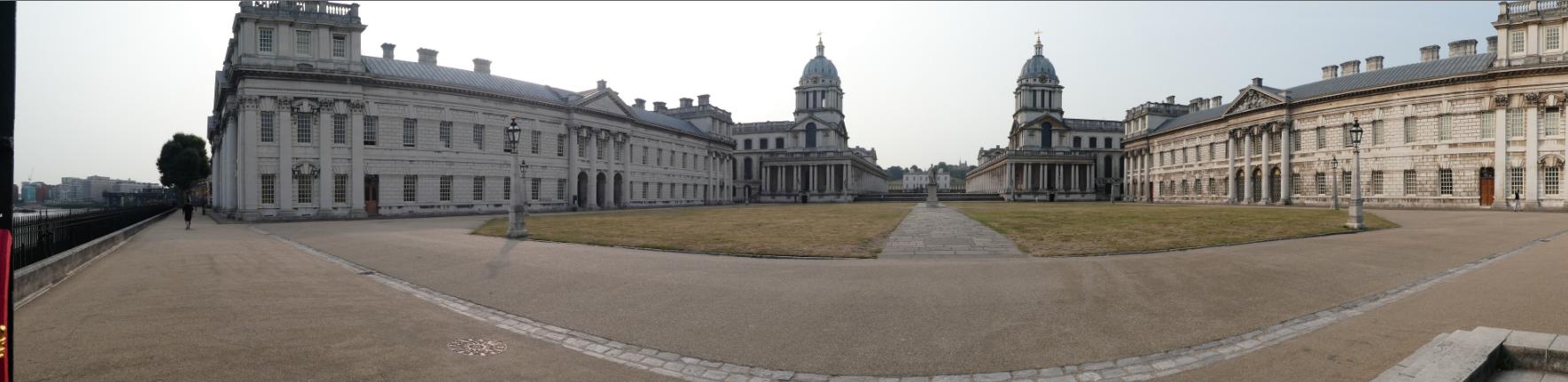
“The College of War”… at Maritime Greenwich (The Royal Naval War College, established in 1900)
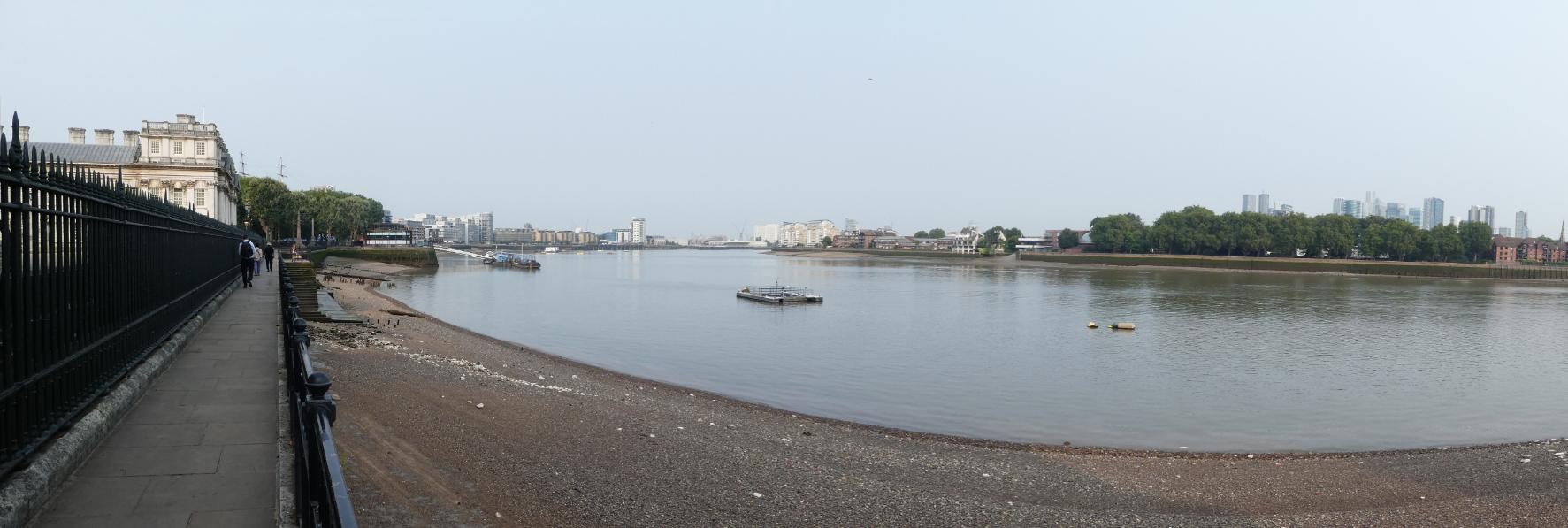
“From the lazy days of sail”
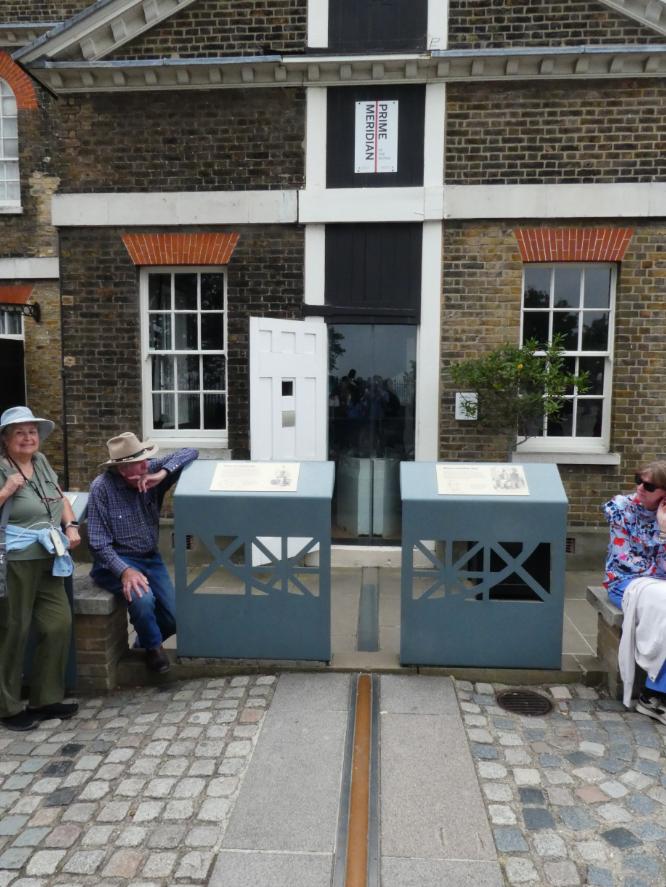
Greenwich Prime Meridian Line…a nearby visit on a related historical topic.
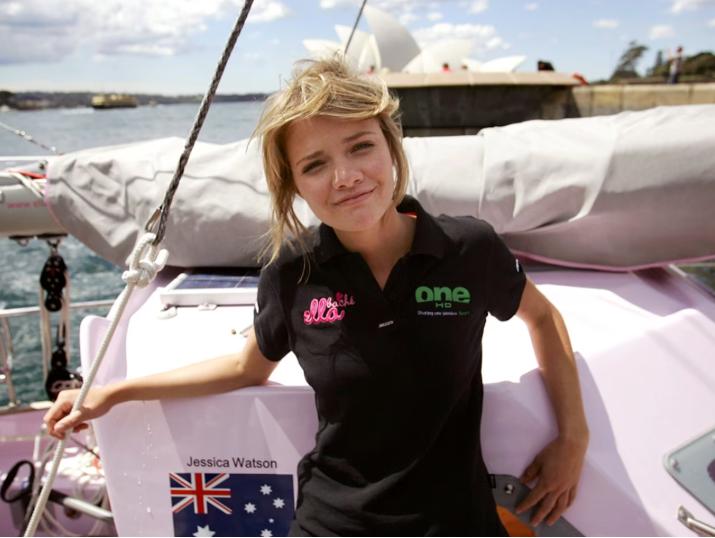
Australian Circumnavigator: Jessica Watson – sailed around the world, alone, as a teenager. ^https://www.nationalgeographic.com/adventure/article/jessica-watson-2010
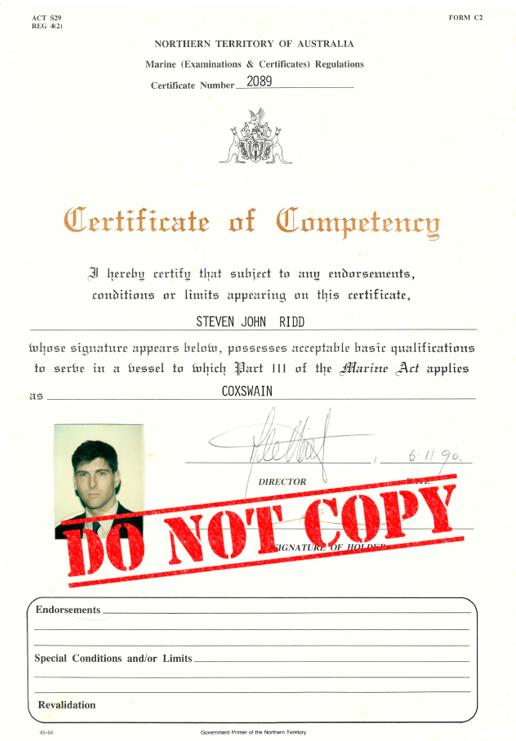
Nature Trail’s Tour Director, Steven Ridd, is also a licensed Commercial Helicopter Pilot and also holds an unrestricted private pilot Fixed Wing licence.
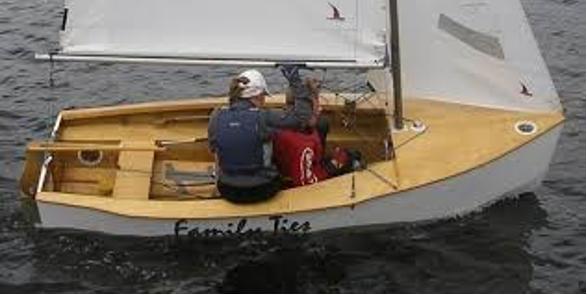
A heron dinghy of just 11 foot long. Yep, I caught the sailing bug at age 7 from my Dad sailing on Lake Wellington outside Sale in East Gippsland, Australia. Impressionable times.