
Our new hiking personal locator beacon (PLB) for 2026 – is a GME Accusat MT620GR
We just bought this PLB device on 15th September 2026. It’s cost us AUD$569 via ‘ARB Penrith‘ 4×4 accessories store, which is located just down ‘the hill’ so to speak from our Blue Mountains base.
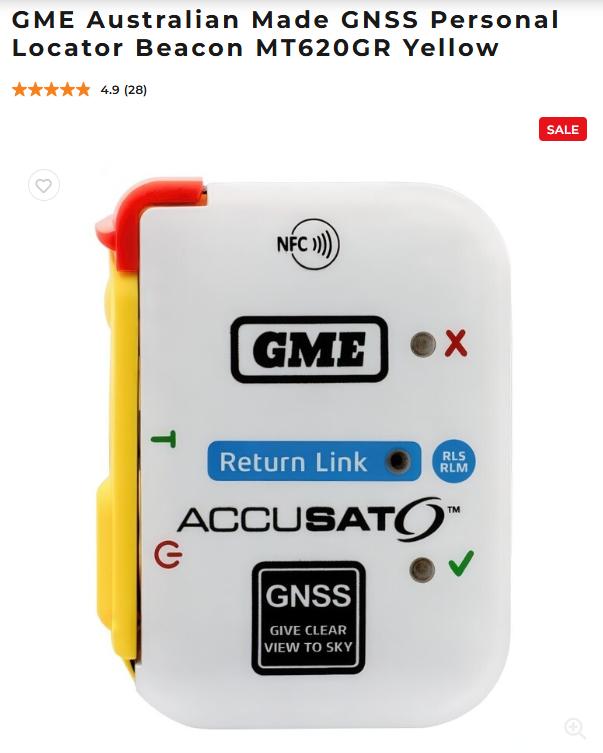
IMPORTANT: Note this model is the ‘GR‘ version! FYI, we explain the ‘GR’ version and the other features/abbreviations/images of this PLB shortly in this article.
Perhaps this purchase was inspiration which readers might appreciate if having read our previous article about ‘Lily’s Law‘ [>READ MORE].
Yet also in our case, it’s due to the legacy of us copping of the NSW wildfires lockdown (Oct 2019 – Feb 2020) then back-to-back pandemic lockdown (Feb 2020 – Nov 2023). Sadly, all that 5-year governmetal imposed social shutdown (2019-2023) denied us trading as a new commerial tour operator.
So during that imposed lockdown we had no cause to use our PLB, else if governmentally we were detected ‘out-and-about’ doing our tours, risked being subjected to serious fines like $5000 each time. That was the sad reality.
Subsequently, whilst Nature Trail post-pandemic tried again then in 2024 to re-start its tour business, it then copped another NSW Government crackdown threat of fining us more than $110,000 for daring to have a website promoting our tours with a 4×4 vehicle – and that they’ve warned us, was just for starters! Unbelievable dictatorship bureaucracy!
We no less since 2025 continue outdoor recreation activities in Nature throughout our Blue Mountains region where we live and are more than pleased to share our acquired knowledge with visitors. This website is part of our sharing of this local knowledege. We don’t charge a cent of course; our venture was never about financial reward.
Our outdoor recreational venture continues to always be about sharing with visitors to the Blue Mountains from that small part we have come to learn about, to appreciate and respect.
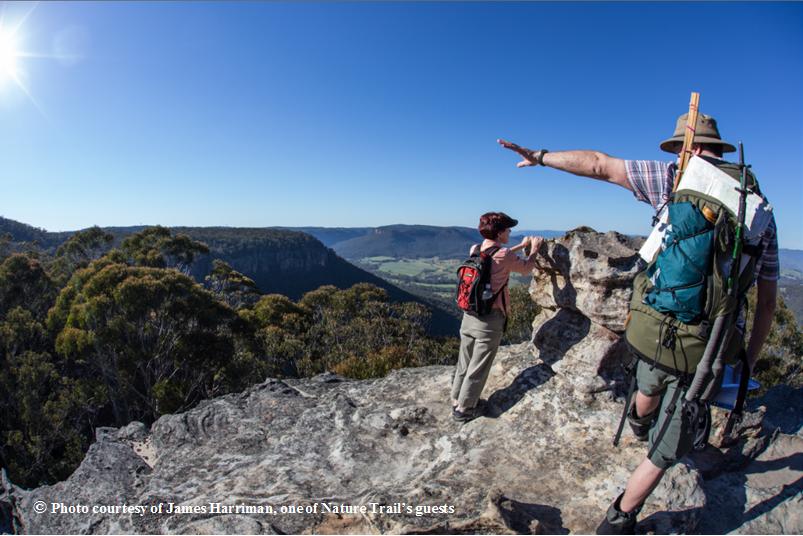
Nature Trail’s PLB background:
We had never previously owned a PLB before, although we had previously become aware of what a similar ‘EPIRB‘ was from our Commercial Coxwain apprentice sea-time experience in coastal in ‘inshore waters’ around Queensland’s FNQ (Cairns, Cape York, the Whitsundays) and then later licensed as a Coxswain back down south of the ‘in-shore waters’ of Port Phillip Bay and Yarra River in Victoria.
An Emergency Position Indicating Radio Beacon (EPIRB) is a type of locator beacon that operates like PLBs on the 406MHz frequency. EPIRBs are compact in size (approximately the size of a household brick) and are designed for use on marine vessels to alert search and rescue authorities in the event of an emergency.
This is an example of an EPIRB:
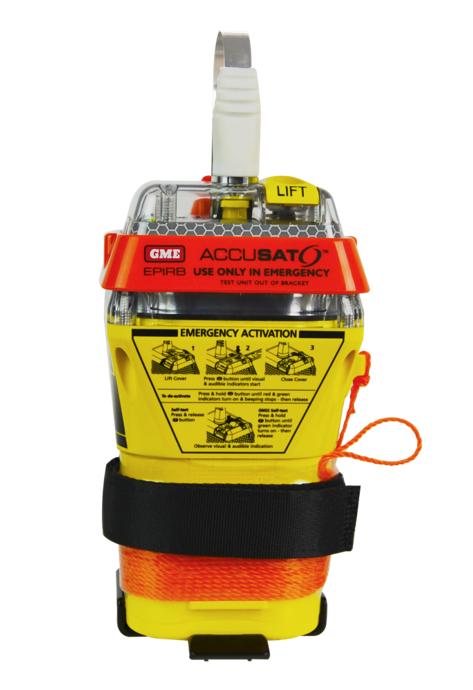
A sample ‘EPIRB’ – A GME Accusat current model MT605G . An EPIRB is specifically intended for use by maritime vessels. ^https://www.gme.net.au/au/news/epirbs-what-are-they-and-why-do-i-need-one/
Compared with an EPIRB, a Personal Locator Becon (PLB) instead is a smaller portable hand held device for emergency use distress signalling when undertaking remote land-based activities such as trekking in wilderness.
Nature Trail originally bought its first PLB in 2015 during its starting out tour operation setup phase. This was initially during our training in TAFE Tour Guiding Certificate IV (Ultimo, NSW) from 2013 and then training in TAFE Outdoor Recreation Certificate III, then Diploma (Wentworth Falls, NSW) 2014-2016.
Back on 10th December 2013 we legally registered ‘Nature Trail’ as an Australian business name and established this complementary domain and website.
As part of our tour operation setup we bought and registered our first PLB on 8th November 2015. We selected then the latest Australian-made GME Accusat (Pocket Series) PLB model MT410G. It wasn’t cheap and we still have it at the time.
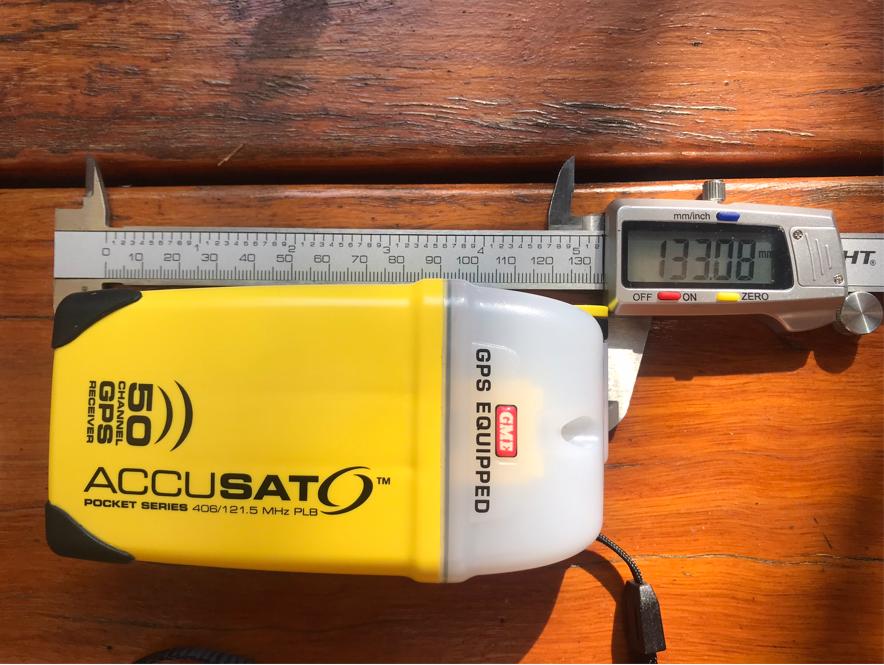
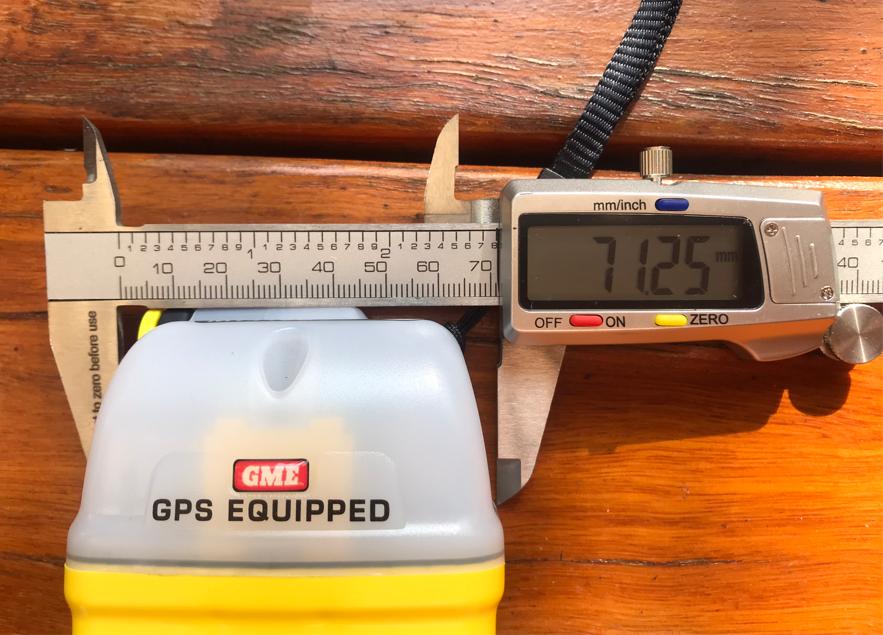
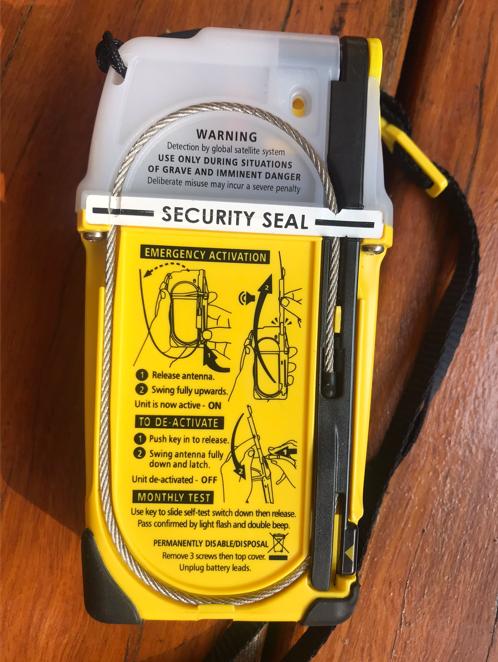
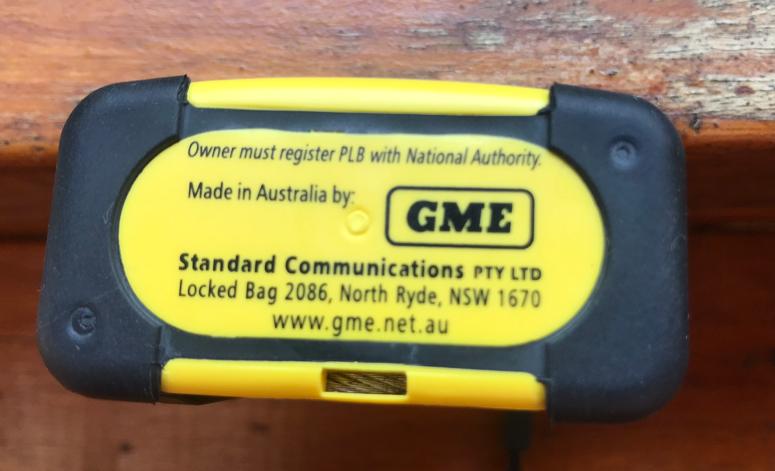
So we acquired it, responsibly and properly registered our first PLB with both GME (the manufacturer) and with AMSA, Australia’s only search and rescue response national authority. Touchwood that we haven’t yet had cause to activate its aerial for an emergency, but we’ve tested it on a number of occasions.
Our consideration of renewing this 2015 model PLB’s 7-year life battery became somewhat questionable of late, since we checked the GME Sydney manufacturer’s website as follows, and then noted the battery replacement costs (AUD$289) around half the cost of us buying a newer model.
“A GME beacon refurbishment is a comprehensive process to ensure your beacon is fit for purpose and meets all compliance standards for a safe boating experience.
It is not simply a battery replacement; it involves replacing many parts of the beacon including the battery and an extensive testing regime using specialised equipment covering Ingress Protection (waterproof), 406MHz frequency, and 121.5MHz homing signal validation.
This ensures your GME refurbished beacon continues to meet Australian Standards.
Returned GME beacons will have their lithium batteries removed, and safely discarded.
GME’s EPIRBs and PLBs are fitted with a long-life lithium battery pack which must be replaced at specific intervals, as indicated by the date stamped on the side of your beacon.” [SOURCE: GME]
[THIS AUTHOR’S NOTE: The traditional 121.5 MHz distress beacons are no longer detected by satellite and are no longer licensed for use. Whilst the VHF radio 121.5 MHz (emergency frequency) is currently still actively monitored by Air Traffic Control (ATC), military facilities, and airborne aircraft, the satellite monitoring for old 121.5 MHz emergency locator transmitters (ELTs) (i.e. PLBs and EPIRBs) was phased out in 2009.]
The date stamped on the side of our initial GME Accusat MT410G (PLB) beacon that we purchased back in 2015 is ‘Apr 2022’ (see image below). This being the factory stamped 7-year expiry date of the battery. The battery is not user accessible (“non-user replaceable”) but only replaceable by the manufacturer being GME Pty Ltd. And GME doesn’t just repave the battery, GME “refurbishes” it – like runs a full technical test regime for reliabilty presumably to its functions for another 7 years.
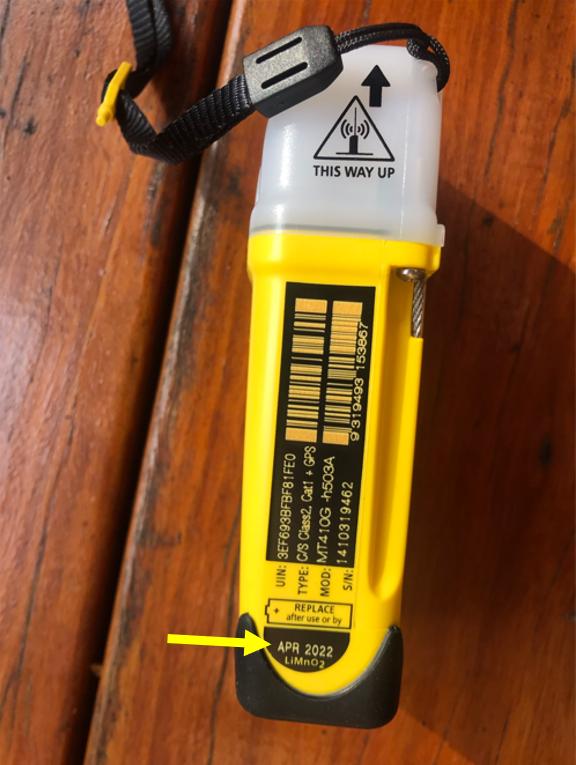
This old model GME Accusat MT410G (PLB) battery has a LiMnO2 battery (lithium manganese dioxide) which is a long-life battery in comparison to traditional lead-acid ones. It is non-rechargeable, so after seven years has to be replaced by the manufacturer’s authorized factory or service centre.
A key benefit of this type of battery is that the chemistry of the Lithium Manganese Dioxide (LiMnO₂) battery and its housed in an isolated cell construction deems it to be non-hazardous safe for air transport approval. That is critical for travellers by air embarking on remote adventures, say to Australia.
Now the cost to replace a GME Personal Locator Beacon (PLB) battery typically ranges between AUD$199 and AUD$289 when serviced directly through the manufacturer (GME).
Our recent purchase decision making:
Currently now in 2026, our pre-existing GME Accusat MT410G (PLB) beacon from 2015 expired its battery in 2022. So as a PLB device designed for life-saving it has become 11-years outdated technology in 2026. Add another 7-years battery life, and our 2015 PLB would be 18 years old. Mmm.
We reckon we’d stay with Sydney-based GME Pty Ltd.
GME’s 2026 model currently costs AUD$569. So the comparative price difference of $280 between our old 2015 model to arrange getting a replacement battery else us buying a new 2026 model were the options.
The new model has more advanced and beneficial features – such as GNSS, smaller pocket size, RLS, RLM, NFC, and monitoring APP – more anon on these features.
Basically for us, an easy and wise decision for us to just upgrade! What’s human life worth when in distress?
GME (2026) PLB model ‘MT620GR’
So we just bought a new GME model – the GME PLB model MT620GR. We ordered this PLB through GME-approved retailer ARB Penrith and we pre-paid, and it only about a week to arrive in store from GME after our pre-payment went through.
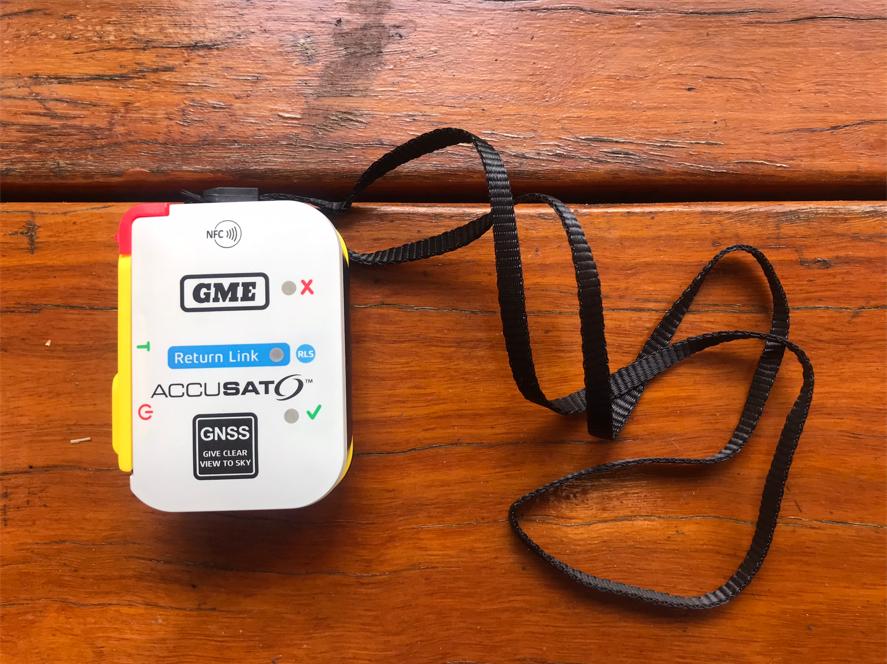
Here it is:
 Loading...

 Reload document
  Open in new tab
 On this new GME MT620GR Personal Locator Beacon, the ‘G‘ stands for GNSS (Global Navigation Satellite System) and the ‘R‘ stands for Return Link Service (RLS).
“a Global Navigation Satellite System (GNSS) is a general term for satellite constellations that provide autonomous geo-spatial positioning, navigation, and precise timing worldwide.”
Whereas ‘GPS’ refers strictly to the U.S. NAVSTAR constellation, ‘GNSS‘ is an umbrella term covering multiple international systems, including GPS (U.S.), GLONASS (Russia), Galileo (EU), and BeiDou (China).
- Receiver Capability: A GPS-only device reads signals from U.S. satellites. A multi-constellation GNSS receiver tracks multiple systems at the same time.
- Accuracy and Reliability: GNSS provides better stability and accuracy because it connects to a larger pool of visible satellites. It works better in difficult areas like dense forests and canyons.
- GNSS satellite constellations provide autonomous geo-spatial positioning, navigation, and timing worldwide. The Australian Government’s ‘Geoscience Australia‘ GNSS network’s primary role is to provide a ‘geodetic framework’ for the spatial data infrastructure, operating and maintaining GNSS networks of approximately 100 Continuously Operating Reference Stations (CORS) across the Australian territories and surrounding South Pacific region.
‘Return Link Service‘ (RLS)
This recently added RLS feature provides this particular PLB with a simple yet valuable blue one-off flashing strobe light to the PLB device once after its emergency activation to confirm to you that emergency services has:
(1) YES, received your distress transmission
(2) YES, confirmed that they are responding and on their way!
This is particularly reassuring psychologically, given when activated by the user being in an emergency distress and so desperately wanting to be reassured that that the emergency signal for help has been confirmed by AMSA as received and that official rescue is responding and on its way to the PLB’s location.

Invaluable! Some wise person came up with this vital RLS feature addition; like: ‘ yep we’ve got your distress signal, we are responding and on our way to help‘.
Should one decide to enjoy venturing hiking/trekking in the great outdoors more adventurously after doing one’s first Grade 1 day trip; well before you invest in buying your first hiking boots, rain jacket and rucksack, first buy your own PLB, PLEASE!
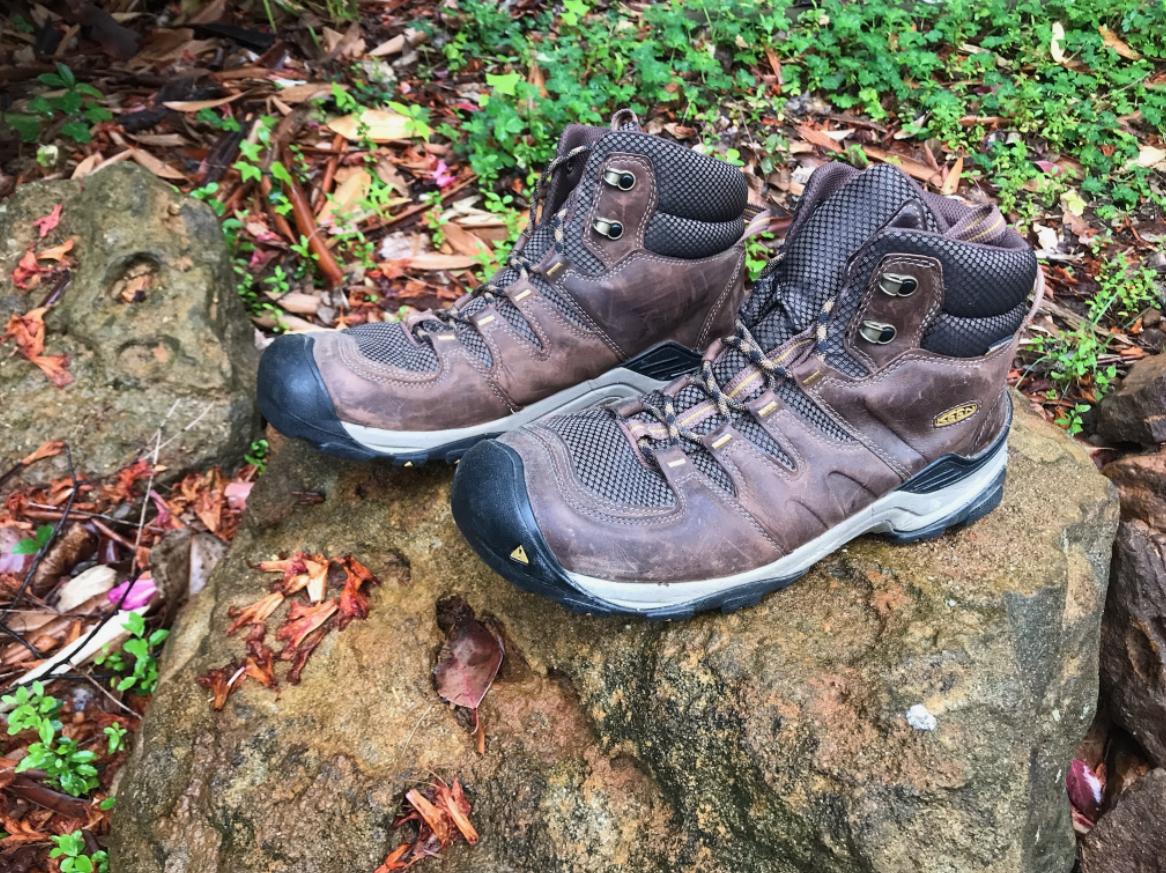
Our hiking boots: American-made ‘Keen’ (brand)
A Personal Locator Beacon is a vital device for any individual in remote distress anywhere on the planet. A PLB cannot not be taken for granted and must never be misused or abused by mis-activation. It may well be your or someone else’s last line of life support.
So, here’s below our investment’s manual that came with our PLB purchase. Like, how to use it, now that we have one? Note the ‘GR‘ version. It is superior and recommended by Nature Trail:
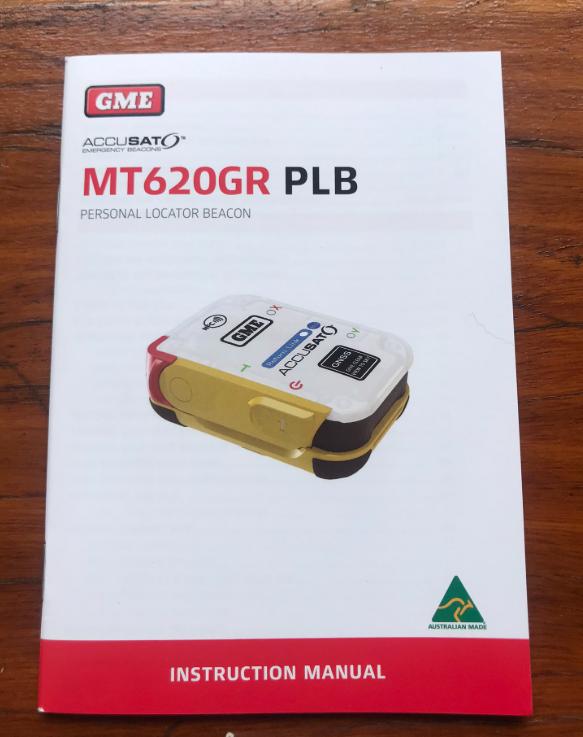
This is the Instruction Manual that ships with this PLB. Fortunately its 37 pages are actually all in English! SOURCE: ^https://www.gme.net.au/au/emergency-safety/mt620gr/
Since purchase, we’ve had a quick skim read. Yet for copyright reasons we cannot just reproduce its contents verbatim. So just buy the thing and you get your own legit copy, so you can read it.
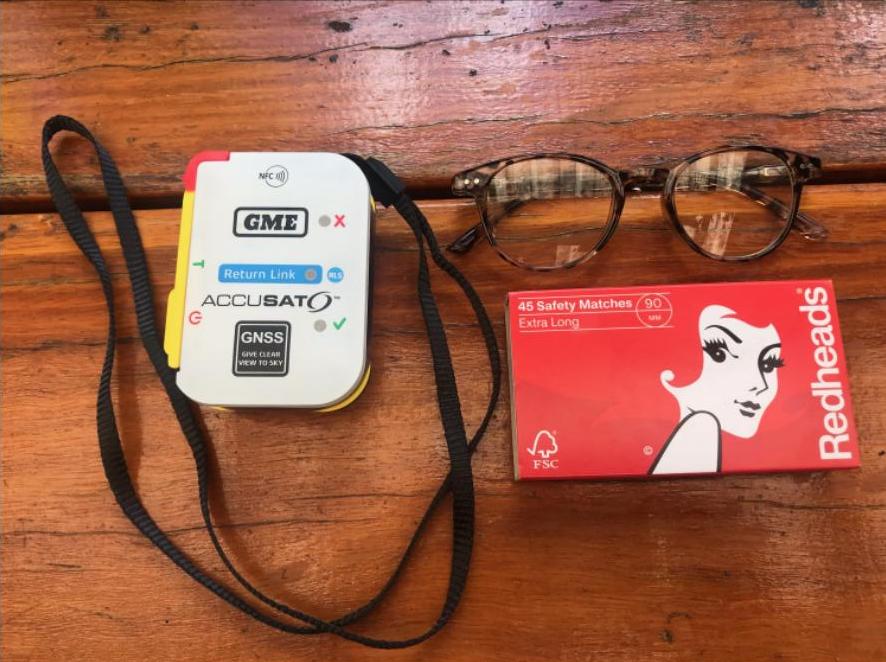
To hikers in distress, this PLB emergency device is pure life-saving gold. Firstly, its comparative dimensions and weight:
- It’s under half the size of a current Apple iPhone 17
- It’s under the weight of same
- It’s three times thicker of same
- It comes with a lanyard
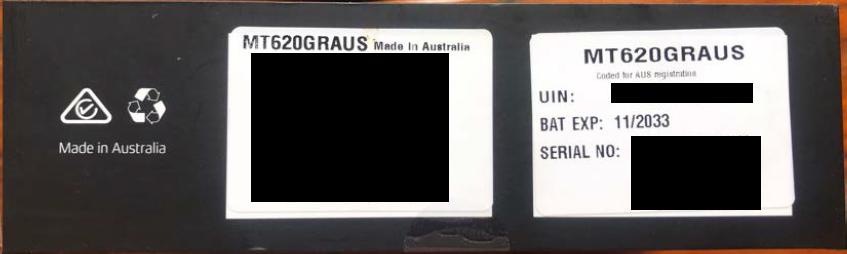
- The device itself has no identifying details – no model #, serial #, no HEX # – such details on the small box it was shipped in.
The takeaway message is that this PLB won’t be any weight burden nor a size burden to rucksack hikers at all. It’s basically a similar dimension and weight (just 160g) as the smallest pack of jelly beans (being 150g).

Both are Australian made!
Frankly, we recommend taking both products to include as kit out on all hiking trips.
Here’s another comparison to this latest PLB model’s size offered by GME:
In our view, the best PLB currently in Australia is this GME one. And we suggest to avoid borrowing/loaning one, with all the hassles and inconvenience. It’s much better to just buy one outright, before you go remote anywhere. This is because when remote, your life and that of others with you or whom you encounter out there are too precious to not do your best to responsibly have such a preparatory emergency life-saving device handy.
The GME MT620GR Personal Locator Beacon – its battery?
The GME MT620GR Personal Locator Beacon also uses a Lithium Manganese Dioxide (LiMnO₂) primary battery chemistry configured as two electronically isolated packs containing a total of four Panasonic CR123A cells (part number 080028), using 4 Panasonic CR123A cells in total (0.6 g of lithium per cell).
Its battery lifespan is also 7-year operational/shelf life from the date of manufacture (but not marked on the unit). The battery is non-user-replaceable, rather must be replaced by the factory or an authorized GME Service Centre upon expiry.
Features of the current GME PLB model MT620GR:
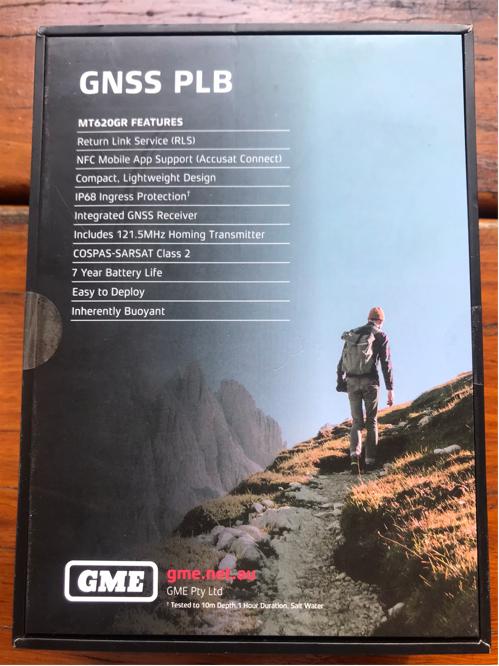
The PLB is a GNSS device (Global Navigation Satellite System) which means that it does not just use GPS (USA-based satellite connection but other global [SOURCE: GME’ package of this one we just bought. Note its features.]
Yet one can’t just buy one of these PLB’s and shove it in a rucksack and presume that Police Rescue and Emergency Ambos know you have one, should if and when you become in distress and to know exactly where your are (irrespective of how remote) and rescue you.
You have to register the device ASAP. There are two registration processes…
Registration of a new GME PLB:
Before using and so relying upon this PLB in the field, please upon receipt of the PLB device, do the following twin registration tasks:
(A) Register the PLB firstly with the manufacturer, in our case GME
^https://www.gme.net.au/au/register
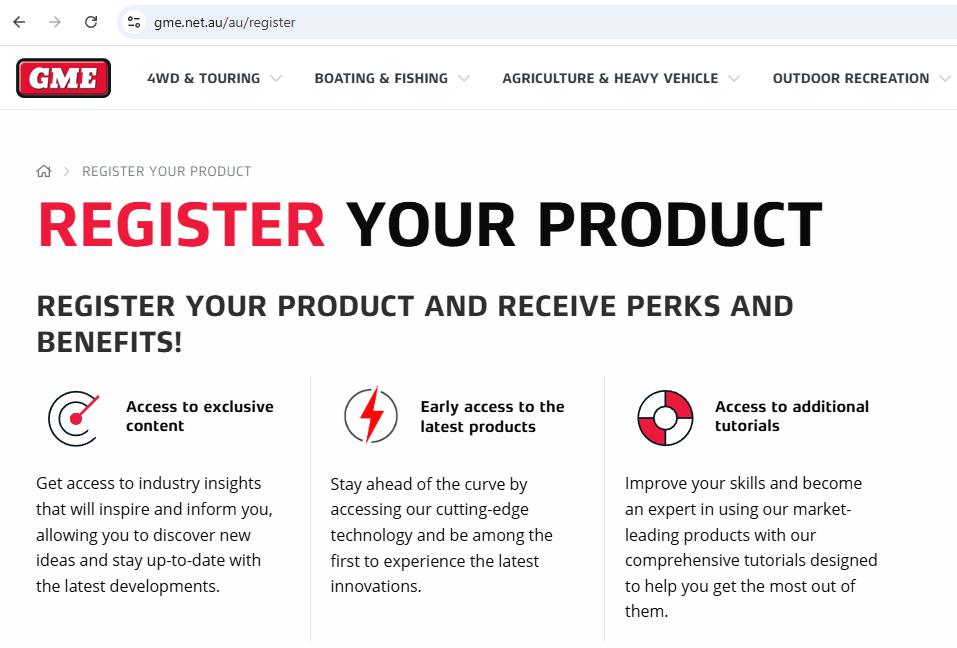
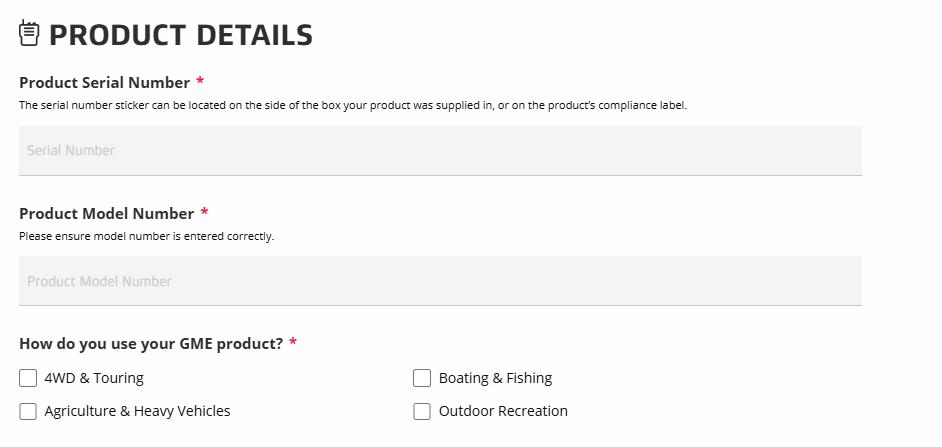
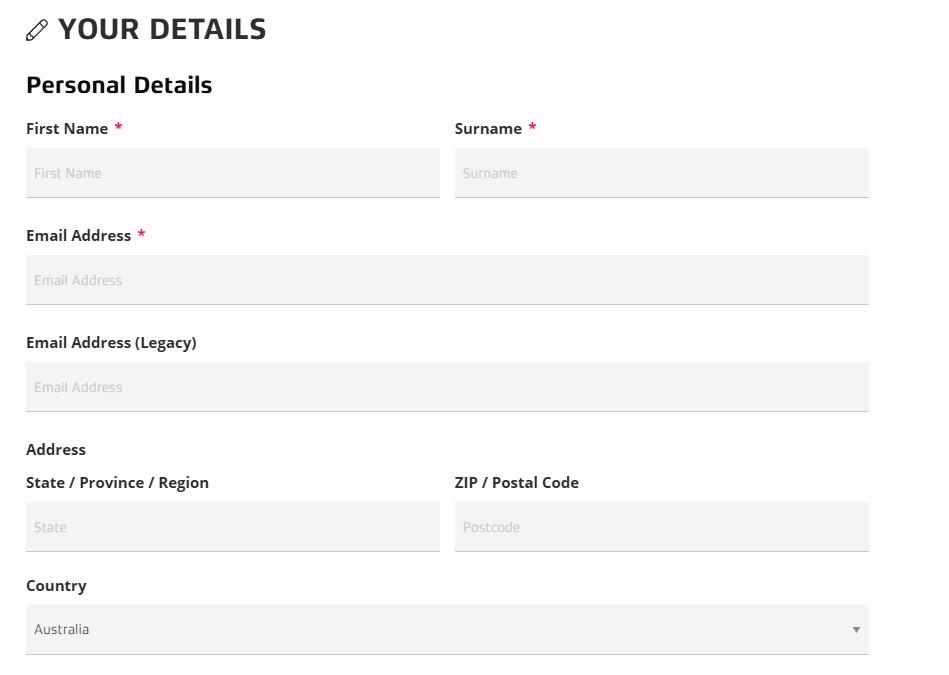
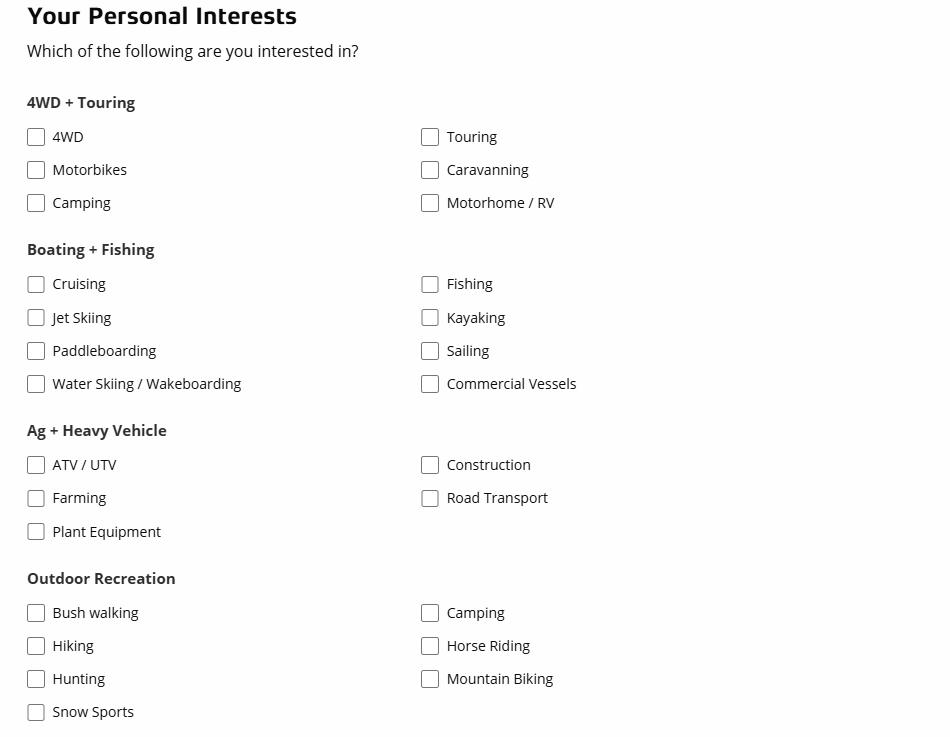
So we’ve done that…
Next…
(B) Register the device secondly with the Australian emergency authority, AMSA

‘AMSA’ stands for the Australian Government’s Australian Maritime Safety Authority.
The fact that you don’t have to be out in the sea matters not. The rescue system just historically probably started out that way, and then…well extended to similarly to serve rescuing those in distress across inland Australia. Someone was obviously smart (and caring).
This is their website: ^https://beacons.amsa.gov.au/registration/
But more specifically (at the time of writing) this is the direct link:
^https://www.beacons.amsa.gov.au/Public/PreRegistration/Beacon
Now we presume here that AMSA’s “pre-registration” is due to AMSA first quality validating that a device for registering is legitimate. The method in case of PLB’s for land use (not EPIRBS for maritime use) to use globally unique identifier codes that a certified manufacturer (like GME) uniquely allocates to each individual PLB unit.
The global term is ‘Hex ID/UIN‘. This combined acronym stands for Hexadecimal/Unique Identification Number. If readers are interested in the complex mathematical science behind this system see our end section on this article in ‘References and Further Reading‘. 🤣
So, Nature Trail registerd our new PLB with AMSA on 6-Oct-2026. We already had a registration account from registering our previous PLB with AMSA. AMSA does not charge a registration fee nor any PLB/Beacon owner account fee. It is an Australian Government emergency service.
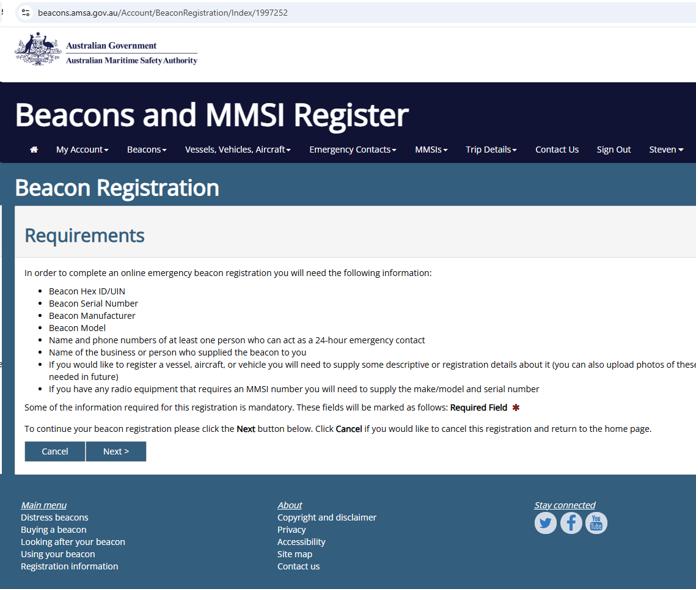
Below is the starting AMSA screen for its online PLB registration form on its website:
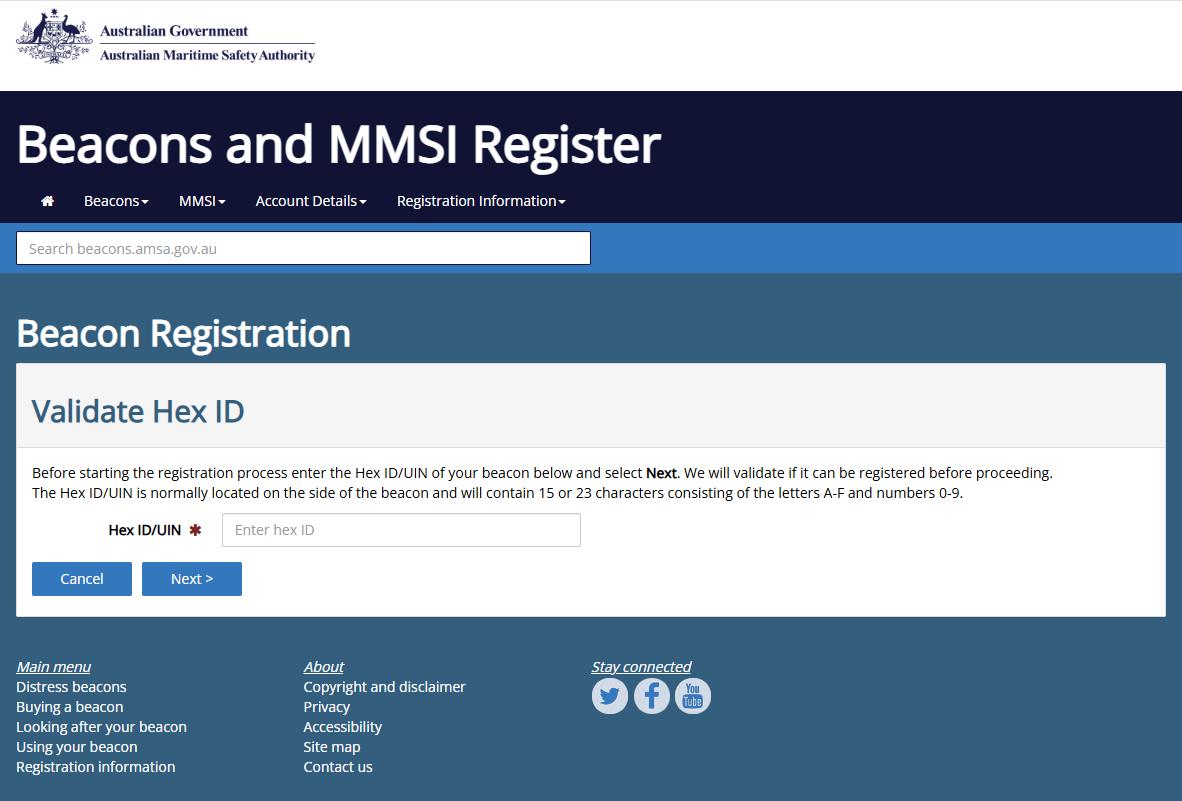
Read the guidance under ‘Validate Hex ID‘ heading. We reckon that anyone tried to contrive a fake Hex ID, they would not be able to proceed to ‘Next>’ on the AMSA website.
The unique Hex ID/UIN once submitted with the AMSA registration process form including all relevant information about the owner and emergency contact details, it becomes the unique contact ID for any distress signals activated on the PLB to AMSA. AMSA at the same time receives all the registered details as lodged by the owner to AMSA.
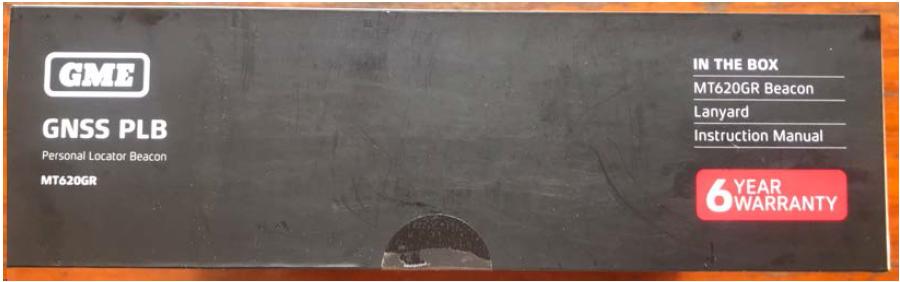
In the case of Nature Trail’s PLB, such details are not on the device itself, but rather on the box it was shipped in. Such details include the PLB’s (beacon)’s Hex ID/UIN, model number, serial number, manufacturer, retailer contact details, PLB usage.
Also, the AMSA online registration process requires details of the owner. These are the requirements:
References and Further Reading
[1] GME, ^https://www.gme.net.au/au/emergency-safety/mt620gr/
Monitoring: You can check the health and status of the battery via NFC using the GME Accusat Connect App on a smartphone | The MT620GR PLB is proudly made by GME Australia in Western Sydney and alongside the MT610G are the only Australian Made PLBs | 17 Gibbon Road, Winston Hills NSW 2153; Phone Number: 1300 463 463.
[2] AMSA, (Austalian Safety Maritime Authority) – so based in Australia for Australia’s territory(ies). This webpage hyperlink on the AMSA website is introductory ‘about‘ registering an emergency beacon in general: ^https://beacons.amsa.gov.au/registration/
Whereas, then this webpage hyperlink on the AMSA website is for use once you have bought a new beacon, it is an online form to then register the beacon’s details, the owner’s details and other related information: ^https://www.beacons.amsa.gov.au/Public/PreRegistration/Beacon
Nature Trail recommends exploring both webpages for this purpose.
[3] AMSA Contacts
AMSA Website webpage: ^https://www.amsa.gov.au/about/contact-us
Contact AMSA Connect |
|---|
| Our contact centre is open Monday to Friday 8am to 5pm AEST. We’re closed on national public holidays.
Call within Australia: 1800 627 484 Distress beacons and MMSI enquiries: |
AMSA email address for PLB (beacon) enquiries is: ausbeacon@amsa.gov.au
Search and rescue 24-hour helpline |
|
|---|---|
Call search and rescue if you need help with:
|
|
Maritime search and rescueWithin Australia: 1800 641 792 |
Aviation and land search and rescueWithin Australia: 1800 815 257 |
[4] ‘The PLB‘, ‘What actually happens when you push the button‘, by ‘Mowser’, (YouTube instructive video), beacon works within 5 minutes… Read more: stuff about AMSA and how the system works. Click on the image to play the video. Yes, Nature Trail is unashamedly biased toward GME for PLBs’ It’s our second one since 2015. 😎
[5] Beacon Types and Models (in Australia), an online summary guide table about current available options and features, by the Australian Maritime Safety Authority (AMSA) on its website, ^https://beacons.amsa.gov.au/about/beacon-types.asp
[6] COSPAS-SARSAT, (International Satellite System for Search and Rescue), ‘A Cospas-Sarsat beacon, also called a distress radio beacon or emergency beacon, is a radio transmitter that can be activated in a life-threatening emergency to summon assistance from government authorities‘ (Australia included). ^https://cospas-sarsat.int/en/
[7] MMSI, (Maritime Mobile Service Identity) information, ^https://beacons.amsa.gov.au/mmsi/index.asp
[8] Hex Code/UIN?, This code is based upon a mathematical positional numeral system, but it is academically complex to try to understand. A Hex ID, also known as a Unique Identification Number (UIN), is a unique 15-character (for first-generation) or 23-character (for second-generation) string of hexadecimal numbers (0–9) and letters (A–F) programmed into a 406 MHz distress beacon (such as an EPIRB, PLB, or ELT). ^https://en.wikipedia.org/wiki/Hexadecimal
[9] ‘EPIRBs. What are they? And why do I need one?‘, ^https://www.gme.net.au/au/news/epirbs-what-are-they-and-why-do-i-need-one/
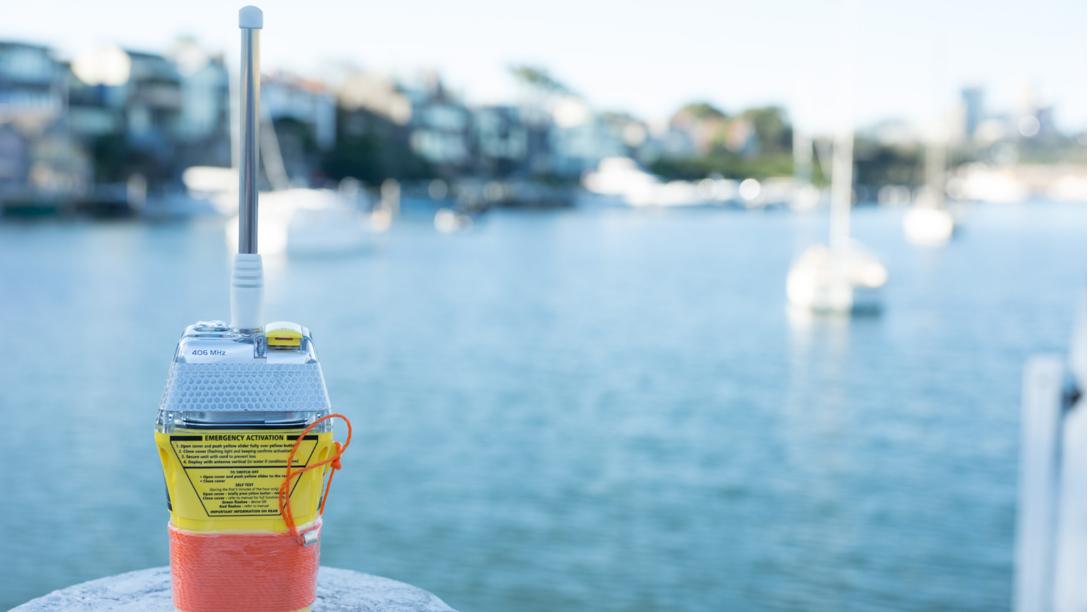
‘EPIRBS‘ are designed for maritime vessels, not for hikers. Whereas PLB‘s are smaller, lighter, portable and designed specifically for hikers.
[10] GME – MT620GR Personal Locator Beacon (PLB), 12th Nov, 2025, ^https://www.marinebusinessnews.com.au/review/gme-mt620gr-personal-locator-beacon-plb/
[11] GME MT620GR vs MT610G – PLB Comparison, RLS Explained & Why Your Phone Isn’t Enough, by Alloffroad – Stefan Fischer, 2026-05-16, ^https://www.patreon.com/alloffroad/posts/gme-mt620gr-vs-158455597